The Horrible Truth Behind Chris Doummit Leaving Parker Schnabel Crew

When Chris Dumit announced that he was stepping away from Parker Schnabel’s operation, it sounded, on the surface, like a quiet retirement. He spoke calmly about making room for younger workers and helping others succeed. But behind that measured explanation lies a far more revealing story—one that exposes the human cost of extreme ambition inside one of the most successful operations ever seen on Gold Rush.
Chris Dumit’s departure was not just the loss of a veteran crew member. It marked a breaking point in a system pushed to its limits by Parker Schnabel’s pursuit of an almost mythical goal: 10,000 ounces of gold in a single season.
The Weight of an Impossible Target
To understand why Chris’s exit mattered so much, it is essential to understand what that target truly represented. Ten thousand ounces is not simply a higher benchmark. It is a scale of production that transforms every part of an operation. It demands constant machine uptime, relentless scheduling, and a workforce stretched thin with no margin for error.
For Parker, this target was the logical next step in a career built on surpassing expectations. For the crew, it translated into longer hours, tighter pressure, and an operational tempo that rarely slowed. What made this season different was not just the number, but how it reshaped the daily workload.
Three Wash Plants, One Bottleneck
Parker’s decision to run three wash plants simultaneously—Big Red, Lucifer, and the Rock Monster—was a technical achievement. But it created a critical imbalance. While production increased upstream, the final and most delicate stage of the process did not scale as easily.
That stage was the gold room, and it belonged almost entirely to Chris Dumit.
Managing cleanup from even one wash plant is demanding work. Precision matters. A single lapse can mean losing gold worth tens or hundreds of thousands of dollars. With three plants feeding concentrates nonstop, the workload moved from demanding to unsustainable.
Chris was no longer just processing gold. He was absorbing the pressure of the entire operation.
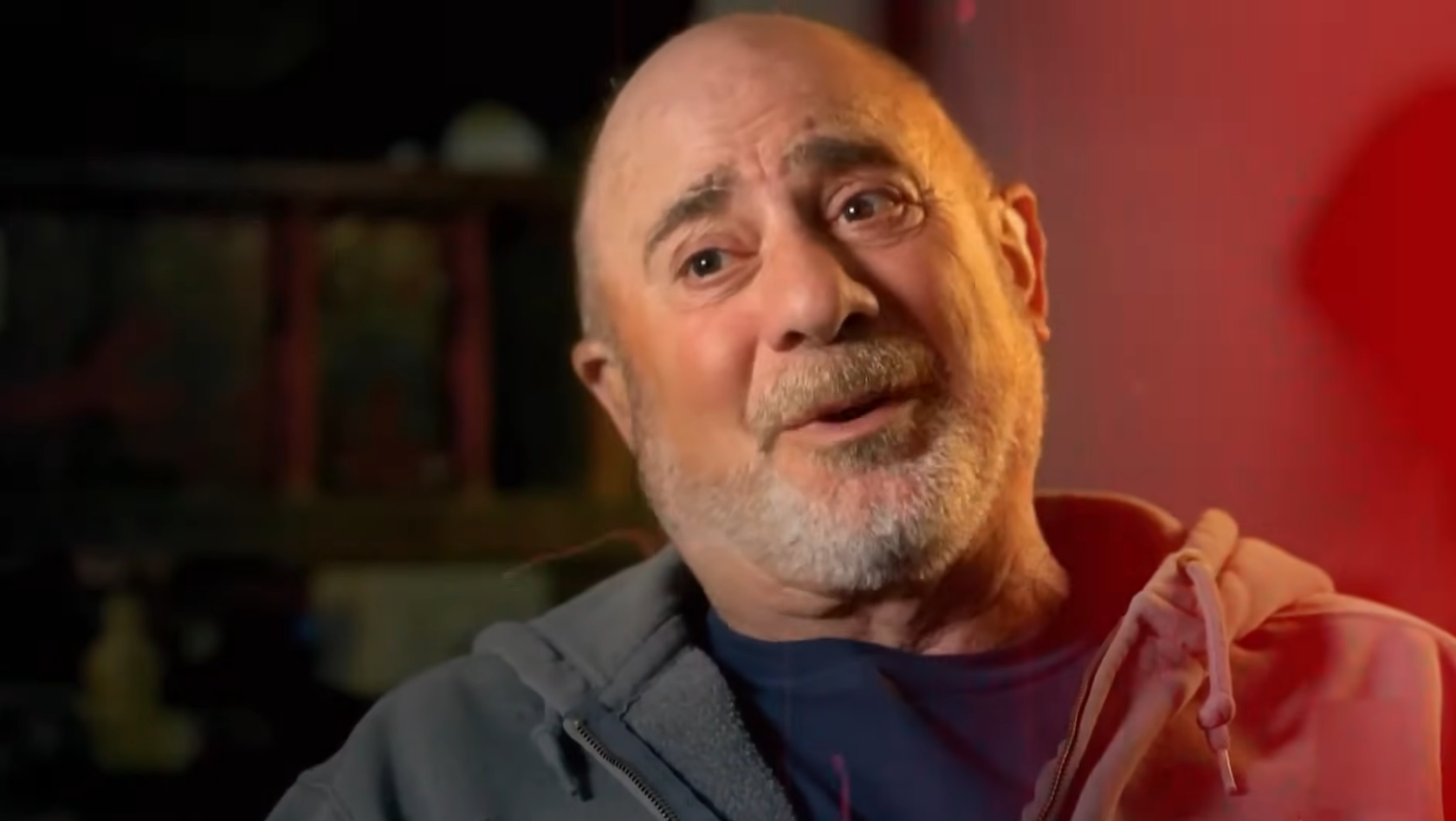
A Loyal Figure Pushed to the Edge
Chris Dumit was not a newcomer struggling to keep up. He was one of the most important figures in Parker’s rise. Originally brought into the mining world as a carpenter during the early seasons of the show, Chris discovered he had a natural talent for mining operations. His calm demeanor and meticulous approach made him indispensable.
When Chris joined Parker Schnabel in Season 4, the partnership worked because it balanced strengths. Parker brought intensity, drive, and scale. Chris brought steadiness, experience, and an unmatched ability to turn raw dirt into recoverable gold.
Season after season, Parker’s record-breaking totals were built on Chris’s consistency in the gold room. The numbers tell the story: thousands of ounces recovered year after year, translating into millions of dollars. Chris was not just supporting success—he was enabling it.
When Loyalty Stops Being Enough
What unfolded in Season 12 was not a sudden collapse, but a slow erosion. The workload continued to grow while support did not. Pulling operators from other machines to assist in the gold room was not an option. Everyone was already committed to keeping the three plants running.
Chris eventually acknowledged what he had never admitted before: he could not do it alone.
The decision to bring in Tatiana Costa—an excellent equipment operator but inexperienced in gold recovery—highlighted how desperate the situation had become. It was not a strategic adjustment; it was a survival move. The message, intentional or not, was clear. The system mattered more than the individual sustaining it.
For someone whose career was built on mutual respect and trust, that realization cut deep.
Parker Schnabel’s Relentless Drive
None of this can be separated from Parker Schnabel’s personality. Raised around mining and guided by a grandfather who embodied the trade, Parker developed an early mastery of heavy equipment and operations. By his late teens, he was already managing large crews and taking financial risks that paid off spectacularly.
That drive made him one of the most successful miners on television before the age of 30. But it also shaped an environment where success became the minimum expectation rather than a milestone.
Each record set a new baseline. Celebration was brief. The next target always loomed larger.
Over time, that approach began to affect not just production, but people. The season chasing 10,000 ounces revealed the downside of constant escalation: a workplace where even the most loyal contributors could feel reduced to components in a machine.

Choosing an Exit Over Exhaustion
Chris Dumit did not leave because he was unwilling to work hard. He left because the cost had become too high. Years of accumulated strain finally led to a moment of clarity: continuing meant sacrificing health, peace of mind, and personal well-being for someone else’s legacy.
His decision was not a rejection of mining or success. It was an act of self-preservation.
In an industry that often celebrates endurance above all else, walking away can be harder than pushing through. Chris had nothing left to prove. He had helped build one of the most profitable operations in the history of the show. Stepping aside was not failure—it was knowing when enough was enough.
A Moment of Reckoning for the Operation
Chris Dumit’s exit exposed a deeper question at the heart of modern mining operations featured on Gold Rush: where is the line between ambition and sustainability?
Parker Schnabel’s drive remains his greatest strength. But this season showed how that same drive, unchecked, can strain even the strongest foundations. When a key figure like Chris reaches a breaking point, it signals that the system itself may need recalibration.
More Than a Departure
Chris Dumit’s story is not about quitting. It is about choosing balance in a world that rewards excess. It is about understanding that success measured only in ounces can overlook the people who make those ounces possible.
In the end, his departure stands as one of the most revealing moments in recent Gold Rush history. It reminds viewers that while gold may be the goal, the true cost of chasing it is often paid quietly, far from the weigh-in table.
And sometimes, the most valuable thing a miner can claim is not gold—but the decision to walk away on his own terms.