Parker Schnabel’s $80 Million Discovery: What the Alaska Find Really Means for Gold Rush

When Parker Schnabel pushed into a frozen stretch of Alaskan wilderness long avoided by other miners, few expected the decision to rewrite the record books. Yet the results now being discussed across the mining world suggest this was not simply another strong season—it may be one of the most consequential discoveries ever featured on Gold Rush.
At the centre of the story is a site known locally as the “Widow’s Cut,” a collapsed and frozen mining zone burdened by reputation and risk. For decades, it was considered untouchable—too unstable, too costly, and too unforgiving. Schnabel’s move into this territory was not driven by instinct alone. It was grounded in modern geological analysis, specifically advanced laser-based surveying that revealed the buried outline of an ancient waterfall system beneath the permafrost.
From a geological standpoint, this matters enormously. Ancient waterfalls act as natural concentration systems, trapping heavy minerals over thousands of years. In gold mining terms, they function like a prehistoric sluice box. If the data was accurate—and the early cleanups suggest it was—the location had the potential to contain gold far more densely packed than standard placer ground. Estimates quickly escalated, with valuations climbing toward an eye-watering $80 million.
What followed was not an overnight success, but a costly and technically demanding operation. Schnabel split his workforce, maintaining production on an existing claim to cover daily costs while deploying an elite crew to thaw and access the frozen cut. Fuel consumption soared. Heavy equipment ran around the clock. Even brief shutdowns translated into significant financial losses, particularly when mechanical failures struck critical wash plant systems.

The turning point came only after weeks of strain. Once repairs were completed and material from the Widow’s Cut finally ran through the plant, the results were immediate and unmistakable. Gold appeared not in traces, but in volume. Cleanups delivered ounces where grams had once been expected. The visual impact alone—sluice boxes layered with colour—signalled that the geological model was not theoretical. It was real.
From a production perspective, the discovery pushed Schnabel into uncharted territory. Weekly totals surpassed previous personal bests and rivalled outputs that many Klondike operations never achieve across an entire season. For viewers, it looked like a moment of triumph. For analysts, it raised deeper questions.
The first is sustainability. Gold concentrated in this way does not last forever. Ancient systems are finite, and the speed at which material is processed determines how long such a find can support a large operation. Locking down the site, limiting access, and controlling information were not just narrative choices—they were strategic decisions designed to protect a resource that could shape multiple future seasons.
The second question is financial reality. While headlines fixate on an $80 million figure, the actual return is far more complex. Royalties owed to landowners can remove a substantial portion of gross value. Environmental reclamation requirements represent another major cost, often running into the millions. Add fuel, payroll, equipment depreciation, and investor obligations, and the final margin narrows dramatically.
This is where Gold Rush often stops short. The programme excels at showing effort, pressure, and payoff, but the accounting that follows remains largely off-screen. That omission feeds speculation. Some viewers question whether numbers are exaggerated or whether production amplifies success for television. However, industry experts consistently point out that staging a find of this magnitude would be logistically implausible. The volumes involved, the geological groundwork, and the operational risks all point to a genuine discovery.
A more compelling interpretation is strategic communication. Publicly framing the find at such a high valuation strengthens Schnabel’s position across multiple fronts—deterring competitors, attracting skilled crew members, and reinforcing leverage in future land negotiations. In modern mining, perception can be nearly as valuable as the ground itself.
There is also historical intrigue. Local lore has long hinted at lost cuts and forgotten channels dating back to the earliest days of the Klondike rush. While there is no firm evidence that Schnabel relied on old maps or undocumented tips, the alignment between legend and modern technology adds another layer to the story. In many ways, this discovery bridges the gap between frontier-era intuition and twenty-first-century data.
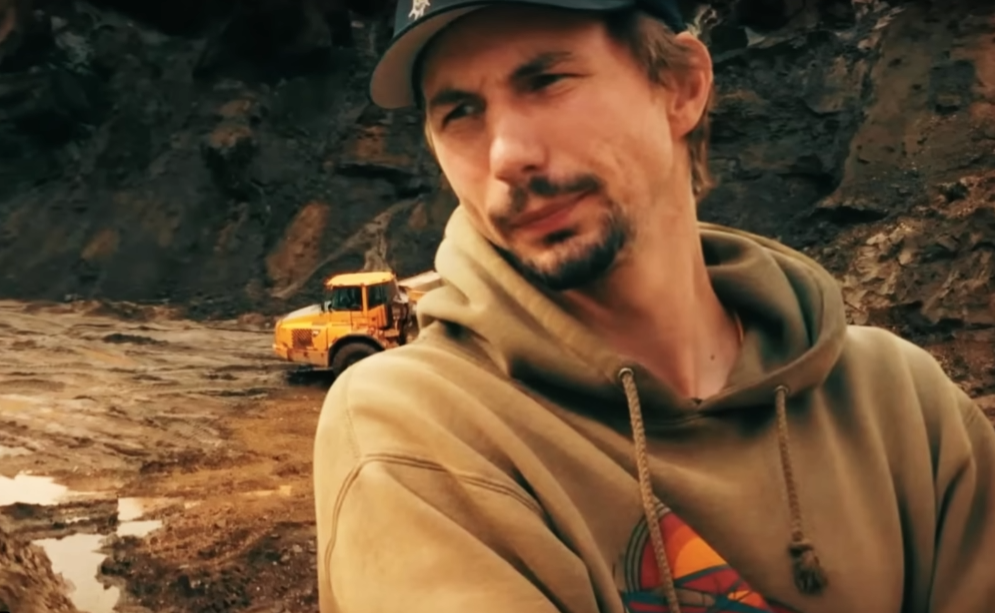
Ultimately, the significance of the Widow’s Cut goes beyond gold totals. It illustrates how mining has evolved into a discipline where science, logistics, and long-term planning matter as much as physical endurance. It also reframes Schnabel’s role within Gold Rush. He is no longer just a successful operator chasing season targets. He is a figure reshaping how large-scale placer mining is approached in the modern era.
Whether this discovery proves to be a once-in-a-generation event or the foundation for an even larger expansion remains to be seen. What is clear is that the story does not end with the gold pulled from the ground. The real test begins afterward—how the operation is managed, how profits are sustained, and how long the hidden waterfall continues to give up its riches.
For viewers, it may look like a breakthrough moment. For the mining world, it is a reminder that the most decisive victories often happen long before the first bucket ever hits the wash plant.