Tony Beet received bad news when his gold mine was temporarily suspended due to safety regulations violations.
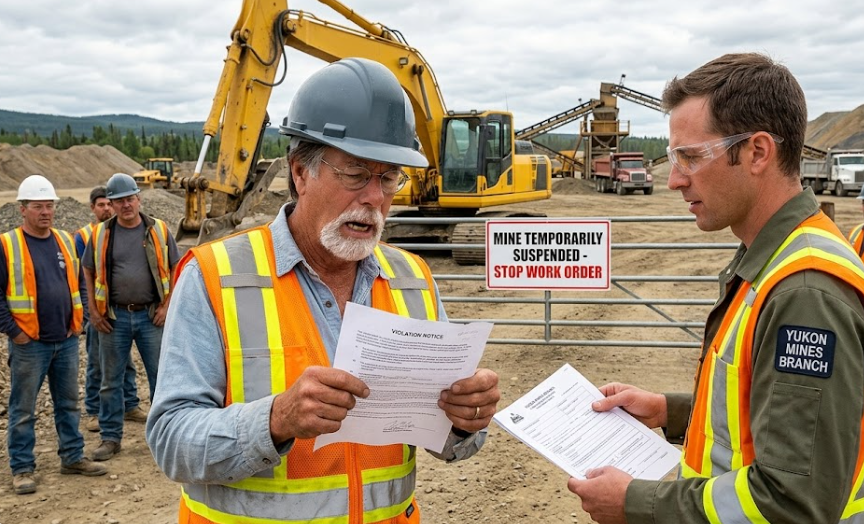
A significant disruption has reportedly hit one of the most powerful mining operations in the Gold Rush ecosystem, as Tony Beets faces a temporary suspension of his gold mine following alleged safety regulation violations. The development marks a rare operational halt for a crew known for high-output performance and aggressive seasonal targets.
From an analytical standpoint, this event represents more than a regulatory pause—it introduces a cascading risk scenario affecting production timelines, workforce deployment, and seasonal gold recovery expectations.
A SUDDEN HALT IN A HIGH-OUTPUT OPERATION
Tony Beets’ mining operation is widely recognized for its scale, mechanical intensity, and continuous production strategy. Unlike smaller crews that can absorb downtime, Beets’ system relies heavily on uninterrupted excavation and processing cycles to meet seasonal gold targets.
A temporary suspension, even if brief, creates immediate downstream effects. Material already extracted must be processed or stored securely, equipment sits idle, and workforce scheduling becomes disrupted. In high-volume placer mining, every idle hour translates into measurable financial loss.
The reported suspension tied to safety compliance issues introduces an additional layer of complexity, as regulatory enforcement typically requires corrective action before operations can resume.


SAFETY COMPLIANCE IN MODERN MINING OPERATIONS
In large-scale mining environments like Tony Beets’ site, safety regulations are not optional constraints—they are structural requirements that govern every stage of operation. These include equipment handling protocols, tailings management, site stability, and worker protection standards.
Violations—whether procedural, mechanical, or documentation-related—can trigger immediate regulatory intervention. In many cases, suspension is not a punitive end state but a compliance reset mechanism designed to ensure safe resumption of activity.
However, the timing of such interventions is critical. In a seasonal industry where production windows are limited by weather and ground conditions, even short interruptions can have amplified economic consequences.

IMPACT ON SEASONAL PRODUCTION TARGETS
Tony Beets’ operation is typically structured around aggressive seasonal output goals, often measured in thousands of ounces of recovered gold. A temporary shutdown compresses the remaining operational window, forcing the crew to accelerate production once clearance is granted.
This creates a chain reaction of operational pressure:
- Increased daily output targets after restart
- Higher equipment utilization intensity
- Potential overtime labor scheduling adjustments
- Reduced maintenance intervals to recover lost time
From a systems analysis perspective, the key risk is not just the suspension itself, but the recovery phase that follows it. Operations often shift into “catch-up mode,” which can introduce additional strain on both machinery and personnel.
EQUIPMENT AND INFRASTRUCTURE UNDER SCRUTINY
Safety-related suspensions in mining operations frequently involve equipment compliance or site management concerns. Heavy machinery such as excavators, haul trucks, and wash plants must operate within strict safety parameters, particularly in unstable ground conditions.
If regulatory authorities identify deficiencies in operational safety systems, corrective upgrades or procedural changes may be required before approval is granted for restart. This can include:
- Structural reinforcement of working areas
- Improved safety documentation and reporting
- Mechanical inspections and certification updates
- Workforce safety retraining protocols
Each of these measures introduces additional downtime beyond the initial suspension period.
WORKFORCE AND CREW DYNAMICS DURING SHUTDOWN
One of the less visible impacts of a mining suspension is its effect on crew morale and labor coordination. Mining crews are typically organized around tightly scheduled production cycles. When operations stop unexpectedly, uncertainty replaces routine.
For experienced crews like Tony Beets’, downtime often leads to reassignment of tasks such as maintenance overhauls, equipment inspections, or site preparation work. However, prolonged inactivity can also create frustration among workers dependent on continuous operation cycles.
Maintaining operational cohesion during regulatory interruptions becomes a key leadership challenge.

ANALYTICAL OUTLOOK: THREE POSSIBLE SCENARIOS
From a production analysis standpoint, the aftermath of this suspension could unfold in several ways:
- Rapid Compliance Resolution Scenario
Issues are corrected quickly, allowing mining to resume with minimal long-term impact on seasonal output. - Extended Downtime Scenario
Regulatory requirements take longer to satisfy, significantly reducing total seasonal production capacity. - Operational Restructuring Scenario
The suspension triggers broader changes in safety protocols and workflow design, potentially improving long-term efficiency but reducing short-term output.
The most likely outcome depends on the severity of the identified violations and the speed of corrective action implementation.
BROADER IMPLICATIONS FOR GOLD RUSH OPERATIONS
This incident highlights a recurring tension within large-scale mining operations: the balance between aggressive production targets and strict safety compliance. As operations scale up, regulatory oversight becomes more prominent, and the margin for procedural error narrows.
For Gold Rush crews operating under extreme seasonal pressure, compliance is not just a legal requirement—it is a strategic variable that directly affects profitability.
CONCLUSION: A TEMPORARY HALT WITH LONG-TERM CONSEQUENCES
While the suspension of Tony Beets’ mining operation is described as temporary, its implications extend beyond immediate downtime. It introduces operational delays, forces workflow recalibration, and compresses the remaining production window of the season.
In high-efficiency mining systems, interruptions of this nature rarely remain isolated events. Instead, they reshape the rhythm of the entire operation.
The key question moving forward is not only when the mine will reopen—but how effectively it can recover lost ground once it does.