Yukon Inferno: Parker Schnabel Battles Wildfires as Klondike Gold Targets Reach Record Highs
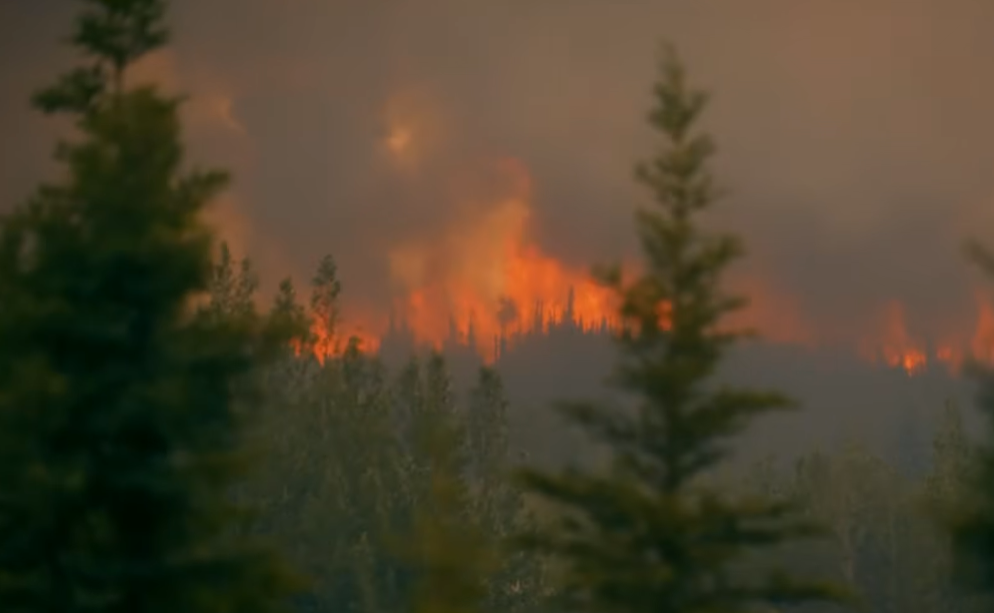
The Yukon Territory has been transformed into a literal and figurative pressure cooker this week as record-breaking gold targets collide with a devastating wildfire season. For 30-year-old mining prodigy Parker Schnabel, the path to a historic $35 million season is currently obscured by thick smoke and 93 active wildfires raging across more than 250,000 acres of northern wilderness.
Mining Under the Smoke
The crisis reached a fever pitch as fires encroached within two miles of Schnabel’s Dominion Creek operation and just one mile from his Sulfur Creek claim. While film crews expressed immediate safety concerns, Schnabel remained characteristically focused on the dirt.
“Obviously, you have a job to do,” Schnabel told his team as they monitored the horizon. “But the fact that we can see [the fire] means it’s not moving fast towards us. When all you can see is smoke is when it’s really sketchy.”
The stakes for the Schnabel fleet are higher than ever. With a seasonal target of 10,000 ounces, any evacuation would result in millions of dollars of gold being left in the ground as water licenses expire. Despite the proximity of the “raging” inferno, the gamble paid off. The crew washed the last of the Sulfur Creek pay, contributing to a massive weekly total of 710.5 ounces—valued at approximately $2.5 million. This brings Schnabel’s season total to 4,251.7 ounces, keeping him firmly on track for his record-breaking goal.
Rick Ness Goes “All In” on Vegas Valley
Further down the creeks, Rick Ness is making a strategic pivot. After a final run at Lightning Creek, Ness announced he is shutting down the site to move all resources to Vegas Valley. The move is a calculated risk; while Lightning Creek delivered a respectable 50.4-ounce gold weigh this week—Ness’s best of the season—it wasn’t enough to satisfy his debts to Troy Taylor.

“It sucks to leave Lightning Creek just as we’re getting to learn it,” Ness admitted, “but you go where the gold is, and the gold is in Vegas Valley this year.”
The transition involved a high-stakes dewatering operation, utilizing a $100,000 “monster” pump capable of moving 5,000 gallons of water per minute. Ness’s crew faced a dangerous setup, moving heavy excavators to the unstable edge of a 30-foot deep cut to connect suction lines. With the water now receding, Ness looks to Vegas Valley as his “last chance” to salvage the season and reach his 1,800-ounce goal.
Mechanical Woes for the King of the Klondike
While Parker Schnabel celebrated a 700-ounce week, the “King of the Klondike,” Tony Beets, faced a more frustrating reality. Despite the surging price of gold and the potential for “generational wealth,” Beets’ Indian River operation was hamstrung by electrical failures that cost the team two full days of production.
The Beets family weighed in at 121.1 ounces from the Indian River, with an additional 36.8 ounces recovered from old-timer tailings at Paradise Hill. For most, a $520,000 week would be a triumph, but for Beets, who has already banked $9.5 million this season, it was a disappointment.
“That’s not very good, is it?” Beets remarked regarding the tailings haul. In a decisive move, he ordered the shutdown of the tailings operation to focus entirely on the trommel. “Concentrate on the trommel… start bringing in some real gold.”

The Outlook
As the winds continue to fan the Yukon flames, the miners remain undeterred. With gold prices at historic highs, the “Klondike fever” has reached a level of intensity that rivals the fires themselves. Whether the weather holds or the smoke forces a shutdown, the 2026 season is shaping up to be the most lucrative—and dangerous—in the history of the modern gold rush.