Ancient Horseshoe Discovery Could Unlock New Clues About Oak Island’s Mysterious Past
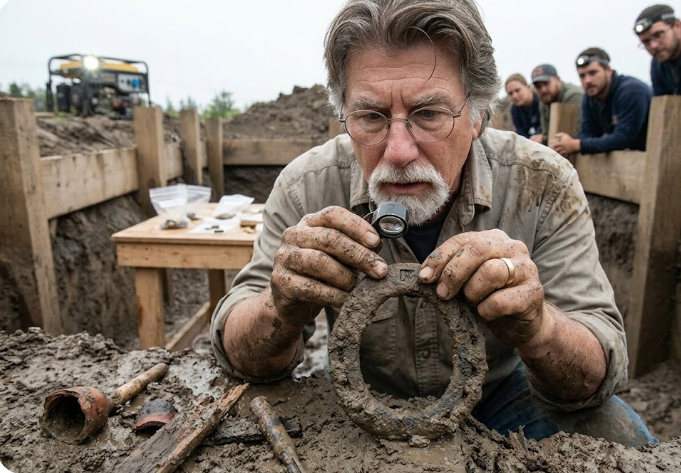
In a groundbreaking turn of events, a horseshoe discovered in the swamp on Oak Island may hold the key to answering some of the island’s most enduring mysteries. The artifact, believed to date back to the 1400s, could be linked to a far older history than originally thought, one that could tie Oak Island to the Knights Templar and the far-reaching influence of Roman explorers.
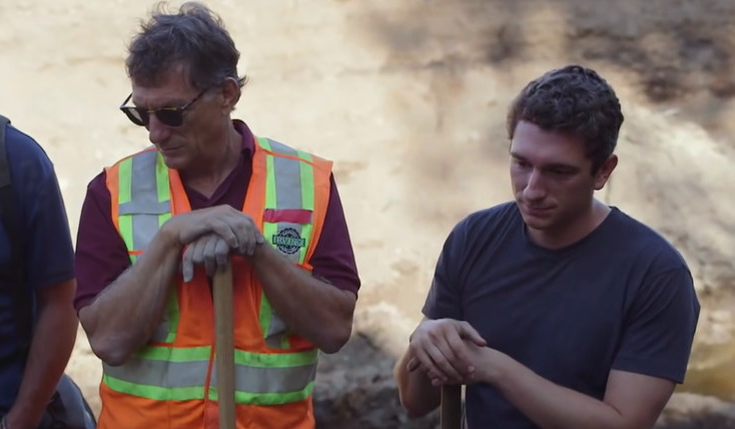
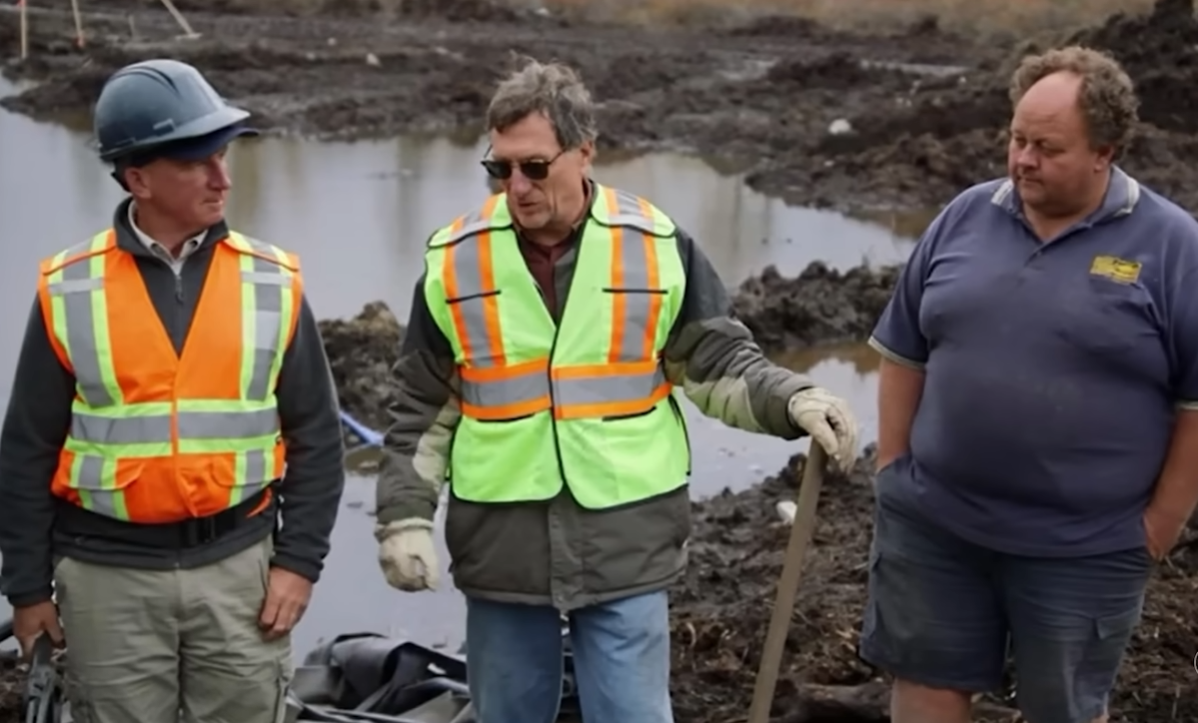
The discovery occurred when Rick Lagina, Gary Drayton, and Billy Gerhardt ventured further into the triangle-shaped swamp—a site that has long been a focal point for the team’s investigations. After months of careful excavations, they unearthed what appeared to be a small, seemingly insignificant horseshoe buried along a stone path. Upon closer inspection by blacksmithing expert Carmen Legge, it was revealed that this was no ordinary horseshoe.
The horseshoe’s unusual design, with its thick top and narrow bottom, indicates that it was crafted for a high-prestige horse, likely one used for riding or even by a cavalryman. Legge confidently placed the artifact in the 1400s, making it the oldest horseshoe ever discovered on Oak Island. The discovery is stirring excitement, not just for its age, but for its potential connections to historical figures who might have visited the island centuries before the modern search began.
A Glimpse into Oak Island’s Ancient Connections
What makes this horseshoe particularly fascinating is not just its age, but its potential connection to the mysterious stone path discovered in the swamp in 2020. During a visit to Portugal, the Oak Island team observed similar construction techniques used in Roman roads and Templar fortifications, which could link the horseshoe and the stone path. Experts have speculated that the stone path found in the swamp may have been built by an ancient civilization, possibly as far back as Roman or Templar times.
For years, theories have swirled around Oak Island, with many believing that treasure hunters might have stumbled upon remnants of the Roman Empire or the elusive Knights Templar. The connection between the horseshoe and the stone path could add credence to the idea that Oak Island was used as a depository for treasures or artifacts by these ancient groups.
The Oak Island Mystery: New Discoveries Lead to New Questions
This discovery is part of the larger ongoing investigation into Oak Island, which has long captivated treasure hunters and historians alike. The team has previously found a Roman coin on Lot Five, further suggesting the possibility of ancient visitors to the island. The horseshoe’s age, the craftsmanship, and its connection to the stone path add an intriguing new layer to the theories about who may have hidden treasures on Oak Island and why.
As the team continues to explore the swamp and surrounding areas, they hope to uncover more artifacts that could confirm the connection between Oak Island and the Romans or the Templars. The discovery of the horseshoe, coupled with the earlier findings, has fueled new questions about the island’s history and its potential as the hiding place for invaluable treasures.
Carmen Legge’s detailed examination of the horseshoe and his assessment of its historical value marks a significant moment in Oak Island’s quest for answers. If this horseshoe is indeed from the 1400s, it would rewrite the island’s history and open new possibilities for further discoveries. The team’s growing confidence in the connection between Oak Island and historical figures from centuries past could lead to one of the most significant archaeological revelations of the 21st century.
A Piece of the Puzzle That Could Change Everything
For the Oak Island team, this discovery is not just a remarkable find—it is a step closer to unlocking the island’s secrets. The horseshoe could represent the missing link in a long-standing mystery that stretches back over 200 years. From the discovery of a medieval lead cross to the recent uncovering of an ancient Roman coin, the team has found compelling evidence that Oak Island was visited by groups with significant historical influence.
The connection between the horseshoe and the stone path further complicates the story of Oak Island, suggesting that the island may have been a hub for ancient maritime civilizations. If the horseshoe was indeed used by a high-ranking individual, it could mean that someone of importance passed through the island, possibly leaving behind artifacts of immense historical value.
As the team continues to dig deeper into the swamp and other parts of the island, they are more determined than ever to piece together the puzzle of Oak Island’s past. The horseshoe discovery is just one of many steps forward in the team’s search for treasure, but it could be the one that finally unlocks the mystery behind Oak Island and the treasure that has eluded so many for centuries.
Conclusion: A Mysterious Past, An Exciting Future
As more artifacts are uncovered, the Oak Island mystery continues to unfold, with each discovery offering tantalizing clues that could change everything we know about the island’s history. The horseshoe, with its potential links to ancient civilizations, is just the latest in a series of remarkable finds that promise to shed light on Oak Island’s enigmatic past.
For Rick Lagina, Gary Drayton, and the rest of the team, the hunt for treasure is far from over. But with each new find, they are drawing closer to the truth. Whether the horseshoe and the stone path are evidence of the Templars or Roman explorers, or whether they point to a more mysterious force at work, one thing is certain—Oak Island is far from the quiet, forgotten place it once was. It is a treasure trove of history waiting to be uncovered, and the team is determined to get to the bottom of it.