Billy Gerhardt Reaches 110 Feet and Discovers a Lead Worth $240 Million on Oak Island

For over two centuries, Oak Island has captivated treasure hunters, historians, and viewers of The Curse of Oak Island. The fabled Money Pit has long been the focus of speculation, risk, and costly digs, claiming lives and fortunes along the way. But the 2026 Season 13 revelation has changed everything. Billy Ghart, a heavy equipment operator-turned-investigator, uncovered evidence at 110 feet below the surface that challenges long-held beliefs about where the real treasure lies—and the potential value is staggering, estimated at $240 million.
The Operator Who Saw What Others Missed
Billy Ghart arrived on Oak Island as a contractor, hired simply to operate excavators and follow directions. Unlike most operators, however, Billy approached every scoop of earth as a clue, meticulously studying historical documents, geological surveys, and engineering reports during breaks. His relentless curiosity soon earned him a unique position: a voice that commanded respect among the team, even when it conflicted with veteran members’ opinions.
The Money Pit, the focus of decades of excavation, became the central point of contention. While millions were spent attempting to dig deeper into the shaft, Billy argued that the true treasure was hidden elsewhere, protected by the same flood tunnels designed to mislead centuries of searchers. Using maps, ground-penetrating radar data, and historical accounts, he identified a location between the Money Pit and Smith’s Cove as a more probable site for a secondary chamber.

Risk, Investment, and Persistence
Billy’s conviction led him to make a bold decision: he would fund the excavation himself. Over $60,000 of his own money went into engineering solutions, pumps, and reinforcements to tackle water infiltration and unstable soil—a situation engineers warned could collapse the shaft at any time. Despite repeated setbacks, including wall collapses and flooding, Billy persisted, operating equipment alongside his crew for long hours every day.
By 108 feet, Billy identified metallic artifacts in the excavator bucket, confirming the presence of man-made objects. Among these was a lead cross, intricately marked, carbon-dated to the 17th century. Scientific analysis confirmed the lead originated from South American mines, historically tied to Spanish colonial treasure fleets, suggesting the artifact served as a marker for a much larger hidden cache.
Uncovering the Hidden Chamber
Following the lead cross, the team mapped the direction and depth of the secondary chamber, located at 142 feet, and prepared a massive engineering effort to safely excavate it. Advanced techniques were employed to stabilize the shaft and manage water from the complex flood tunnel system. After months of construction, meticulous drilling, and phased excavation, the team finally accessed the chamber.
Inside, the results were extraordinary. Gold coins, silver bars, religious artifacts, and sealed lead containers holding documents were found in remarkable condition, confirming that Oak Island’s treasure extended far beyond folklore. Independent appraisers estimated the haul at $240 million in precious metals alone, not including historical artifacts whose cultural and academic value could be immeasurable.
Historical and Analytical Implications
From an analytical standpoint, Billy’s discovery shifts the focus of Oak Island investigations. For generations, treasure hunters assumed the Money Pit held the ultimate prize, overlooking secondary locations deliberately engineered for concealment. The find underscores the sophistication of historical builders who engineered flood tunnels and underground chambers to protect treasures from detection and excavation.
For the team and viewers alike, this discovery highlights how careful observation, logical analysis, and a willingness to challenge conventional wisdom can overturn assumptions that have persisted for centuries. The artifacts and their placement suggest an organized, deliberate effort, possibly tied to Spanish colonial interests, that may reshape understanding of pre-Columbian and early modern exploration in North America.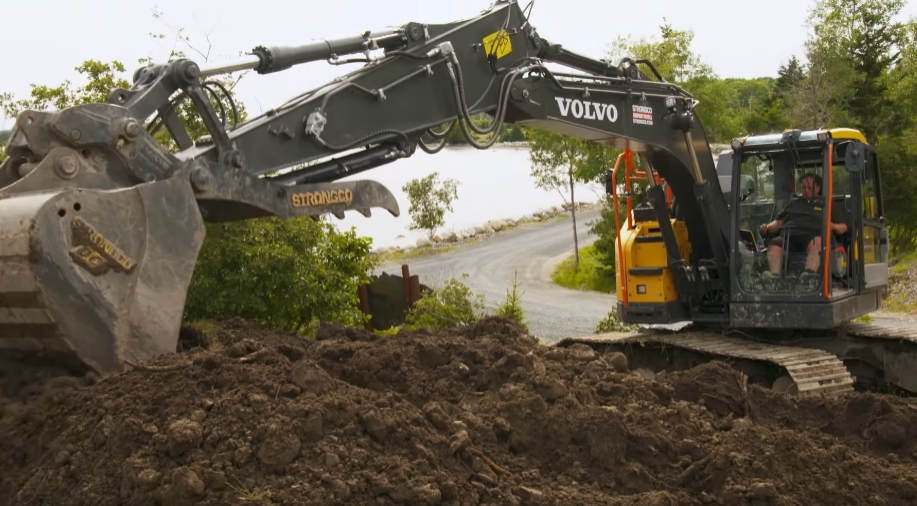
Looking Ahead: Risks, Rewards, and Future Operations
The engineering challenges faced in reaching the 142-foot chamber foreshadow the complexities of future excavations. Each deeper dig carries heightened risks, from water pressure to soil instability, requiring costly and careful construction. Analysts predict that any subsequent recovery efforts will necessitate not only technical precision but also strategic planning regarding crew safety, budget management, and artifact preservation.
Billy’s perseverance demonstrates the critical role of individual initiative in complex field operations. His ability to integrate historical analysis, engineering foresight, and practical excavation knowledge has positioned him as a central figure in what could be the most significant Oak Island discovery in history.
Conclusion: A Turning Point for Oak Island
The discovery at 110 feet and the subsequent excavation of the 142-foot chamber mark a turning point in the Oak Island saga. Billy Ghart’s meticulous approach, personal investment, and analytical insight have not only led to the unearthing of treasures long thought lost but also have rewritten theories about how and why these treasures were hidden. For historians, treasure hunters, and fans of The Curse of Oak Island, the 2026 season is a testament to the power of observation, the value of challenging assumptions, and the enduring allure of uncovering secrets buried for centuries.