EIGHT HUNDRED YEARS OF MYSTERY: Medieval room discovered on Oak Island reveals many dark secrets
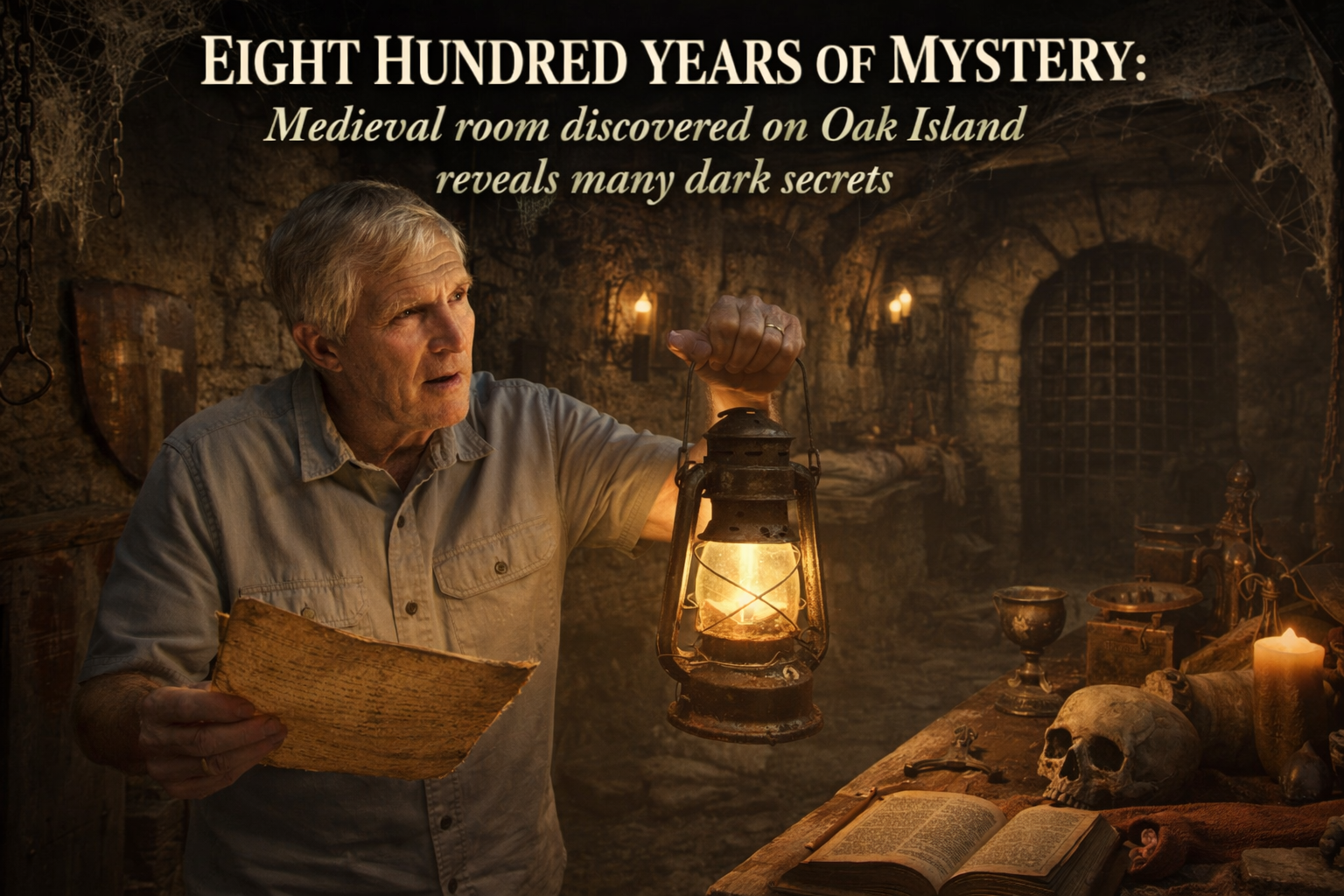
For more than two centuries, Oak Island has captivated treasure hunters, historians, and television audiences alike, becoming the locus of some of the most enduring mysteries in North America. Season 13 of The Curse of Oak Island has now delivered what could be its most astonishing revelation yet: a perfectly preserved medieval room, hidden sideways beneath the shoreline, dating back roughly 800 years. This discovery is not only a testament to the ingenuity of its builders but also raises profound questions about the island’s true purpose and the fate of those who have dared to search for its secrets.
A Chamber Unlike Any Other
Unlike the notorious Money Pit, whose flooded shafts have stymied treasure seekers for generations, this medieval chamber was found completely intact, shielded from the elements by a sophisticated hydraulic seal. Carbon dating of timber samples has revealed a construction window between 1350 and 1400 AD—centuries before Columbus’ voyage and the traditionally accepted timeline of European activity in the Americas. The room’s existence suggests that Oak Island was the site of a deliberate, long-term construction effort, far exceeding the scale and sophistication previously imagined.
From an analytical perspective, this chamber may represent the missing piece in the Oak Island puzzle. It challenges decades of assumptions, including the longstanding notion that the Money Pit itself held the island’s ultimate treasure. Instead, the evidence indicates that the Money Pit may have functioned as a diversion or “lock,” guiding seekers away from the true chamber hidden along the shoreline.

Engineering Beyond Its Time
The discovery points to advanced medieval engineering rarely seen in North American archaeology. The walls of the chamber show precise tool marks from adzes and tunneling picks, suggesting skilled craftsmanship. Furthermore, the surrounding flood tunnels appear not as crude booby traps but as part of a deliberate hydraulic design, channeling water away from the chamber. Such engineering suggests the involvement of highly organized European builders, possibly monastic military orders such as the Knights Templar, whose combination of architectural mastery and seafaring knowledge would have allowed for such a feat.
From the show’s perspective, these insights redefine Oak Island not merely as a treasure hunt but as a deliberate medieval enterprise. The presence of a sealed chamber of this sophistication indicates the original builders intended to protect its contents from discovery for centuries, perhaps even millennia. Analysts can only speculate about what motivated such secrecy, with theories ranging from the storage of religious relics to secure records or navigational charts of global significance.
Implications for the Oak Island Search
The presence of this medieval room fundamentally alters the trajectory of future exploration. Historically, efforts have been focused on the Money Pit and surrounding shafts, consuming millions of dollars and claiming lives along the way. This discovery demonstrates that previous dig sites, while perilous, may have been deliberately misleading, a kind of engineered misdirection to protect the true chamber. For the Lagina brothers and the Fellowship of the Dig, this means a strategic pivot is essential: the focus must shift to the shoreline chamber and adjacent areas that could hold further clues.
Moreover, the physical instability of the Money Pit itself, exacerbated by decades of drilling and natural erosion, underscores the urgency of reevaluating digging priorities. Analysts predict that the next phase of exploration will involve careful excavation of the shoreline chamber, possibly using advanced geotechnical engineering techniques to prevent structural collapse. A “strip mine” approach, as hinted at in Season 13, could be considered—but it would carry significant risk given the delicate limestone and gypsum formations underlying the island.
Theories About the Chamber’s Purpose
The discovery raises intriguing questions about the chamber’s original function. Unlike traditional treasure vaults, the room is dry, secure, and engineered to withstand flooding—a level of sophistication more consistent with safeguarding important objects than stockpiling wealth. Analysts have long speculated that Oak Island may have been used to store sensitive items: documents, religious relics, or artifacts deemed too dangerous to transport elsewhere. The precision of the construction suggests that the contents may have held strategic or spiritual value, justifying the extraordinary effort to conceal them.
Additionally, the discovery of hand-carved marks and the use of long-lasting timbers indicate that whoever constructed the room intended for it to survive centuries, if not indefinitely. This aligns with the historical profile of orders such as the Templars, who were known for constructing secretive, fortified sites throughout Europe and beyond. If such an organization was indeed responsible, it may explain why so little trace of their activity has been documented in historical records of the region.

Predictions for Future Episodes
From an analyst’s perspective, the discovery sets the stage for several potential developments in the series. First, the Lagina team may uncover additional chambers or tunnels, perhaps linked via hydraulic or subterranean networks to the main room. Second, the contents—if they survive—could provide unparalleled insight into medieval exploration, trade, or religious practices, potentially reshaping historical narratives. Third, the ongoing instability of the Money Pit and other shafts could introduce dramatic operational challenges, including equipment losses or near-misses, which the show has long used to heighten tension and viewer engagement.
Finally, the reveal of the medieval room suggests a broader pattern: the Oak Island mystery is not merely a tale of pirates or buried gold but a multi-layered puzzle stretching back centuries, combining engineering, secrecy, and strategic misdirection. Analysts predict that future episodes will explore these themes, offering historical context alongside the ongoing physical hunt, blending scholarship with the high-stakes narrative that has long defined the series.
Conclusion
The medieval chamber discovered in Season 13 represents a watershed moment for Oak Island. It challenges long-held assumptions, demonstrates a level of engineering sophistication rarely seen in the Americas before the 15th century, and shifts the focus of the treasure hunt to a previously overlooked part of the island. For the Fellowship of the Dig, this discovery is both a reward and a responsibility: to uncover the secrets of an 800-year-old chamber while preserving its integrity and safety. For fans, it promises a season of revelations, suspense, and historical intrigue that may finally bring them closer to understanding one of the world’s most enduring mysteries.