New Archival Records and Deep-Beach Artifacts Re-Link Oak Island to 17th-Century Pirate Gold
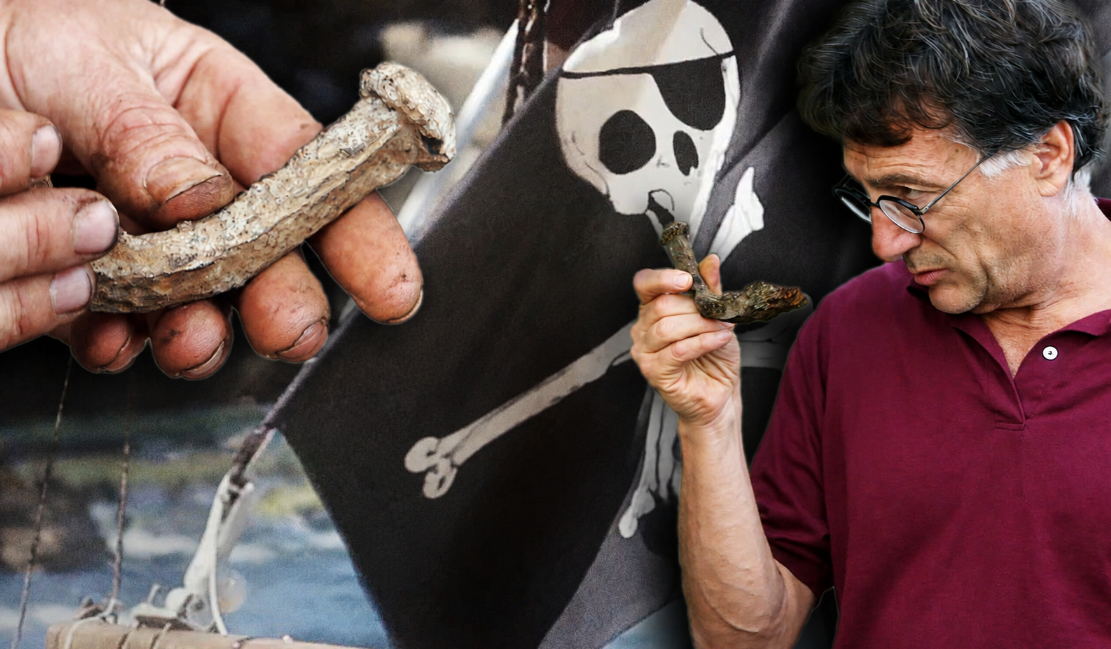
The modern Fellowship of the Dig has dramatically redirected its chronological timeline for the Oak Island mystery. In a series of consecutive breakthroughs spanning regional genealogical archives, remote beach-front metal detecting, and a secure private estate in Wolfville, the investigative team has unearthed a compelling trail of physical and documentary evidence connecting the notorious Mahone Bay island to 17th-century piracy and high-level Masonic espionage.
The twin discoveries have effectively bridged the gap between romantic maritime folklore and clinical historical reality, shifting focus away from traditional industrial military theories and back to the golden age of high-seas plundering.
The Deathbed Confession and the 90-Foot Stone
The operational pivot began at the South Shore Genealogy Center in Lunenburg, where island historian Charles Barkhouse and investigative journalist Randall Sullivan successfully isolated an overlooked 19th-century archival lead tucked within the municipal McGinnis family files. The document—a localized historical text published on December 20, 1863, by a member of the early Oak Island Association—details a stunning deathbed confession from an ancient, unnamed mariner who passed away in the British colony of New England more than a century prior.
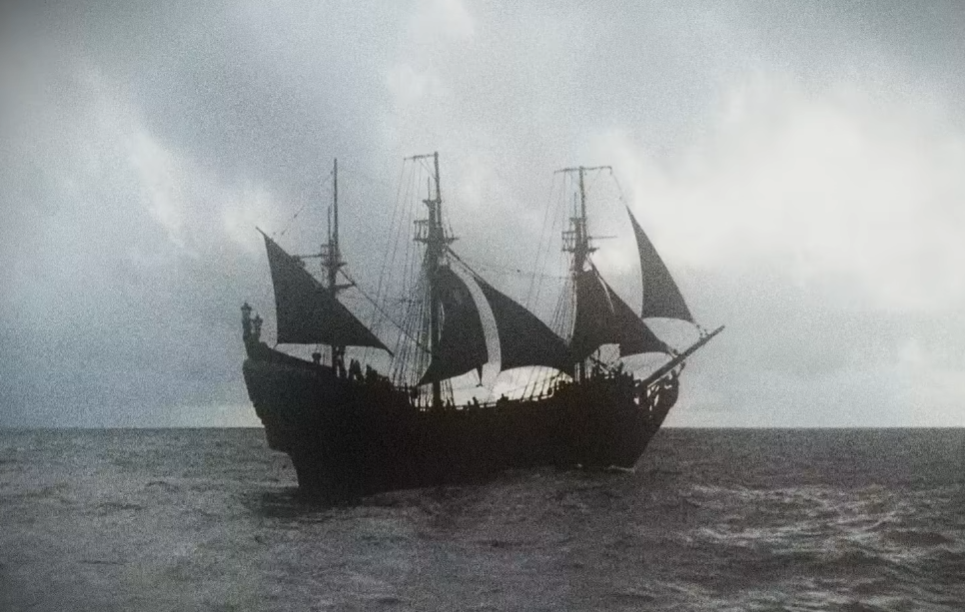
According to the validated archival text, the dying sailor confessed to having served as an active crew member under the command of the notorious Captain William Kidd, who was executed for piracy in London in 1701. The mariner assured his caretakers that he had personally assisted Kidd and a select group of followers in burying “over 2 millions in money” beneath the soil of a secluded, uncharted island situated precisely east of Boston.
Crucially, the historic 2-million-pound figure cited in the 1863 text mirrors the exact phrasing decoded from the famous, enigmatic “90-foot stone” unearthed by the Onslow Company within the Money Pit grid in 1804, offering the first independent documentary corroboration of the stone’s original translation.
The Cut Maravedí of Isaac’s Point
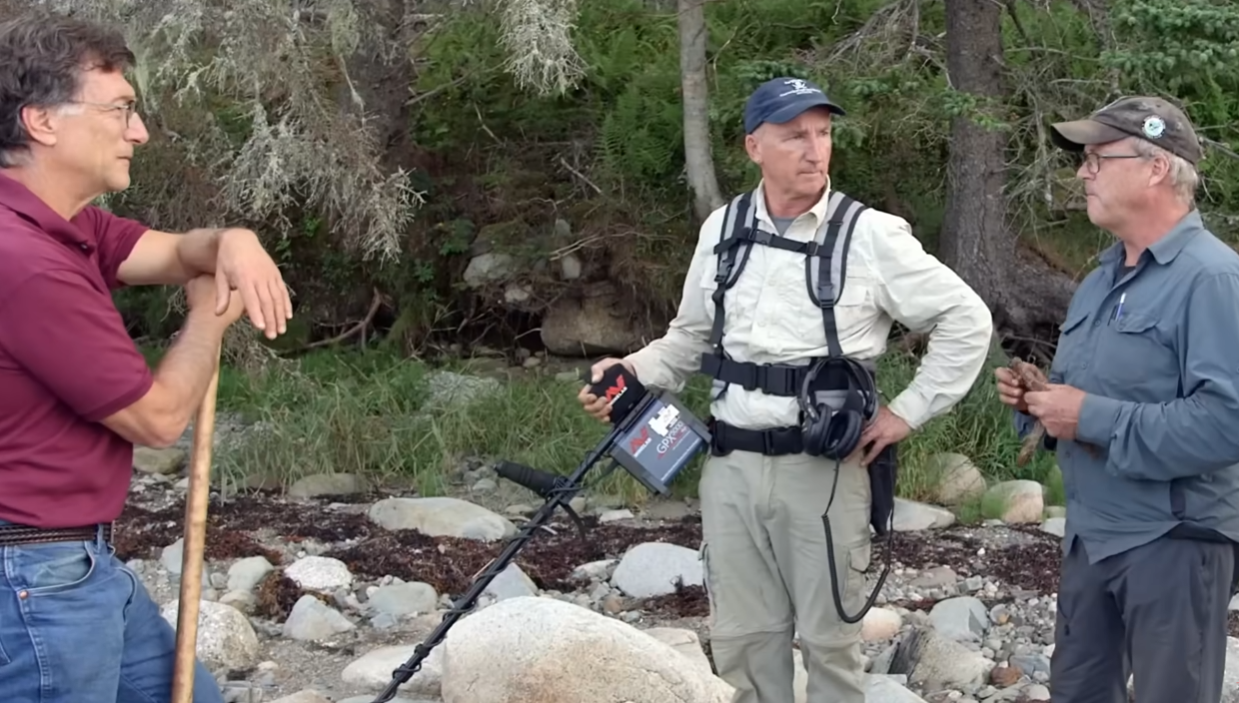
Simultaneously, a targeted metal detecting sweep executed along the eroded coastal bluffs of Isaac’s Point yielded a major numismatic breakthrough. Exploiting severe bank erosion caused by recent North Atlantic winter storms, metal detection expert Gary Drayton and searcher Jack Begley isolated a rare, deeply buried metallic anomaly on the eastern shoreline.
The artifact was identified as a genuine Spanish-made copper maravedí coin, heavily chiseled and intentionally severed into a distinct geometric fraction. Maritime historians note that these specialized “cut coins” were utilized almost exclusively by 17th-century privateers and pirate syndicates to make exact change or issue structured financial advances to crew members.
Because the specimen was recovered from dense coastal topsoil rather than corrosive salt water, it remains in pristine condition, with researchers currently working to isolate a definitive 1600s or early 1700s mint date. The discovery marks the second Spanish maravedí recovered from the island’s periphery, reinforcing the reality of pre-garrison maritime occupancy.
Inside Captain Anderson’s Sea Chest
The final, most intimate phase of the historical offensive took place 50 miles north in Wolfville, where researchers Alex Lagina and Doug Crowell interviewed Steve Atkinson, a direct lineal descendant of Captain James Anderson. Historical land registry deeds confirm that Anderson—a notorious 18th-century mariner, spy, and turncoat who defected from the American Patriots to the British Crown—originally owned Oak Island’s strategic Lot 26 before selling the parcel to legendary resident Samuel Ball in 1788.
Atkinson granted the fellowship unprecedented access to Captain Anderson’s original wood-hewn maritime sea chest, which still contained the privateer’s highly delicate personal documents and a heavy ring of four distinct iron keys. Among the authenticated papers was a pristine, wax-sealed certificate from June 24, 1791, officially registering Brother James Anderson as a Master Mason in Lodge Number 9.
Astonishingly, archival records indicate that Captain Anderson died in the West Indies in July 1796—exactly one year after Daniel McGinnis and his associates first discovered the Money Pit. The presence of multiple treasure keys within the Masonic captain’s estate has fueled intense speculation that Anderson’s personal infrastructure may have been directly linked to the three legendary treasure chests rumored to have been extracted during the island’s initial 1795 excavation.