OAK ISLAND MYSTERY DEEPENS AS PIRATE LINKS, COINS, AND ARTIFACTS POINT TO CENTURIES OF HIDDEN ACTIVITY
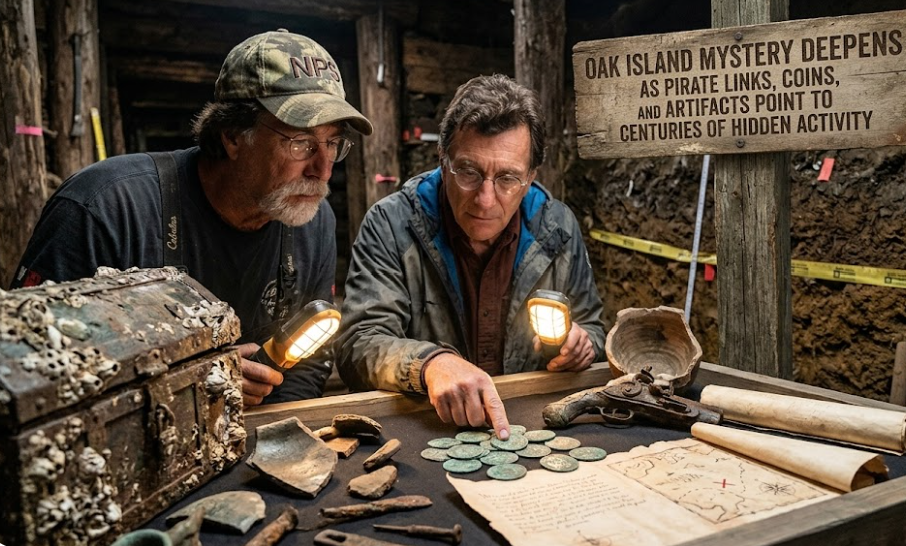
The ongoing investigation on Oak Island has taken another significant turn as researchers and treasure hunters uncover a growing chain of artifacts that appear to connect centuries of maritime activity, privateering networks, and possibly buried wealth linked to legendary figures such as Captain William Kidd and 18th-century privateers. A series of finds—including ancient coins, ship spikes, and a historically significant sea chest—has intensified speculation that the island may have been part of a long-running treasure and smuggling operation.
According to recent field activity, metal detecting teams working alongside the core excavation crew have recovered multiple early-period artifacts that are consistent with 17th and 18th century maritime travel. Among them are cut Spanish coins known as maravedís, heavily worn ship spikes believed to originate from early colonial ship construction, and structural clues suggesting a possible wharf or docking site once existed on the island.
These discoveries have been closely analyzed by the Oak Island team, led by brothers Rick Lagina and Marty Lagina, alongside metal detection expert Gary Drayton and researcher Craig Tester. Their findings continue to suggest that Oak Island was not simply a site of isolated digging activity, but potentially a long-term hub of maritime operations stretching back several centuries.
PIRATE LEGENDS RESURFACE THROUGH HISTORICAL DOCUMENTS AND MAP EVIDENCE
A key point of renewed interest comes from archival research connecting Oak Island to the notorious Captain William Kidd. Historical references examined by researchers suggest that Kidd’s name was associated with buried treasure legends in the region as early as the 17th century. One map reference even appears to explicitly label “Kidd’s treasure,” reinforcing long-standing theories that pirate activity may have extended into the North Atlantic beyond previously confirmed routes.
Further complicating the narrative is a documented deathbed confession from a sailor allegedly connected to Kidd’s crew. The account describes a claim that over two million pounds in treasure were buried on a secluded island east of Boston—an area geographically consistent with Oak Island. This testimony has long been debated, but its persistence in historical records continues to fuel modern excavation efforts.



Researchers also point to the famous “90-foot stone,” reportedly discovered during early excavation attempts in the 1800s, which allegedly contained coded markings referencing buried treasure at a deeper level. While the authenticity and translation of the stone remain disputed, it is frequently cited as one of the earliest pieces of physical evidence supporting the treasure theory.
ARTIFACT DISCOVERIES REINFORCE EARLY 18TH-CENTURY PRESENCE
In parallel with historical research, on-site discoveries have strengthened the case for sustained human activity on Oak Island during the early colonial period. A heavily corroded ship spike recovered from excavation spoil has been dated to the early 1700s. Experts suggest it may have originated from shipbuilding or docking infrastructure, possibly indicating the presence of a wharf or repair station.
The implications of such a structure are significant. If confirmed, it would suggest that Oak Island functioned not merely as a hiding place, but as a logistical point for maritime resupply or cargo handling. This theory aligns with other recovered artifacts suggesting repeated ship-related activity over time.
Metal detecting operations have also revealed additional cut Spanish coins—maravedís—commonly used by explorers and sailors operating in the New World during the 1600s and 1700s. These coins were frequently divided into segments for trade, and their presence on Oak Island suggests transactional or occupational activity rather than accidental loss.
KEYS, CHESTS, AND PRIVATEER CONNECTIONS EMERGE FROM LOCAL ARCHIVES
The investigation has taken a new direction following discoveries related to Captain James Anderson, an 18th-century privateer and landowner associated with property records on Oak Island. Anderson’s history, as revealed through archival research, indicates he operated as both a mariner and a privateer during periods of colonial conflict, shifting allegiances between British and American forces.
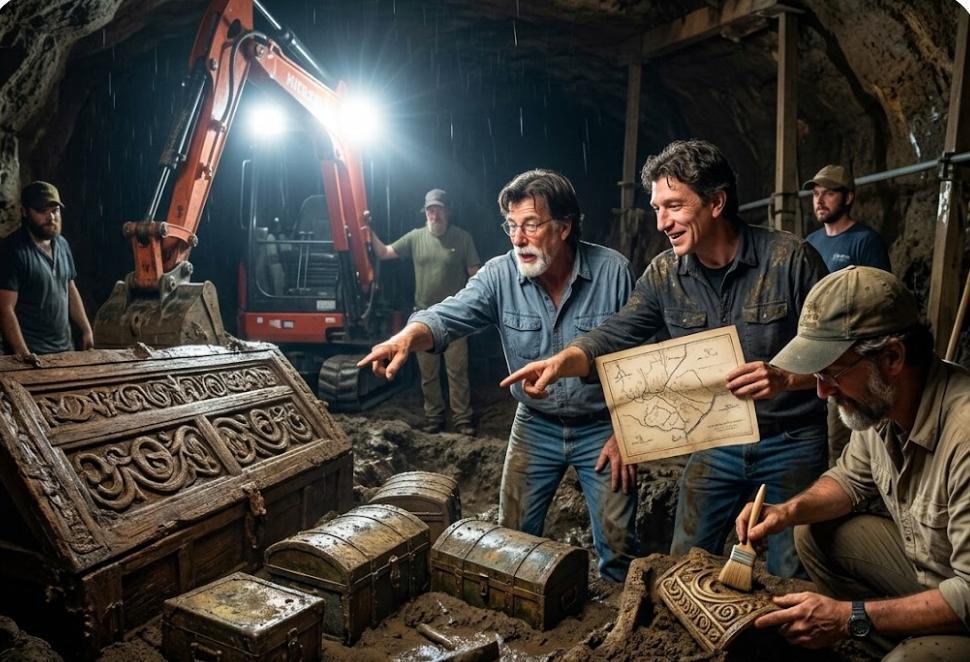
A particularly intriguing development came when researchers were granted access to Anderson’s preserved sea chest, containing historical documents confirming his status as a registered Master Mason and detailing his maritime career. The chest also contained multiple keys, sparking speculation about whether additional locked containers or hidden caches may have existed in connection with his operations.
The discovery has prompted renewed theories that Oak Island may have been used as a staging ground or storage site for privateering activities, potentially involving multiple vessels and coordinated resource concealment.

TEAM RESPONSE AND CONTINUING INVESTIGATION
As the scope of discoveries expands, the Oak Island team continues to emphasize methodical investigation over speculation. Rick Lagina and Marty Lagina have consistently maintained that each artifact must be carefully verified and contextualized before drawing conclusions about its historical significance.
Meanwhile, Gary Drayton continues to play a key role in surface exploration, often uncovering the earliest physical indicators of buried or eroded materials. His findings, particularly in areas affected by storm erosion, have been critical in identifying previously inaccessible layers of historical activity.
Local historian Doug Crowell has also contributed new archival insights, connecting land ownership records and maritime histories that may link Oak Island’s past to known privateers operating in Nova Scotia waters.
A MYSTERY STILL UNRESOLVED
Despite the accumulation of artifacts and historical clues, Oak Island remains unresolved. Each discovery appears to deepen the complexity of the site rather than clarify it. From pirate legends tied to Captain Kidd, to privateer activity involving James Anderson, to physical evidence of maritime infrastructure, the island continues to present more questions than answers.
What is becoming increasingly clear, however, is that Oak Island was far from empty. Whether it held treasure, served as a colonial supply point, or functioned as part of a larger maritime network remains unknown.
For now, the search continues—layer by layer, artifact by artifact—into one of the most enduring mysteries in North American history.