New Finds on Oak Island Suggest Europeans May Have Arrived Earlier Than Anyone Thought (S13)
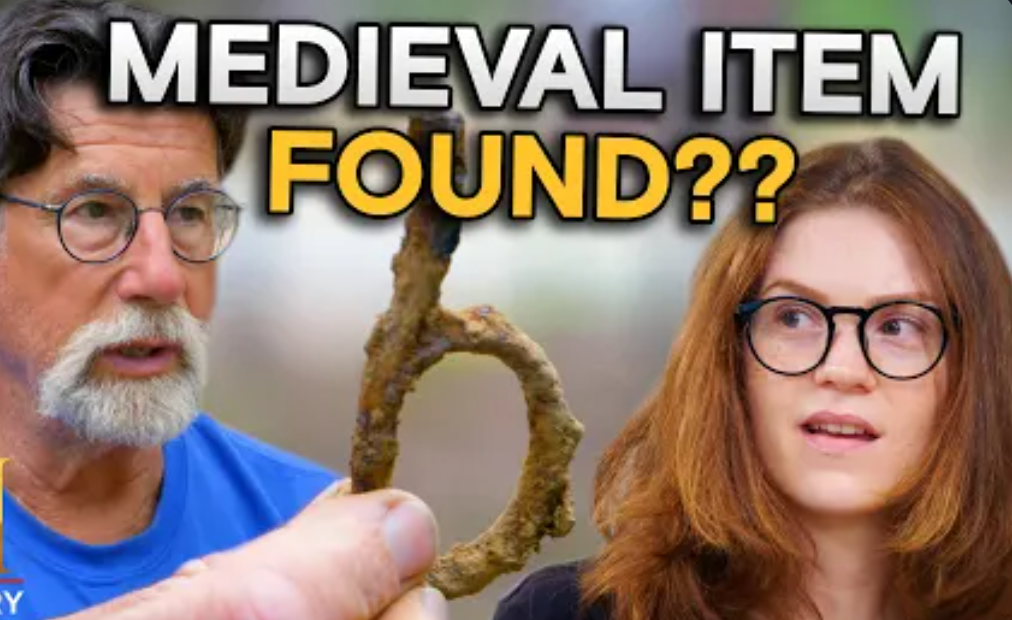
Lot 5 — long considered one of the most enigmatic sites on Oak Island — has once again become the center of attention following a series of discoveries that may push the island’s timeline further back than previously believed. In a recent episode of The Curse of Oak Island, the team uncovered a sequence of artifacts that appear to connect medieval Europe, possible ancient travelers, and perhaps even the earliest undocumented settlers of Nova Scotia.
The search, led by Rick Lagina and metal-detection expert Gary Drayton, took place in the middle of Lot 5 — a location already known for producing six ancient Roman coins believed to date between 1,500 and 2,000 years old. Those coins, confirmed by experts to have circulated in Europe up until the 1400s, remain one of the most puzzling finds in the show’s history. Now, new discoveries are adding fresh intrigue to an area already rich with clues.
A Lead Fragment With a Familiar Signature
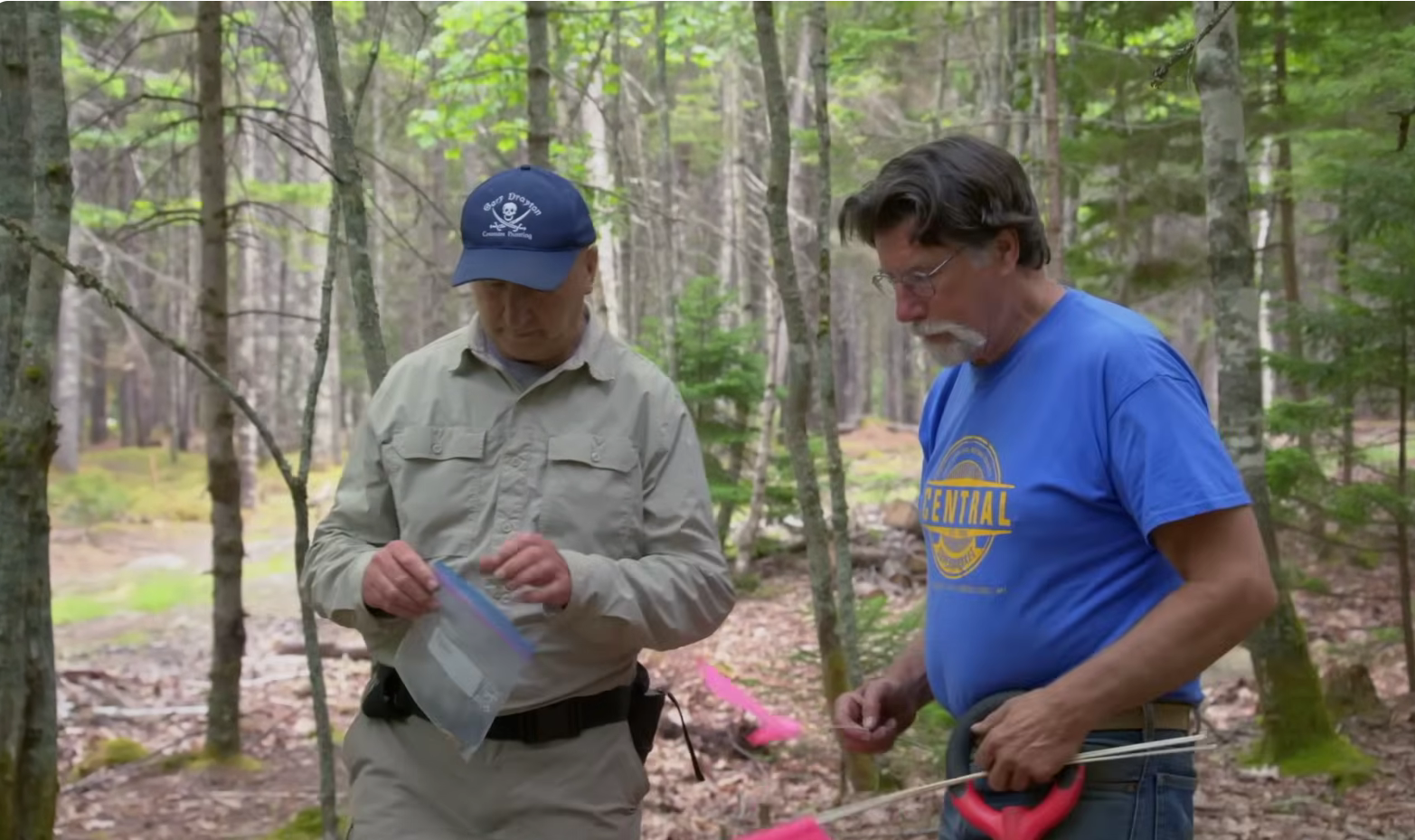
The first major find of the day occurred when Gary’s detector flagged a strong signal near the area where the Roman coins were found. Digging through the soil, the team uncovered a long, heavy piece of lead — an odd shape that Drayton immediately recognized as potentially significant.
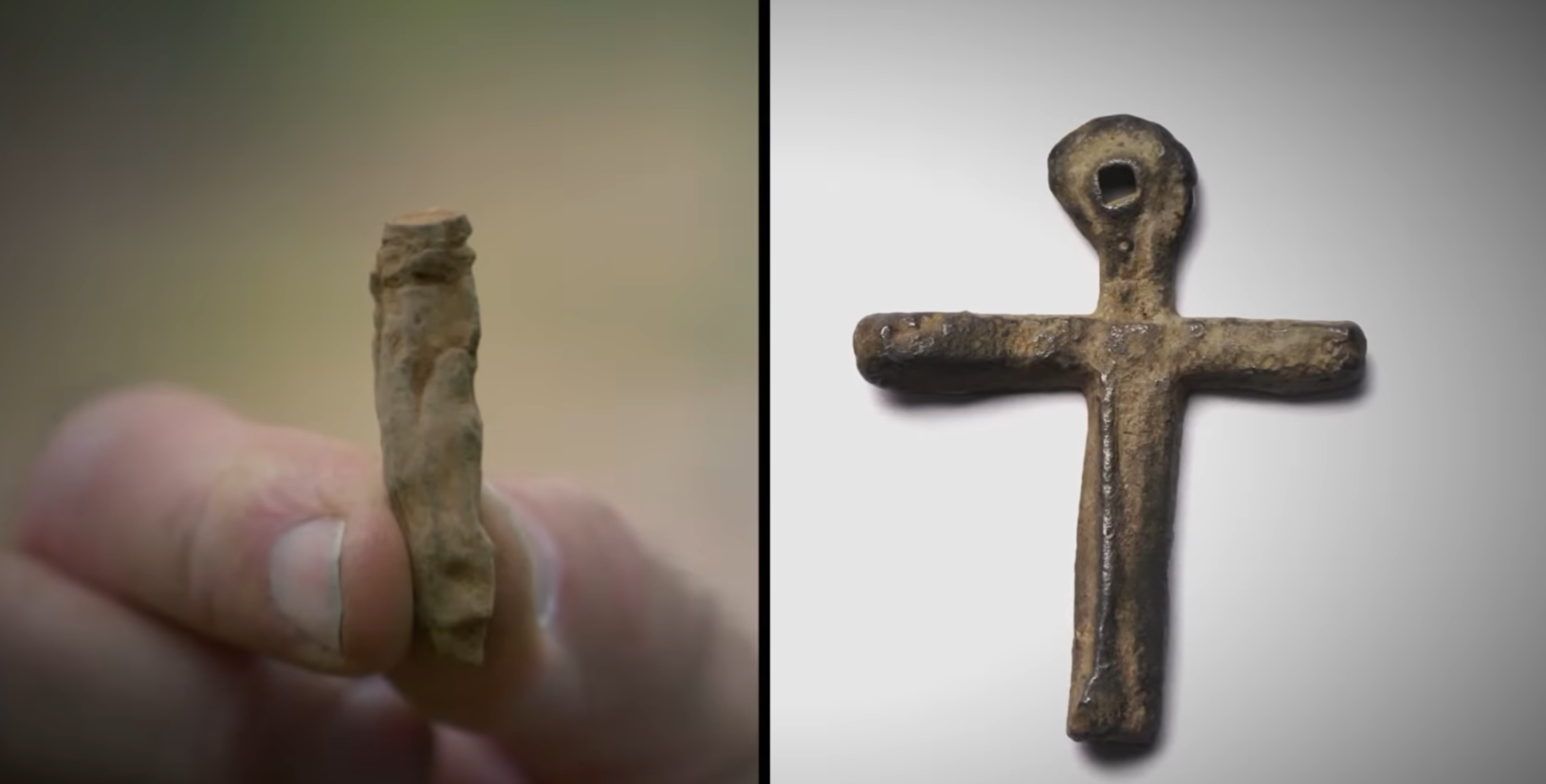
“This is really, really interesting,” Gary remarked as he held the piece. “When you see something elongated like this, it could match an earlier object — maybe even the medieval lead cross.”
The cross, found several seasons ago on Oak Island’s southern shore, remains one of the show’s most mysterious artifacts, believed to predate European settlement. The notion that a newly discovered object might connect to it was enough to send the team straight into analysis mode.
The lead fragment was promptly bagged and flagged for metallurgist Emma Culligan, whose scientific work has become vital to the island’s investigations. For the Oak Island team, every lead object represents not just a piece of metal, but a potential timestamp — a way to identify which century, culture, or civilization once touched the island’s soil.
A Surprising Second Find: Scissors, Not Horse Tack
Moments later, another promising signal led Rick and Gary to what initially appeared to be an old pair of scissors. The artifact came out of the ground in two pieces, fractured along what looked like a clean break. But the pair hesitated.
On first inspection, Gary suggested the object might be part of a horse bridle — specifically, a cheek piece, which would be a significant clue. Historical records do not indicate horses being kept on Lot 5 in the centuries before the Money Pit’s discovery in 1795. A horse-related artifact, combined with medieval coinage, might have hinted at earlier European activity.
However, once taken to archaeologist Laird Niven and metallurgist Emma Culligan for deeper analysis, the truth became clearer.
The two pieces did not match genetically — their cross-sections were of different shapes, indicating they did not break from a single curved object like a bridle. Instead, Laird confirmed that they were indeed the handles of old shears — scissors used in the 1600s and early 1700s.
Culligan’s metallurgical analysis added further intrigue. The metal contained a slight chlorine content and measurable sodium, suggesting prolonged contact with salt water. More importantly, the object was made of raw iron with minimal impurities, a sign that it originated before the era of blast furnaces — meaning the object most likely dates from the late 1600s.
A Timeline That Keeps Getting Older
The 1600s dating is significant for several reasons:
-
Lot 5 shows no record of habitation before the late 18th century.
-
Earlier discoveries — the Roman coins, medieval lead objects, and cross isotopic analyses — already suggested pre-colonial activity.
-
The shears add a new data point in a growing cluster of artifacts that appear to span centuries.
As Laird noted, the find does not directly prove a connection to the Money Pit’s construction, but neither does it rule it out. More importantly, it strengthens the idea that Lot 5 was visited, used, or inhabited long before the officially recorded history of Oak Island began.
Rick Lagina emphasized a key point: “There are two lots on this island that are incredibly difficult to understand — the Money Pit lot and Lot 5.” The accumulating evidence suggests that Lot 5 might hold clues to multiple phases of activity, possibly by different groups across centuries.
Unanswered Questions and New Directions
Each new artifact raises more questions:
-
Who brought 17th-century shears to this remote part of Nova Scotia?
-
Why are Roman coins — objects that circulated until the 1400s — found alongside medieval lead fragments?
-
Were visitors using the island as a seasonal camp, a repair stop, or something more strategic?
-
Could these objects help identify the builders of the mysterious structures found near the Lot 5 shoreline?
Laird and Emma agree on one thing: the story of Lot 5 is far from complete. As Emma noted during the lab review, “Every little find brings us closer. Every artifact tells a story.”
The team shows no signs of slowing down. With more metal detecting planned and deeper excavations pending regulatory approval, Lot 5 could be the key to unlocking Oak Island’s oldest chapter.
For now, the mystery deepens — and Lot 5 remains one of the most compelling places on an island full of secrets.