OAK ISLAND TEAM REPORTS “UNUSUAL METAL SIGNATURES” AS GARDEN SHAFT INVESTIGATION INTENSIFIES

Subsurface voids, engineered timber, and trace gold findings fuel renewed speculation that the Money Pit search zone may be closer to a man-made structure than ever before.
On Oak Island, the latest phase of drilling has delivered one of the most intriguing sequences of findings in recent memory, as the team behind The Curse of Oak Island continues to refine its search around the highly scrutinized Garden Shaft and adjacent Money Pit zone. According to field operations and lab analysis presented this week, multiple indicators now point toward the presence of engineered underground features at depths previously considered inconclusive .
At the center of the investigation is borehole DN 11.5, drilled into what the team has informally dubbed the “baby blob”—a tightly defined anomaly zone identified through water sampling and geoscientific modeling. Early drilling results revealed a significant void at approximately 90 feet, with drill rods passing into what appeared to be open space for roughly 18 inches before contacting resistance again. Engineers on site described the sensation as consistent with either a collapsed cavity or a previously existing tunnel structure .
The discovery immediately intensified discussion among senior researchers, including Rick Lagina and Marty Lagina, who have long maintained that overlapping structural anomalies in this area may indicate a larger engineered system beneath the island. The alignment of multiple boreholes striking similar depths has further reinforced that hypothesis.
WOOD, WATER, AND THE POSSIBILITY OF ENGINEERED STRUCTURES
A breakthrough moment came when core samples extracted from near the void zone revealed fragments of preserved wood embedded within sediment layers at depth. Far from being dismissed as debris, the material was immediately sent for geochemical analysis due to its unusual preservation context and proximity to suspected underground features.
Laboratory testing conducted by Emma Culligan using X-ray fluorescence (XRF) technology produced unexpected results. While most elemental readings aligned with naturally occurring minerals found on Oak Island—such as iron, calcium, and magnesium—the scan also detected trace quantities of gold.
Culligan described the finding as statistically unusual but scientifically verifiable, noting that gold appeared consistently across repeated scans of the same sample. The concentration was extremely low in absolute terms, but significant within geochemical expectations for organic material exposure at depth. The team interpreted the result as supporting evidence for prolonged contact between wooden structures and mineral-rich water systems.
THE GARDEN SHAFT BECOMES A FOCUS POINT
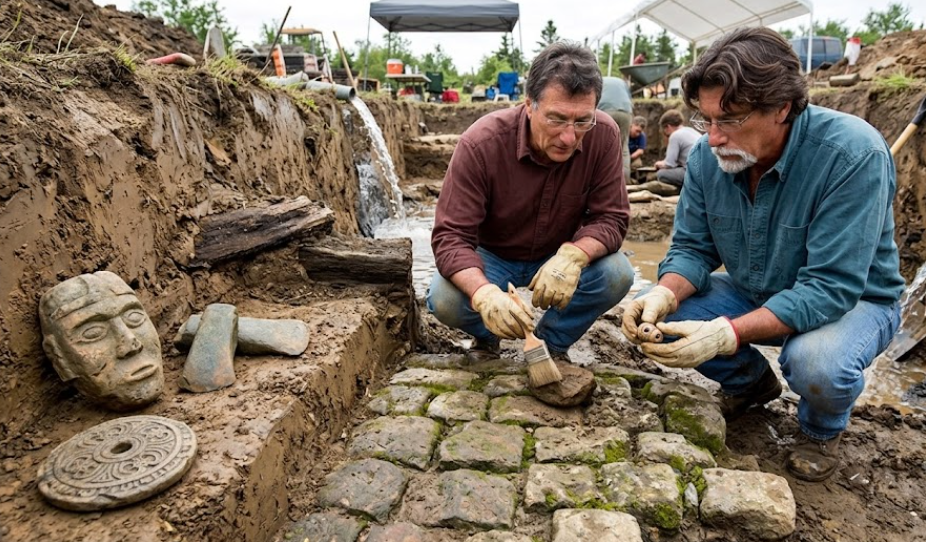
Parallel to drilling operations, restoration work inside the Garden Shaft has added another layer of complexity to the investigation. Contractors working in confined conditions reported structural features consistent with intentional construction, including wooden lining systems and angled supports embedded within the shaft walls.
During inspection, team members also documented the presence of an old handcrafted ladder preserved within the structure. The object, believed to be significantly aged, has become a focal point of discussion regarding early human activity in the shaft region. Its craftsmanship has prompted speculation that it may have been constructed using traditional hand tools rather than industrial equipment, suggesting historical occupation of the site long before modern excavations.
The presence of both timber reinforcement and open void anomalies near the same vertical corridor has raised questions about whether the Garden Shaft may have been engineered to interface with deeper subterranean features.
ALIGNMENT OF VOIDS RAISES NEW QUESTIONS
One of the most compelling developments involves the spatial alignment of multiple boreholes—DN 11.5, DN 12.5, and DN 13.5—all of which have reported similar resistance changes at nearly identical depths. Geological consultants on site have noted that such consistency is unlikely in naturally formed soil stratification, particularly when observed across multiple independent drilling points.
This has led to renewed discussion about whether the team may be intersecting a single large horizontal structure or tunnel system running beneath the Money Pit area. While no definitive confirmation has been made, the pattern has been described internally as one of the strongest structural consistencies observed in recent years of exploration.
HISTORICAL CONTEXT AND CONTINUING SPECULATION
Alongside physical findings, interpretive analysis continues to draw on historical theories associated with the island’s origins. Researchers, including historian Laird Niven, have referenced earlier comparisons between stone construction techniques on the island and medieval engineering practices found in Europe.
However, no direct artifact has yet been recovered that conclusively links the current findings to any specific historical group or construction period. The presence of engineered stone walls, rubble infill, and water-adjacent anomalies continues to fuel discussion but remains unconfirmed in origin.
ANALYSIS OF LAB RESULTS STRENGTHENS FOCUS AREA
Following the XRF confirmation of trace gold in wood samples, team members emphasized the importance of cross-referencing results with additional water and soil tests. The working theory is that repeated detection of trace metals across different mediums may help define the boundaries of a mineralized or man-influenced zone.
Senior personnel have described the results as “directional rather than conclusive,” meaning they do not confirm treasure but significantly narrow the search area.
CONTINUING OPERATIONS AT DN 11.5
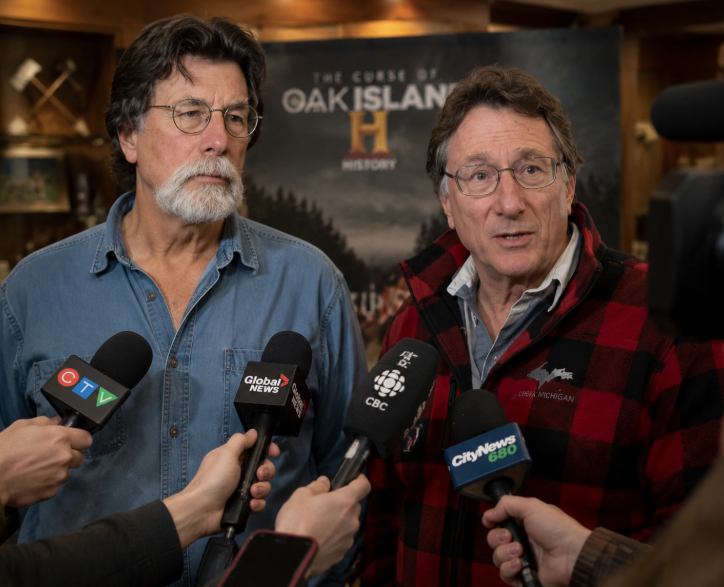
Despite temporary pauses for analysis, drilling at DN 11.5 is set to continue with additional core sampling planned to verify the extent of the void and surrounding material composition. Engineers have also proposed further angled probe drilling to determine whether adjacent structural anomalies connect into a larger underground system.
The team remains cautious but increasingly focused on the possibility that the Garden Shaft region may represent a convergence point for multiple engineered features.
CONCLUSION: A SEARCH ENTERING A NEW PHASE
While no definitive treasure discovery has been confirmed, the combination of void detection, engineered wooden structures, and trace gold presence has pushed the investigation into a more data-driven phase than ever before. The working hypothesis is shifting from isolated anomalies to a potentially connected subterranean system.
For now, the Oak Island team continues its methodical excavation, balancing scientific analysis with historical interpretation, as each new core sample brings them closer to answering one of the most enduring mysteries in North Atlantic exploration.
As summarized by the latest field report, the search is no longer just about what lies beneath—but about understanding the structure of what has been hidden all along.