Oak Island’s Latest Discovery: Buried Stone Tools and What They Could Mean for the Island’s Timeline
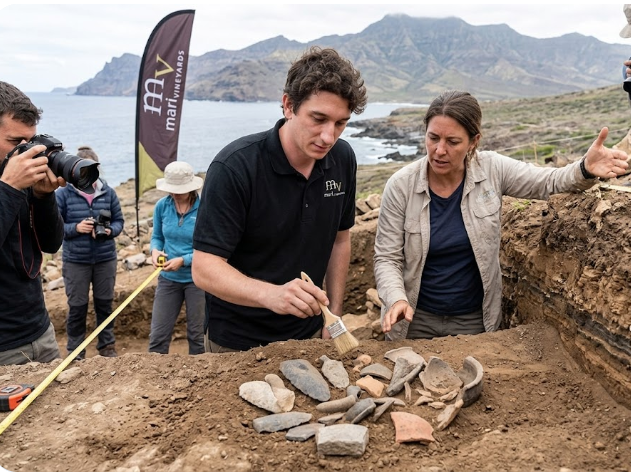
A newly reported discovery of stone tools buried beneath ancient soil layers behind Oak Island is beginning to reshape how both researchers and viewers interpret the island’s long-standing mystery. While The Curse of Oak Island has traditionally focused on engineered features—shafts, tunnels, and possible treasure vaults—this find introduces a different category of evidence: human activity that may predate the complex constructions typically associated with the Money Pit.
From a programme analysis perspective, this development has the potential to significantly alter the narrative direction of the series, shifting attention from singular treasure theories toward a broader, multi-layered history of occupation and use.
A Different Kind of Evidence
Stone tools, if verified as authentic and contextually undisturbed, represent one of the most fundamental indicators of human presence. Unlike coins or metal artifacts, which often point to trade or specific historical periods, lithic tools can span vast timelines—from prehistoric activity to early colonial adaptation.
What makes this discovery particularly compelling is its reported location: beneath an ancient soil layer, behind the main island zone that has dominated excavation efforts for decades. This suggests that the tools may not be directly linked to the known search areas, raising the possibility that Oak Island was used long before the engineered features associated with treasure narratives were constructed.
For the Lagina team, this introduces a new line of inquiry. Rather than asking only who built the Money Pit, the question becomes: who was present on or around the island before those structures existed?
Stratigraphy and the Question of Age
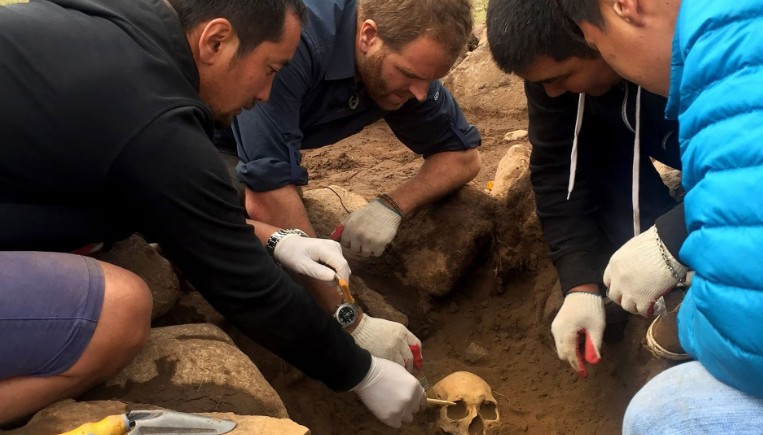
The key to interpreting this find lies in stratigraphy—the layering of soil and materials over time. If the tools were indeed recovered from a sealed or undisturbed layer, their depth could provide crucial information about their age.
In The Curse of Oak Island, the team has increasingly relied on scientific methods, including carbon dating, dendrochronology, and geochemical analysis. A similar approach will likely be applied here. Organic material found in association with the tools—such as charcoal or plant remains—could be used to establish a chronological framework.
If the dating places these tools significantly earlier than known European activity in the region, it would support the theory that Indigenous populations or early transient groups utilized the island or its surrounding areas.
However, if the tools align with early European settlement periods, they could represent a preparatory phase—evidence of initial exploration or resource extraction before larger-scale engineering began.
Expanding the Historical Narrative
One of the recurring challenges in The Curse of Oak Island has been reconciling multiple lines of evidence that point to different time periods. Coins, wood samples, and structural elements have often produced dates spanning several centuries, leading to competing theories about the island’s history.
The introduction of stone tools adds another layer to this complexity. Rather than contradicting existing theories, it may support the idea that Oak Island was used repeatedly across different eras, each leaving its own imprint.
From a storytelling standpoint, this is significant. It allows the programme to move beyond a single-origin narrative and instead explore Oak Island as a site of continuous or episodic human activity.
This shift could broaden the scope of the investigation, incorporating archaeological perspectives alongside traditional treasure-hunting methods.
Potential Links to Known Features
A key question moving forward will be whether the stone tools can be connected to any of the island’s known features. If similar materials or tool marks are identified in excavation sites—such as the Money Pit, the swamp, or areas like Lot 8—it could suggest continuity between early activity and later construction phases.
Alternatively, the tools may represent an entirely separate phase of use, unrelated to the engineered structures that have defined the show’s central mystery.
Either outcome carries implications. A connection would strengthen the argument for a long-term, evolving project on the island, potentially involving multiple groups over time. A lack of connection would reinforce the idea that Oak Island’s history is more fragmented, with distinct episodes of activity that may not be directly linked.
Scientific Validation and Skepticism
As with any major discovery on the show, verification will be critical. Stone tools can sometimes be misidentified, particularly in environments where natural rock fractures mimic human modification.
The involvement of archaeologists and specialists will be essential in confirming whether the objects display clear signs of intentional shaping, use-wear patterns, or other diagnostic features.
Additionally, the context of the find—whether the tools were recovered in situ or from disturbed soil—will influence how much weight can be placed on the discovery.
From an analytical standpoint, the show’s credibility will depend on how rigorously these questions are addressed.
Predictions for Upcoming Episodes
If the discovery is validated, several developments are likely:
- Expanded archaeological focus: The team may allocate more time and resources to exploring areas beyond the traditional search zones.
- Integration of new experts: Specialists in lithic analysis and early human activity could be introduced to provide deeper insight.
- Reassessment of timelines: Existing theories may be revisited in light of evidence suggesting earlier occupation.
- Narrative diversification: Episodes may balance treasure-focused exploration with broader historical investigation.
These shifts would represent a natural evolution of the series, reflecting its increasing reliance on scientific analysis.
Conclusion: A Broader Mystery Emerges
The discovery of stone tools beneath ancient soil layers behind Oak Island does not provide immediate answers. Instead, it expands the scope of the mystery, introducing new questions about who was present on the island and when.
For The Curse of Oak Island, this represents both a challenge and an opportunity. The challenge lies in integrating new evidence without losing narrative cohesion. The opportunity lies in deepening the investigation, moving beyond the search for a single hidden treasure toward a more comprehensive understanding of the island’s past.
In that sense, the tools themselves may be less important than what they represent: a reminder that Oak Island’s story is likely more complex—and more layered—than any single theory can fully explain.