Oak Island’s Lot 5 Explosion: Ancient Coins, British Pottery, and Shipbuilding Clues Rewrite the Mystery Once Again
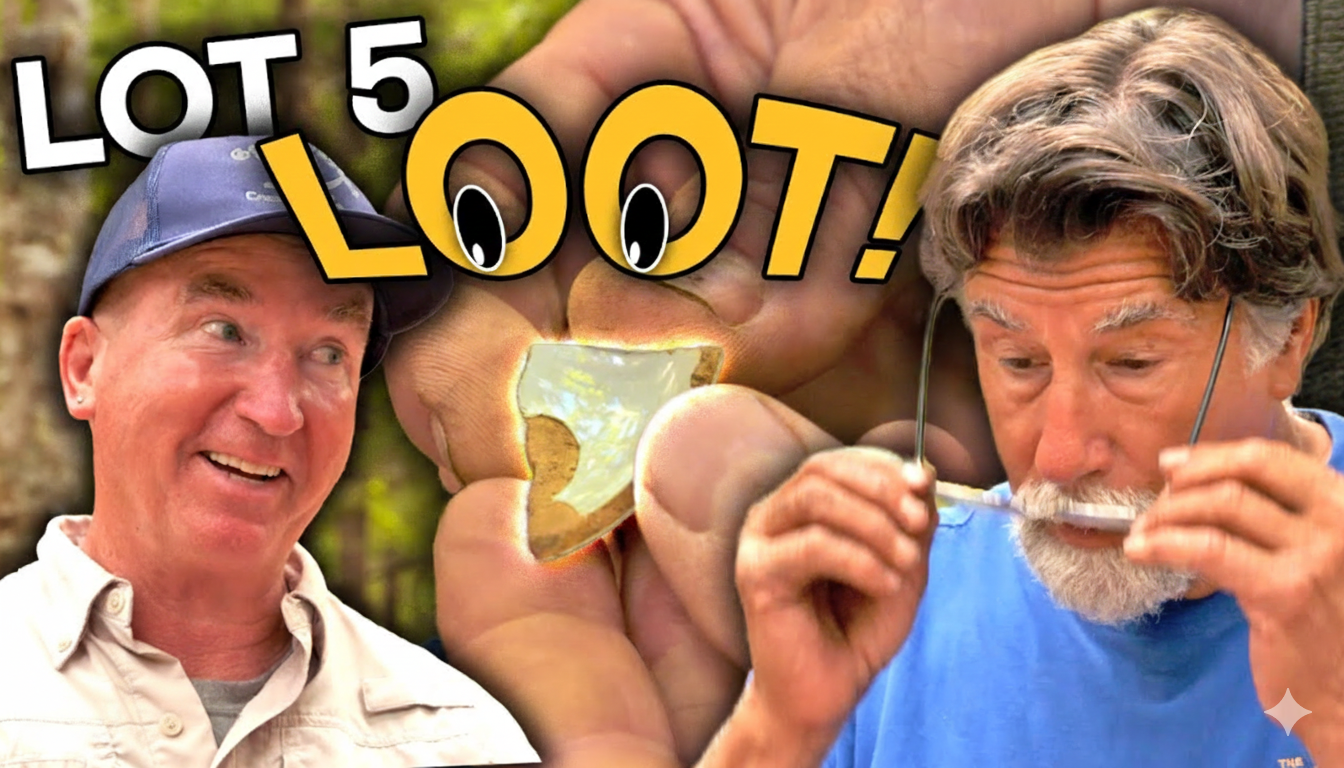
For years, Lot 5 sat at the edge of Oak Island lore — privately owned, largely inaccessible, and treated as one of the island’s lingering blind spots. Although Robert Young spent decades working the land alongside surveyor Fred Nolan, modern tools and archaeological precision had never been applied to the property. That changed the moment Rick and Marty Lagina purchased the lot. And now, in just a matter of days, Lot 5 has erupted into one of the most significant archaeological hotspots in the island’s recent history.
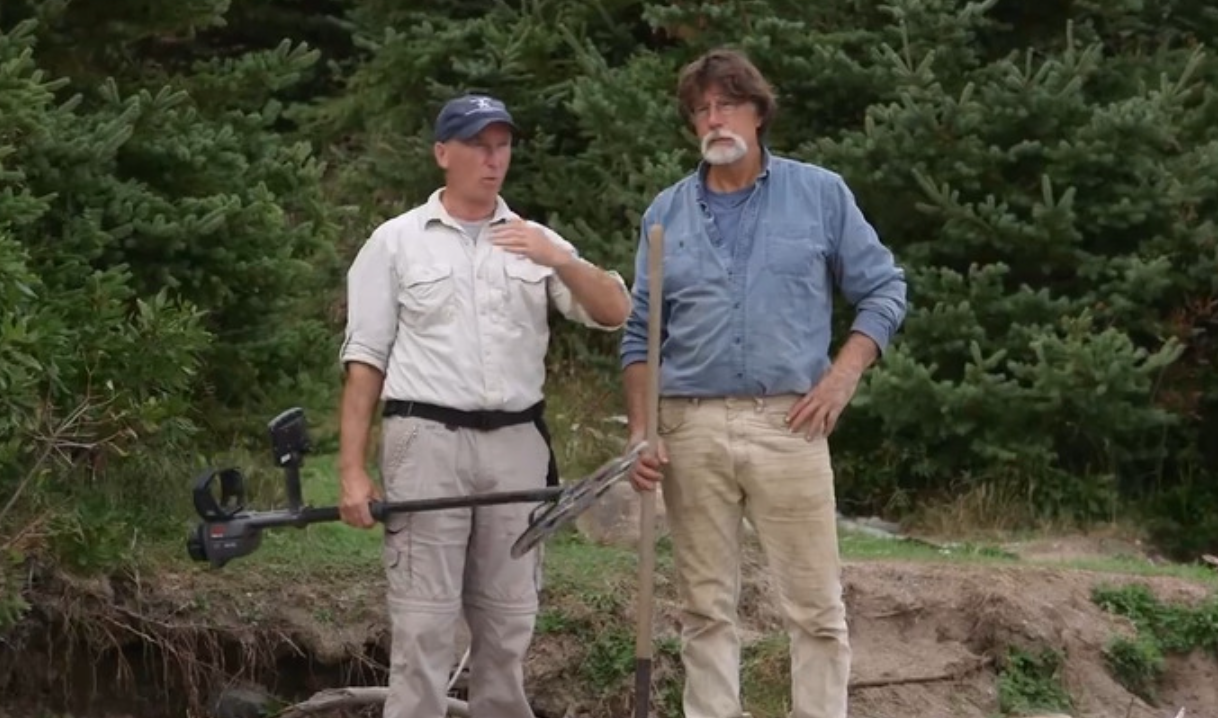
On a cool morning filled with anticipation, Rick Lagina, Gary Drayton, and archaeologist Laird Niven walked through the trees toward the newly acquired land. Rick’s excitement was visible.
“I’ve been waiting for this day for a very long time,” he admitted.
Gary nodded. “Am I ecstatic? Absolutely. The opportunity for answers is 100%.”
For a team used to dead ends and half-clues, gaining unrestricted access to a site long tied to Oak Island legend felt momentous. “It’s like being given the keys to the family car,” Rick joked. “I didn’t think this day would ever happen.”
What followed would prove worth the wait.
A Coin That Stops Everyone in Their Tracks
As Gary began sweeping the ground with his detector, early signals proved unremarkable — survey markers, rocks, bits of iron. But deeper into the interior of Lot 5, the tone of his detector changed, sharper and richer.
“Oh, that sounds better,” Gary called out.
Moments later, Rick brushed away soil and lifted a thin, patinated object. Gary’s hands shook.
“That’s a cut coin, mate. And not a modern one.”
Hammered coins — produced by striking metal blanks with engraved dies — began in the first millennium BC and remained common until the 15th century. Machine-struck coins replaced them in Europe long before North America was colonized. A hammered coin on Oak Island suggests activity centuries older than the discovery of the Money Pit.
“This is the kind of find you’d expect to pull up in Europe,” Gary explained. “It’s gorgeous. It’s old. And it’s absolutely special.”
Rick placed it into a top-pocket evidence bag. Their next stop: the interpretive lab.
A 1500s Coin — and a Serious New Timeline
Inside the lab, archaeologist Emma Culligan and Laird Niven examined the coin under magnification. Emma then ran it through X-ray fluorescence scanning (XRF), a process revealing the metal’s composition.
“It looks mainly copper,” she explained, “with tin, some iron… and arsenic.”
The presence of arsenical bronze stunned the room. This alloy declined sharply after the 1500s and had vanished entirely from coinage by the 1700s.
“That makes it old,” Emma confirmed. “This type of bronze doesn’t appear past a certain date.”
Rick leaned back, absorbing the moment. “So we’re crafting a story here — a texture that suggests early activity.”
With a similar arsenical bronze artifact found previously on Lot 7, and now another appearing on Lot 5, the evidence is stacking up: someone was here in the 1500s — or earlier.
Lot 5 Opens Up — And the Ground Begins to Speak
Returning to the field, Gary and Rick resumed their systematic sweep. And Lot 5 delivered once again.
A deep signal produced a heavy, blade-like tool, blackened with age. “This has all the characteristics of something really old,” Gary said. If it was a tool, why was it buried so far down? And who used it?
Then everything changed.
Fragments of ceramic pottery — glazed, decorated, and unlike anything previously seen on Oak Island — emerged from the soil. When Laird and fellow archaeologist Helen Sheldon arrived to inspect the pieces, the response was immediate.
“That’s press-molded pottery,” Helen noted. “This design starts around 1740. The ceramic itself is early 1700s.”
British. Decorated. Expensive.
And impossible to ignore.
But the most dramatic moment came minutes later, when Miriam Amiro uncovered a piece of delicate blue-and-white tin-glazed pottery.
“Delftware,” Helen said with certainty. “English. Mid-1700s.”
Two distinct ceramic types — neither ever found elsewhere on the island — both from early 18th-century England and emerging from a rock-filled feature of unknown purpose.
Suddenly, the past was no longer theoretical. It was tangible.
Shipbuilding Evidence Raises the Stakes Again
Before the archaeologists could process the pottery discoveries, Gary and Rick uncovered yet another startling artifact — a large, heavy copper nail with a rose head.
Copper nails resist corrosion in salt water and were commonly used in boat construction. For an island already associated with possible ship activity — from wooden structures in the swamp to ancient decking spikes — this nail fit a pattern that is rapidly intensifying.
“We don’t find these every day,” Gary said. “This is boat-building material.”
Combined with early English ceramics, arsenical bronze artifacts, and a hammered coin of potential 16th-century origin, Lot 5 is starting to resemble more than a domestic site or campsite. It may have been a staging area — or something far more strategic.
A New Center of Gravity in the Oak Island Mystery
As the archaeologists expanded the excavation, the signs of a large, deliberate feature emerged. Rocks placed with intent. Artifacts appearing consistently deep. No evidence of modern contamination.
“Lot 5 is something significant,” Rick concluded. “Either historically — or in terms of our treasure hunt.”
Marty agreed. “It changes the game.”
With every bucket of soil and every flagged signal, Lot 5 is revealing that Oak Island’s story stretches further back — and involves far more people — than previously imagined.
And the team is nowhere near finished.
“Leave no stone unturned,” Rick said, stepping back into the trench.
For once, the ground seems ready to comply.