Oak Island’s Secret Chamber Opens – $200M Treasure Chest Finally Found!
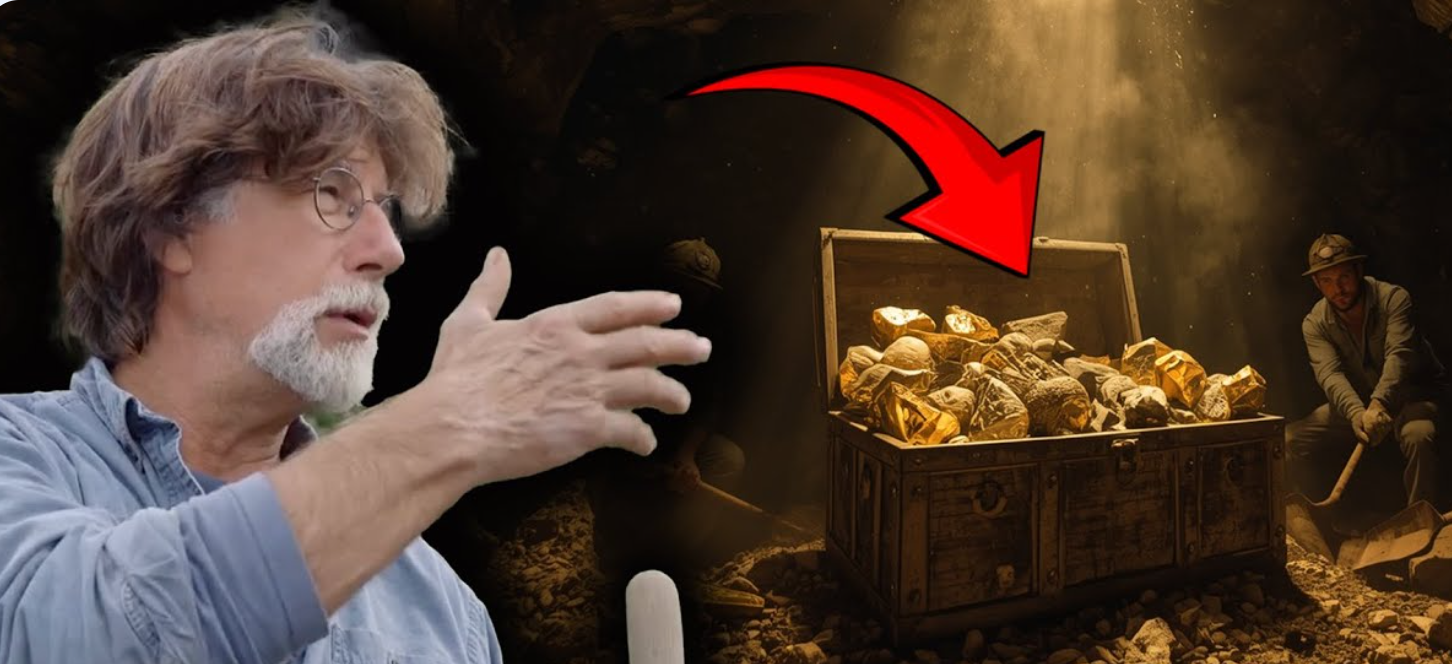
For more than two centuries, Oak Island has occupied a unique place in North America’s historical imagination—a windswept patch of land off the coast of Nova Scotia where legend, persistence, and frustration have long collided. Now, after months of intensive excavation during the 2025 season of The Curse of Oak Island, the team led by Rick Lagina believes it has reached the most consequential stage of the search yet.
What began as another cautious probe into familiar ground has escalated into a discovery that even seasoned team members struggled to process. After six months of near-continuous work, more than 1,500 tons of sediment removed, and repeated battles with flooding and mechanical failure, the team confirmed the presence of a sealed subterranean chamber beneath the Money Pit area—one that appears deliberately constructed and untouched for centuries.
A Chamber That Refused to Reveal Itself Easily
The discovery did not arrive in a single dramatic moment. Instead, it unfolded gradually through patterns of failure, reassessment, and renewed strategy. Early ground-penetrating radar and magnetometer readings hinted at a void nearly 120 feet below the surface, but previous attempts to access the area had collapsed under pressure from water intrusion and unstable geology.
Rather than abandoning the site, Rick Lagina made an unconventional decision: to map not only successful digs, but every failed shaft and collapsed borehole. When overlaid, these data points revealed a curved geological anomaly—one that redirected the team toward a section previously dismissed as too unstable to pursue.
That recalibration proved critical. In early September 2025, core samples struck smooth, worked stone rather than natural bedrock. Sensors registered metallic density inconsistent with surrounding layers, and microscopic gold particles appeared in the slurry—too refined to be incidental.
Architecture, Not Accident
By mid-October, remotely operated cameras confirmed what the team had long speculated but never proven: the chamber was not a random cavity. Its interior walls were formed from evenly cut stone blocks, each approximately four feet wide, arranged with geometric precision. At the center of the chamber lay a gold-forged cross embedded into the floor, surrounded by aligned metallic objects resembling chests.
“It’s not just treasure,” Rick Lagina remarked quietly during the initial feed. “It’s architecture.”
Estimates based on density readings suggested a mass exceeding 2,000 kilograms of non-ferrous material, likely gold. Later analysis refined those figures, indicating roughly 450 kilograms of recoverable gold, alongside more than 2,000 artifacts—coins, tools, and carved objects spanning multiple historical periods.
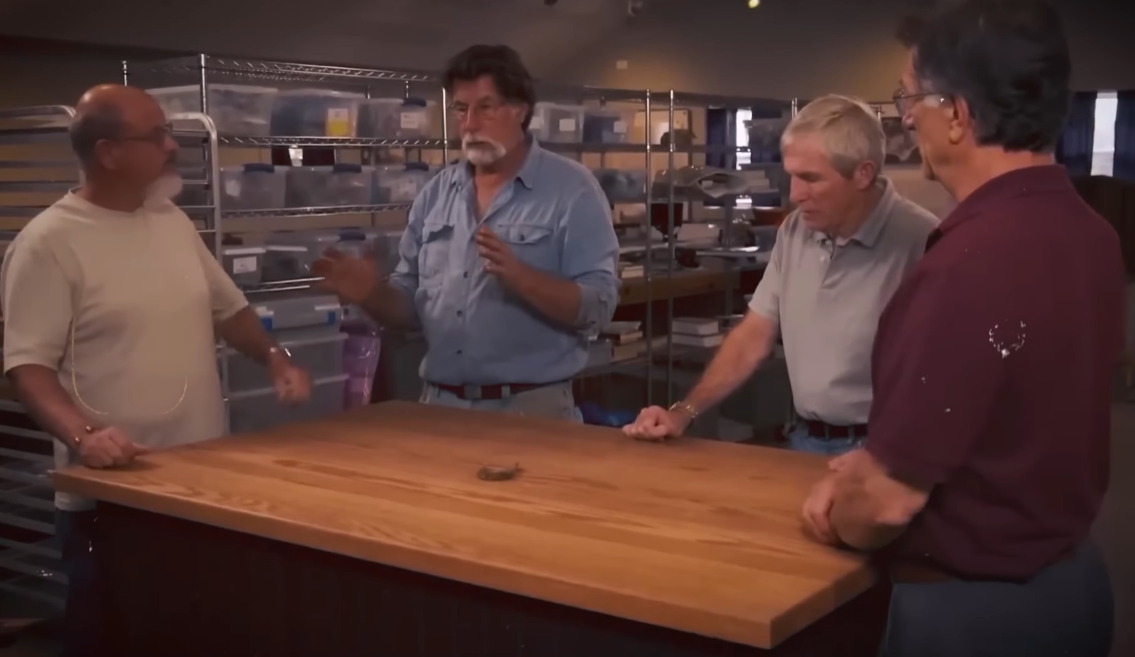
Nature Pushes Back
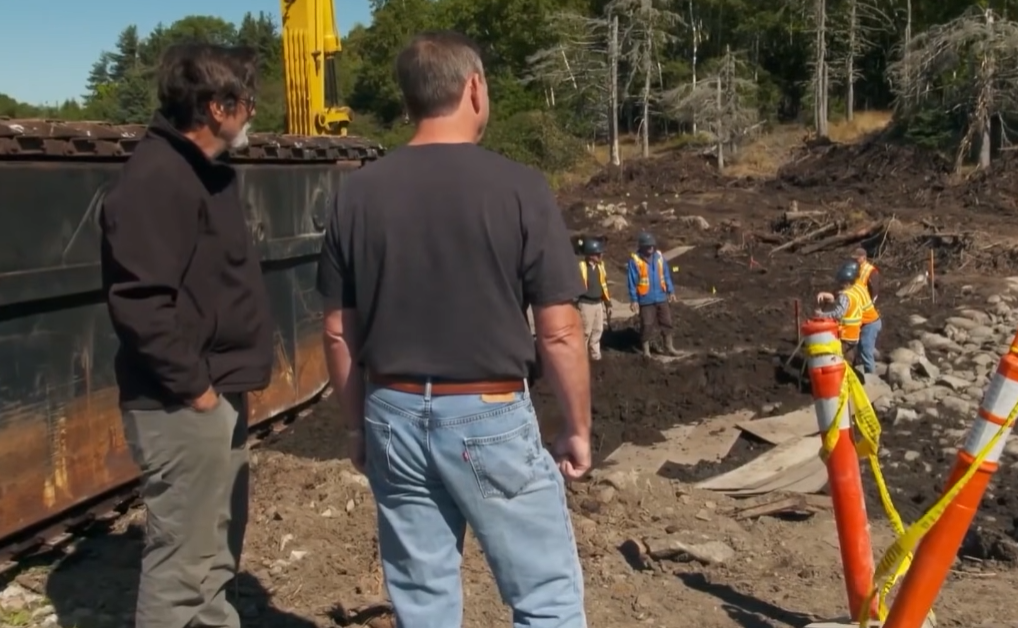
As with nearly every chapter in Oak Island’s history, progress came at a cost. Sudden storms dumped more than 45 millimeters of rain in a single afternoon, overwhelming pumps that were already moving over 3,200 liters of water per hour. Excavation walls collapsed, machinery failed, and weeks of work vanished beneath muddy floodwater.
Yet the setback proved temporary. Within days, the team reengineered drainage systems, reinforced retaining walls, and resumed work—this time uncovering a richer pay layer at 122 feet, with gold concentrations more than double previous averages.
A massive gold-veined boulder weighing over 500 kilograms emerged shortly thereafter, its placement suggesting deliberate positioning rather than natural deposition. The boulder alone contained an estimated 45 kilograms of gold and appeared to sit atop a constructed floor, acting almost as a marker—or a guardian—of what lay below.
More Than Monetary Value
By late November, reinforced access platforms allowed the team to retrieve several sealed chests from the chamber. When opened under controlled conditions, they revealed gold coins, bars, and ceremonial artifacts whose combined value exceeded $200 million at current market rates.
Yet for the Lagina brothers and their crew, the significance extended beyond financial valuation. The artifacts pointed to Oak Island’s use as a structured storage site—possibly by early European mariners, displaced royal factions, or organized groups seeking secrecy rather than conquest.
Maps, tools, and carvings recovered alongside the gold suggest intent, planning, and continuity across generations. Oak Island, it appears, was not merely a hiding place, but a system.
The Legacy of the Hunt
As the final gold pour took place under floodlights—molten metal glowing against the November fog—Rick Lagina reminded the team that the journey itself carried lasting meaning.
“Oak Island didn’t just test our luck,” he said. “It tested our patience, our resolve, and our respect for history.”
With more than 1,500 man-hours invested, thousands of artifacts cataloged, and one of the most substantial discoveries in the island’s history confirmed, the question now shifts from whether Oak Island held a secret to what that secret ultimately represents.
The island has spoken—but as always, it has left just enough unanswered to ensure the story is far from over.