Old World Shadows, New World Clues: Why the Templar–Viking Trail Matters More Than Ever on The Curse of Oak Island
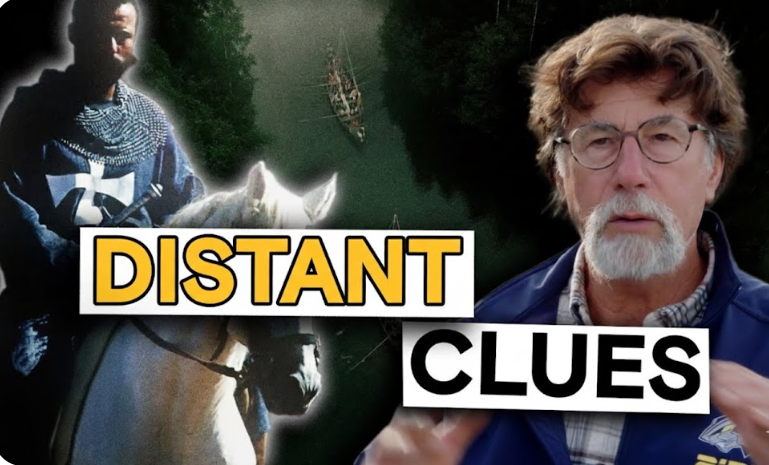
For years, The Curse of Oak Island has balanced between speculation and science, between legend and laboratory data. Yet the recent transatlantic investigation led by Rick Lagina and his team feels markedly different. This is not another symbolic detour or coincidence-driven theory. Instead, it represents one of the most coherent attempts yet to connect Oak Island to a wider medieval network spanning Europe and the North Atlantic.
The journey begins far from Nova Scotia, inside the cold stone walls of Valkenburg Castle in the Netherlands. Once a prison during the suppression of the Knights Templar in the early 14th century, the castle is more than a dramatic backdrop. The dungeon engravings examined by the team—particularly the four-dot cross and the so-called “goose paw”—are not random carvings. These symbols have appeared repeatedly along the Oak Island research trail, including in Nova Scotia itself.
From an analytical standpoint, this matters because symbols gain significance not from singular appearances, but from repetition across time and geography. When identical markings surface in Templar prisons, European coastal sites, and near Oak Island, coincidence becomes a weaker explanation. Instead, the evidence suggests a shared symbolic language—one that may have been used by groups operating in secrecy under extreme pressure.
That pressure was very real. Following the mass arrests ordered by King Philip IV of France in 1307, the Templars faced extinction. If they possessed valuable religious or political artifacts, relocation—not defense—would have been the rational strategy. But relocation required maritime capability, navigational knowledge, and trusted allies. This is where the Viking connection enters the narrative not as fantasy, but as logistics.
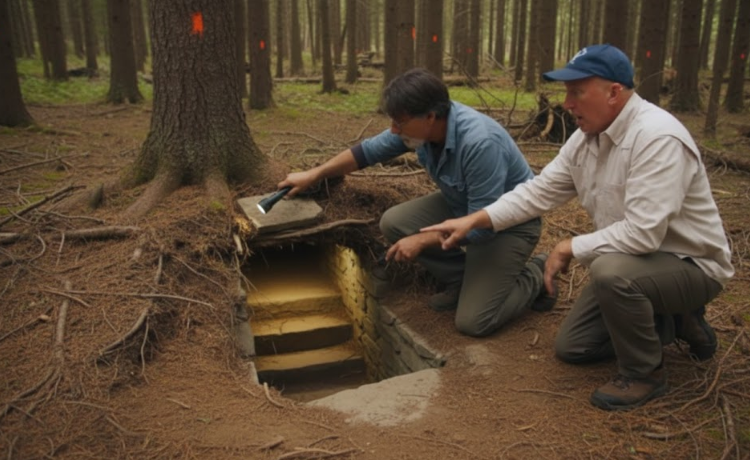
The team’s next stop in Denmark strengthens this possibility. At the Ladby Viking Museum, a medieval arrowhead found decades ago on Oak Island is assessed by Scandinavian experts. The conclusion is measured but important: the artifact’s form, metallurgy, and date range are fully consistent with Viking-era weaponry, extending into the 12th and 13th centuries. This does not prove Viking presence on Oak Island, but it aligns with multiple data points already recovered—stone structures, carbon dates, and tool fragments that predate known British colonial activity.
Crucially, this is where the show’s narrative matures. Rather than claiming Vikings or Templars “were definitely there,” the team asks a more precise question: could Norse descendants have provided transportation and navigational support to fleeing Templars? Historically, the answer is plausible. The Norse were proven Atlantic navigators centuries before Columbus, and their trade networks extended deep into Europe, including regions under Church influence.
That theoretical bridge becomes more tangible in Newfoundland at L’Anse aux Meadows, the only verified Viking settlement in North America. Archaeological evidence confirms Norse presence around the year 1000, including ironworking facilities and imported materials. Even more compelling is the discovery of butternuts—plants that do not grow in Newfoundland but are native to regions as far south as Nova Scotia. This single fact quietly reshapes the map. It proves that Norse explorers traveled well beyond their known settlement, likely along the same Atlantic corridor that leads directly to Oak Island.
From an analytical lens, L’Anse aux Meadows functions as a confirmed waypoint, not an endpoint. If Norse expeditions moved seasonally between northern base camps and southern resource zones, Oak Island falls comfortably within that operational range. Add to this the medieval dates emerging from Oak Island artifacts, and the theory gains structural integrity.
What elevates this storyline further is the metallurgical work conducted by Emma Culligan. XRF testing suggests the arrowhead composition predates post-medieval European alloys. Combined with discussions of bog iron—a material widely used by Vikings and found in swamp environments similar to Oak Island—this opens the door to comparative analysis that could either confirm or rule out Scandinavian origin through hard data.
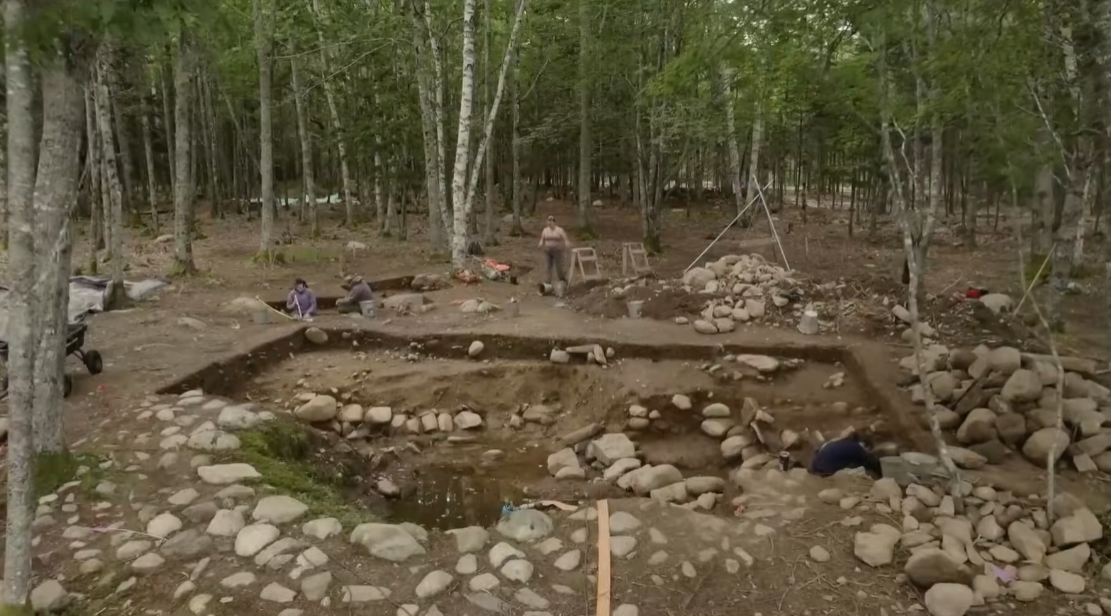
From a program analysis perspective, this arc represents a strategic pivot for The Curse of Oak Island. Rather than chasing singular “treasure” outcomes, the show is increasingly framing Oak Island as a node within a much larger medieval system—one involving movement, secrecy, and survival. That reframing is important. It allows progress to be measured not only by gold recovered, but by historical clarity achieved.
Looking ahead, the implications are significant. If future testing links Oak Island iron artifacts directly to Scandinavian bog ore signatures, or if additional symbols align with known Templar prison markings, the investigation may cross a threshold. At that point, Oak Island would no longer be an isolated mystery, but part of a documented transatlantic narrative predating conventional history.
Whether this ultimately leads to a physical vault or not, the trajectory is clear. The Oak Island mystery is narrowing, not expanding. And for the first time in many seasons, the convergence of archaeology, metallurgy, symbolism, and geography suggests the answers may lie not in speculation—but in synthesis.