SMITH’S COVE BREAKTHROUGH: MASSIVE EXCAVATION REVEALS ANCIENT STRUCTURES AND POTENTIAL GOLD
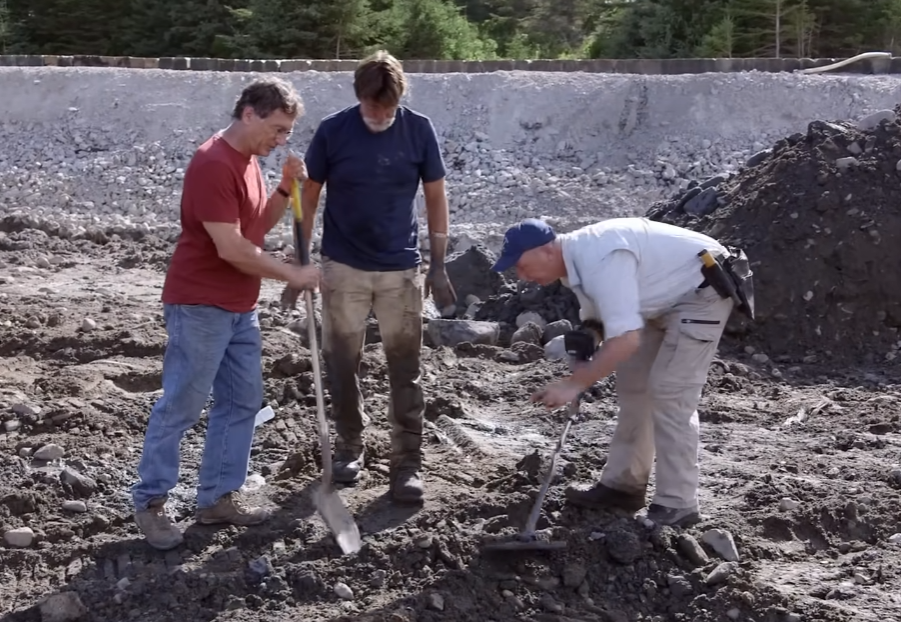
The 223-year-old mystery of Oak Island has entered a high-stakes new chapter this week as brothers Rick and Marty Lagina initiated a massive excavation of Smith’s Cove. Following the successful construction of a 525-foot steel cofferdam, the team has begun unearthing the nearly 12,000-square-foot area, revealing a labyrinth of man-made structures and a series of artifacts that could redefine the timeline of the island’s legendary “Money Pit.”
The “Top Pocket” Discovery
The week began with a surge of adrenaline as metal detection expert Gary Drayton and Rick Lagina explored the area near the northwestern end of the cofferdam. Their target: the “U-shaped structure,” an enigmatic timber formation first documented by Dan Blankenship in 1971.
During the sweep, Drayton recovered a heavy, gold-colored object. Initial field analysis suggests the item may be a coin; however, the lack of a “milled edge” has sparked intense speculation. In numismatics, the absence of milling often indicates a strike date prior to the mid-18th century, potentially predating the 1795 discovery of the original Money Pit. “It looks gold-plated… I can see sparkles,” Drayton noted, labeling the item a “top-pocket find” as it was rushed to the lab for cleaning and verification.
Floods and Hidden Foundations
As heavy equipment operator Billy Gerhardt pushed deeper into the beach, a new structural enigma emerged. Beneath a crane pad, the team discovered a series of timbers buried a foot deep, accompanied by a significant rush of seawater.
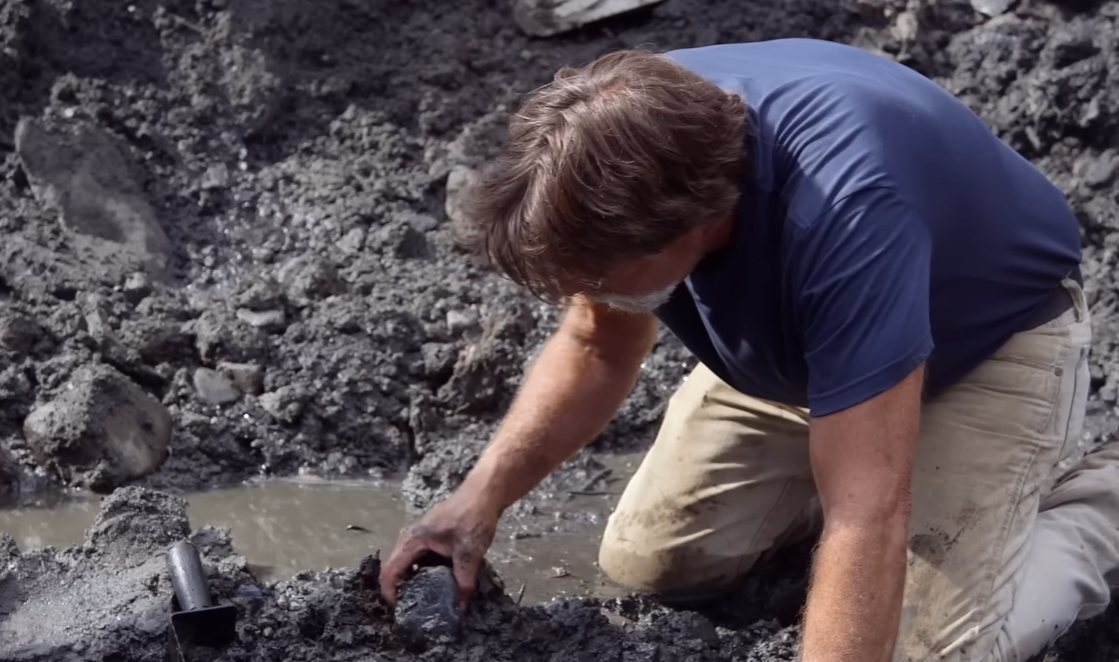
Geologists and historians on-site are debating whether these planks represent the remnants of a previous searcher’s attempt to block the sea or the “Holy Grail” of Oak Island engineering: the man-made flood tunnel. This notorious hydraulic trap is believed to feed seawater from the cove into the Money Pit to protect the treasure vault. “Something’s really opened the floodgates now,” Rick Lagina observed, eyeing the water pouring through the wooden braces.
Relics of the Knights Templar?
The search for artifacts near the cove’s rock pools yielded a lead object shaped like a spoon handle and a decorative brass piece, possibly salvaged from an ancient shipwreck. These finds were recovered in the same vicinity as a lead cross found days earlier—a cross that many theorists link to the medieval Knights Templar.
The team expanded their search, digging four feet into the shoreline to recover a heavily encrusted iron “conglomerate.” Laboratory analysis by archaeometallurgist Emma Culligan revealed the object to be a cast-iron stove door featuring a unique “starburst” design. While the manganese content suggests a mid-18th to mid-19th-century origin, the starburst pattern matches a medieval-style button found on Lot 5, suggesting a recurring symbolic theme across the island.
Chasing the Restall Legacy
The week concluded with a targeted search for the “Vertical Shaft,” a site where the Restall family famously attempted to intercept the flood tunnels in 1961. After clearing several feet of silt, the team uncovered large boards and modern fasteners, including a beveled spike and 20th-century nails.
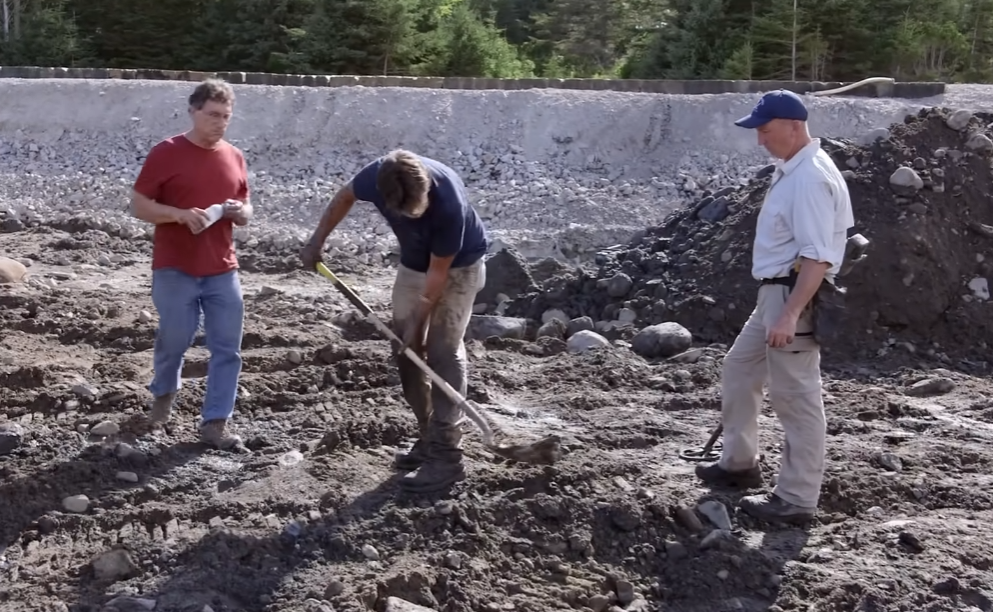
Craig Tester and Rick Lagina believe these artifacts confirm the location of the Restall shaft, providing a vital “X” on the map. By following this modern trail, the team hopes to finally bypass the searcher debris and locate the original, pre-1795 flood tunnel.
“This story is complex, and it needs to be told,” Rick Lagina stated. “Whether it be the searcher story or the original depositional story, it’s all important.”