THE BREAKTHROUGH: LEAKED PRODUCTION DATA SUGGESTS OAK ISLAND VAULT LOCATED
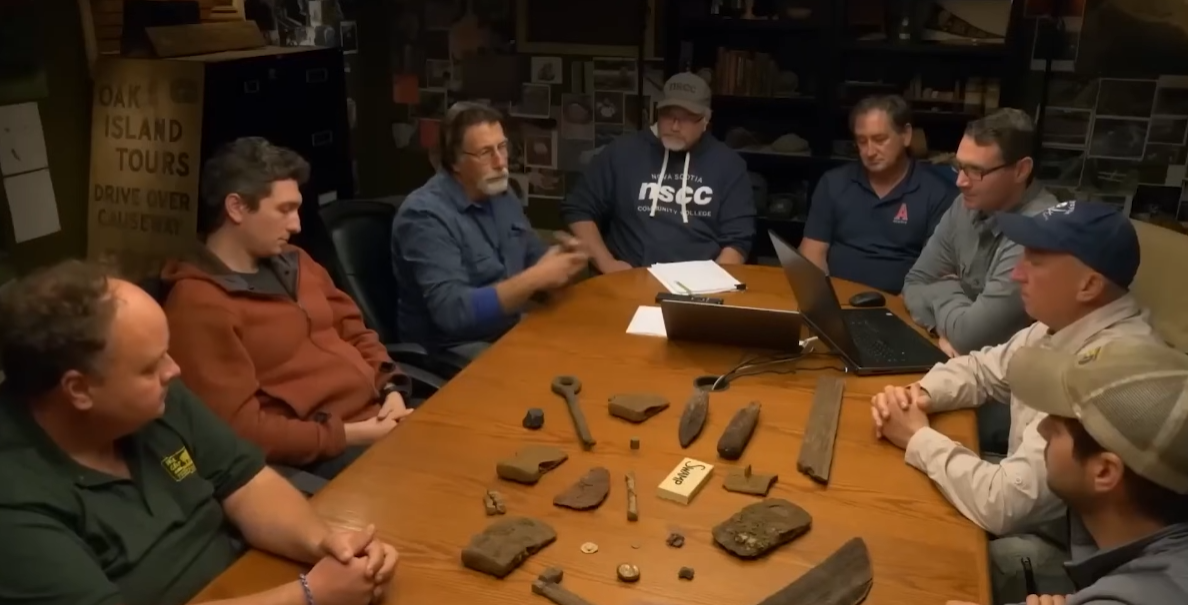
After 229 years of broken shovels and dashed hopes, the “Curse of Oak Island” may have finally met its match. Leaked production details from the upcoming episodes of Season 13 suggest that Rick and Marty Lagina have pinpointed a sealed underground structure nearly 100 feet beneath the surface—one that is reportedly emitting metallic signatures more powerful than any detected in the history of the modern search.
While the show is currently on a mid-season hiatus, the “War Room” is buzzing with news of what insiders are calling “the primary vault.” The discovery comes at a critical juncture for the fellowship, as they navigate a logistical minefield involving expiring government permits and the imminent dismantling of the Smith’s Cove cofferdam.
The Mercury Shield: A Rosicrucian Clue?
One of the most startling revelations of the season involves a lead artifact recovered from Lot 17. Scientific analysis conducted by Dr. Chris McFarland revealed a bewildering chemical cocktail: lead mixed with mercury and tin.
The presence of mercury has sent the team’s historical researchers into a frenzy. Theorists point to Sir Francis Bacon—the 17th-century polymath and rumored leader of the Rosicrucians—who allegedly developed a method of using mercury to preserve and protect valuable documents. This discovery has reignited the “Shakespearean Manuscript” theory, suggesting that the vault may hold original works of the Bard, shielded for centuries by a toxic mercury barrier.
High-Stakes Engineering at Smith’s Cove
The breakthrough in the uplands near Smith’s Cove was punctuated by a dramatic mechanical event. While excavating a suspected tunnel, the team struck a high-pressure water source that “burst upward like a geyser,” temporarily halting the dig.
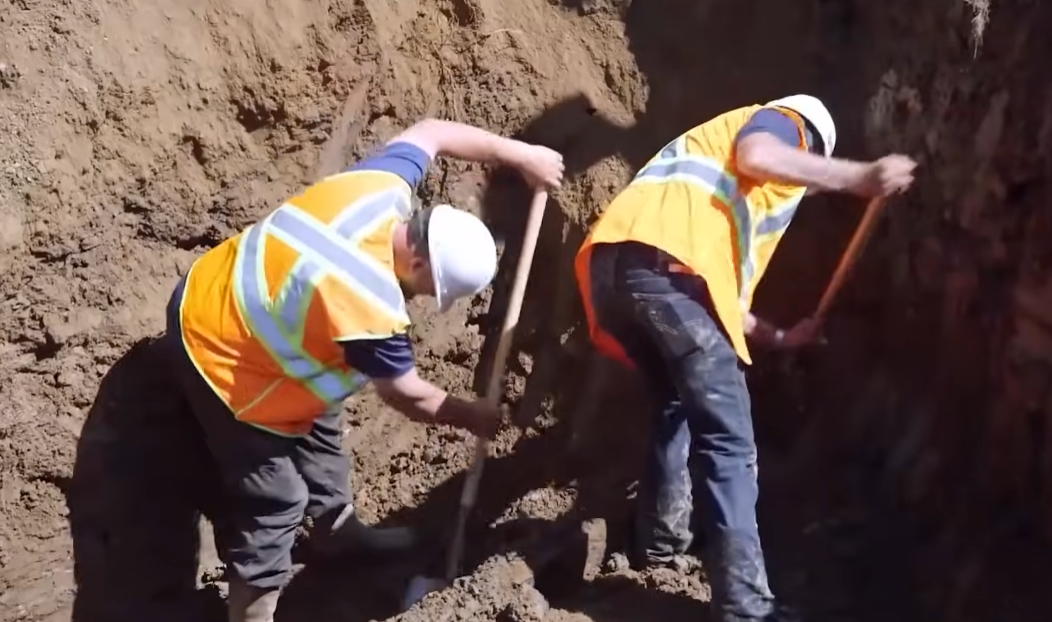
“We believe this is the primary flood tunnel,” Rick Lagina noted. The timing, however, is precarious. Marty Lagina confirmed via a high-level conference call with Irving Equipment Limited that the government permit for the steel cofferdam expires in less than a month. The team faces a grueling three-week timeline to remove the massive metal sheets, a process that will force a complete suspension of work in the uplands for the remainder of the year.
The McGinness Legacy and the Medieval Blade
Archaeological efforts at the former residence of Daniel McGinness—one of the original discoverers of the Money Pit in 1795—have yielded what may be the oldest artifact ever found on the island. A bone-handled knife, described as “historic and ornate,” was recovered from a newly discovered stone foundation.
Lead archaeologist Laird Nevin suggested the blade is medieval in origin, further bridging the gap between the 18th-century “searcher” era and the 14th-century “builder” era associated with the Knights Templar. Ground scans near the foundation also revealed a “trap door” and a secret cellar, leading to speculation that McGinness may have possessed intimate knowledge of the pit’s contents long before the official history began.
A Race Against the Clock
As heavy machinery operator Billy Gerhardt pushes past the 30-foot mark in the search for the U-shaped structure’s origin, the fellowship finds itself at a crossroads. Every bucket of earth now brings forth wood inscribed with the year “1769” and hand-hewn timbers that match pre-discovery engineering.
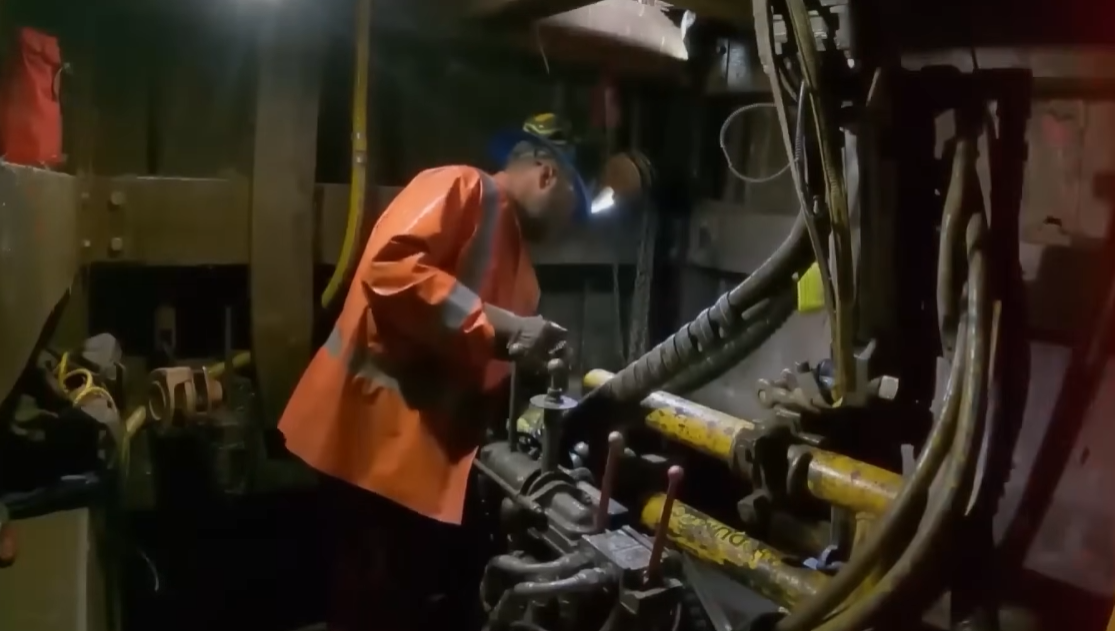
The latest leaked data suggests that the team is no longer asking if the treasure exists, but how to extract it before the winter freeze and government restrictions lock the island once more. For the Lagina brothers, who have spent over a decade and millions of dollars on the quest, the “sealed structure” 100 feet down represents more than gold—it is the final chapter of a 200-year-old mystery.