OAK ISLAND’S MILLENNIUM BREAKTHROUGH: ANCIENT WELL PREDATES KNOWN HISTORY
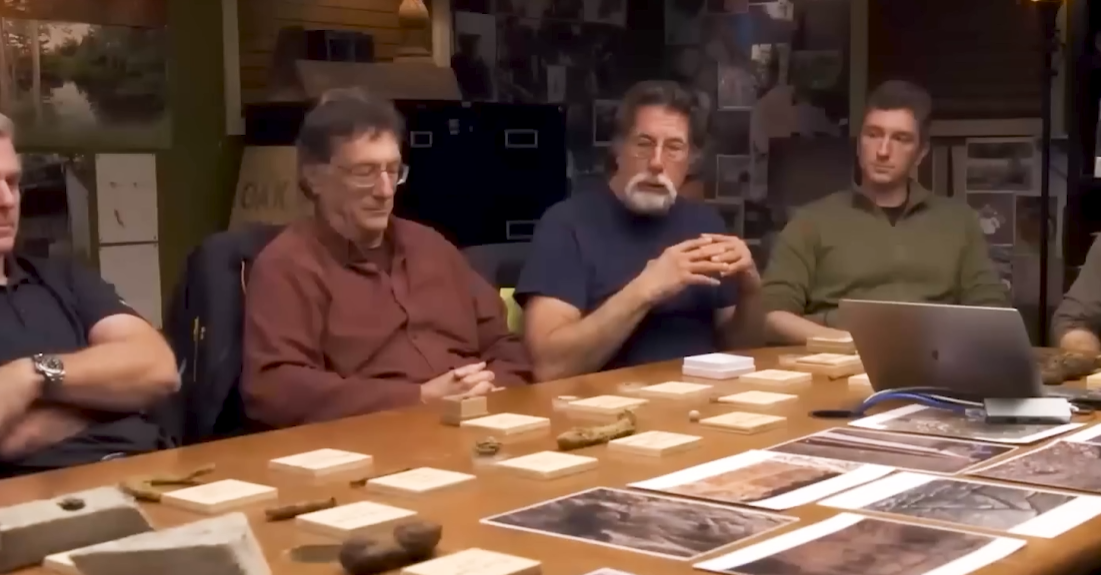
The 230-year-old mystery of Oak Island has undergone a seismic shift this week as scientific data confirmed human activity on the island nearly 700 years before the 1795 discovery of the “Money Pit.”
What began as a routine investigation into Lot 26 has culminated in a staggering chronological revelation: a man-made well that researchers now believe is the oldest structure ever identified on the island. Carbon dating performed on organic materials recovered from the depths of the structure returned a timeline between 1028 and 1172, placing its construction in the early medieval period.
The Well of Secrets
The well on Lot 26 first drew the team’s attention during previous winter seasons when it famously refused to freeze, even in sub-zero temperatures. This thermal anomaly led to a full-scale excavation, revealing a complex, large-scale masonry project far more sophisticated than a simple pioneer well.
Adding to the intrigue, water analysis within the shaft detected traces of silver, prompting the team to investigate potential connections to ancient maritime commerce. “This changes every assumption we’ve made,” noted one researcher. “If humans were engineering deep wells here a thousand years ago, Oak Island wasn’t a discovery of the 18th century—it was a destination.”
The “Hatch” and the Templar Map
Parallel to the work on Lot 26, the fellowship has made significant strides on Lot 5, formerly the property of the late treasure hunter Robert Young. The team has identified a circular stone depression measuring exactly 13 feet in diameter—a measurement that mirrors the original 1795 description of the Money Pit.
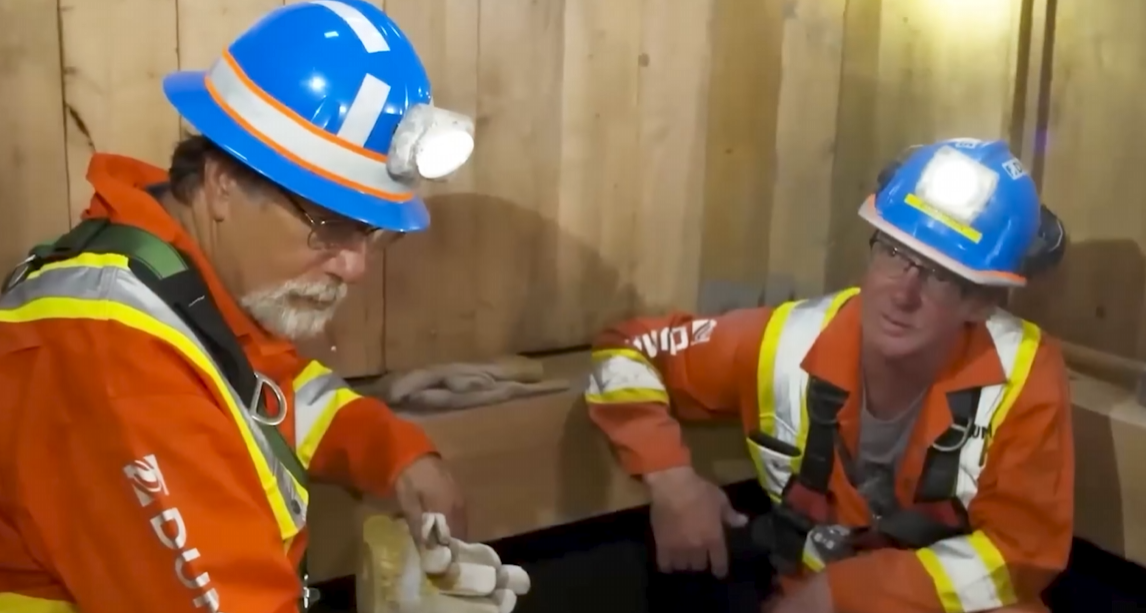
The site has already yielded a 2,000-year-old Roman coin and a lead barter token reminiscent of the 14th-century lead cross found in Smith’s Cove. These artifacts have reignited interest in the theories of the late Zena Halpern, who provided the team with a map allegedly created by the Knights Templar.
Modern investigators are now focusing on a specific landmark on Halpern’s map: “The Hole Under the Hatch.” Current theories suggest that the Garden Shaft, an 82-foot-deep structure recently rehabilitated by Duma Contracting, may be the very “hatch” referenced in the medieval document.
Gold in the Water
While the treasure vault remains elusive, the “War Room” has been buoyed by the most promising chemical evidence in the history of the hunt. Geoscientist Dr. Ian Spooner and hydrogeologist Dr. Fred Michael reported that water samples taken from the Garden Shaft and a nearby 95-foot-deep tunnel show the highest concentrations of gold ever detected on the island.
Further wood samples from the shaft have been dated to 50 years prior to the 1795 discovery, suggesting that the “Money Pit” system was a much older, more expansive industrial operation than previously recorded.
A Crossroads of History
For the fellowship, the mission has evolved from a simple quest for bullion into a high-stakes archaeological rescue of a lost era. With the discovery of 11th-century twigs, 14th-century tokens, and 18th-century engineering, Oak Island is no longer just a treasure site—it is a vertical timeline of the North Atlantic’s hidden history.

“We are standing at the intersection of legend and reality,” Rick Lagina remarked as the team prepared for the next phase of deep-bore drilling. “Every sample brings us closer to the truth, even if the truth is more complex than gold.”