Season 13 of Oak Island ends with a surprise — an unexpected discovery!
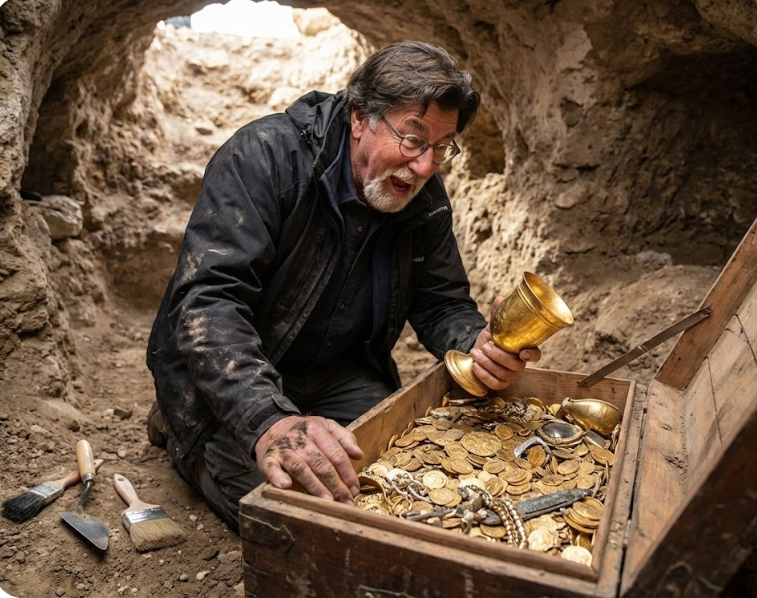
For more than two centuries, Oak Island has lured treasure hunters with whispers of buried wealth. In Season 13 of The Curse of Oak Island, the search appeared to edge closer than ever to a breakthrough. But instead of delivering a definitive treasure find, the latest episodes may have reframed the mystery entirely.
At the centre of the season’s most dramatic development was a new shaft known as “Cerberus,” engineered to push deeper into the Money Pit area than previous efforts such as the earlier “T-1” shaft. Led by brothers Rick Lagina and Marty Lagina, the team expanded both the search zone and the technology deployed underground.
Early weeks were punishing. Flooding halted progress. Mud, clay and debris from previous centuries of excavation complicated drilling. Yet incremental discoveries sustained belief: crafted metal artifacts, dated wood fragments and evidence suggesting activity on the island predating the 1795 discovery of the Money Pit.
The turning point came when advanced sonic drilling scans revealed an anomaly at depths exceeding 200 feet. The data indicated a defined void — almost rectangular in shape — in an area where no engineered structure had previously been confirmed.
“This is new,” geoscientist Dr. Ian Spooner remarked as the readings were reviewed in the War Room. The formation did not resemble natural solution cavities common in limestone terrain. It appeared structured.
A fibre-optic camera was lowered into the void. The footage, broadcast during the season’s final episodes, showed smooth, slab-like surfaces rather than rough bedrock. Observers described what looked like fitted stone blocks and a circular metallic feature embedded within one wall. Carved symbols — crosses, geometric shapes and celestial-like markings — were also noted.
The interpretation remains contentious.
Some experts consulted by the programme suggested the chamber’s materials could include basalt — a volcanic rock not native to Nova Scotia. If accurate, that would imply transport from elsewhere. Metallurgical speculation centred on whether the embedded metal plate could be composed of an unusual alloy historically used for symbolic or ceremonial objects.
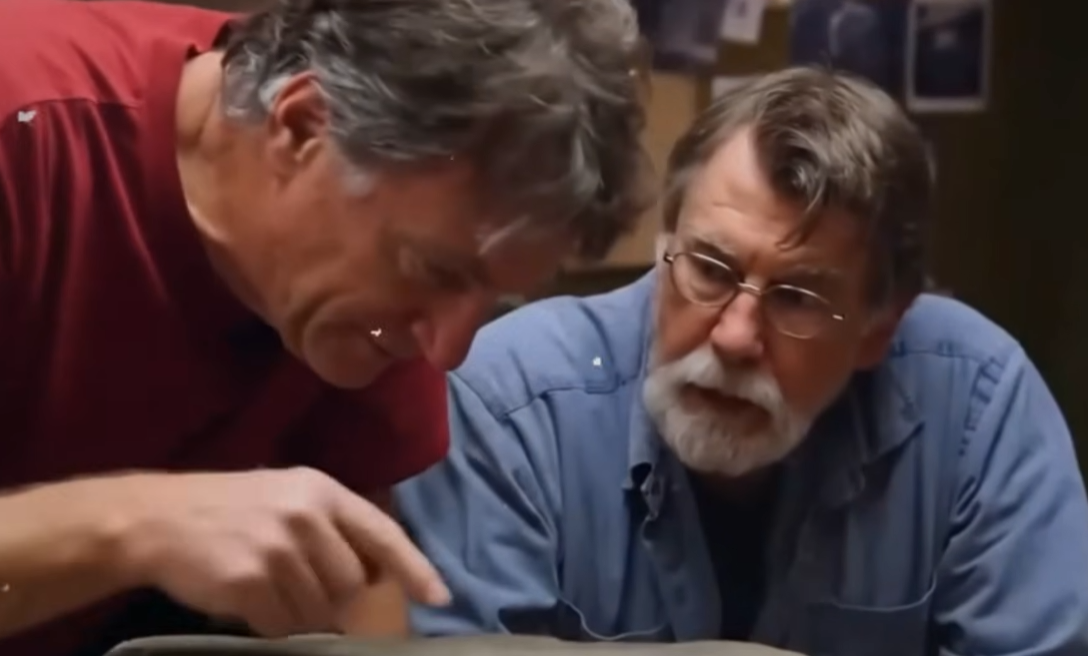
Such details fuelled renewed discussion of long-standing Knights Templar theories. Historians have often pointed to the year 1307, when the Templar order was suppressed in France, as a pivotal moment in European history. Legends claim that ships carrying Templar assets disappeared from La Rochelle shortly before the arrests began.
Could Oak Island be connected to that narrative?
One academic commentator cited during the season proposed that the carvings resembled encoded symbolic shorthand rather than straightforward language. Another pointed to possible astronomical alignments within the imagery. If the chamber functioned not as a vault but as a marker or guide, it would represent a radical shift in interpretation.
For decades, the dominant public theory framed Oak Island as a repository for treasure — pirate gold, royal jewels or hidden archives. Season 13’s developments suggest a different possibility: that the Money Pit and its surrounding tunnels might have been designed as layered barriers or directional systems rather than simple storage spaces.
Rick Lagina, whose emotional investment in the search has defined the series, described the find as “bigger than treasure.” Marty Lagina, historically the more cautious voice, appeared struck by the implications. Both acknowledged that the chamber, if confirmed as engineered, could signify purpose rather than plunder.
However, key questions remain unanswered.
The footage, while compelling, has yet to be independently verified outside the programme’s narrative. Geological processes can create voids with angular characteristics, and visual distortions at depth are not uncommon. Claims regarding basalt transport and alloy composition require further laboratory confirmation.
Moreover, the site’s orientation and stratigraphy are complex. As one team member observed earlier in the season, even determining cardinal directions underground can be challenging, complicating structural analysis.
Legal and archaeological considerations also loom. Any discovery of significant historical import in Nova Scotia would fall under provincial heritage regulations, potentially altering the project’s scope and control.
Yet the broader impact of Season 13 lies less in a definitive answer and more in a conceptual shift. Instead of asking, “Where is the treasure?” the team may now be asking, “What was this built to do?”
The honeycomb drilling strategy proposed for future seasons — multiple connected shafts designed to explore the surrounding area — reflects this pivot. If the chamber is a waypoint rather than a destination, the real objective could lie beyond it.
Sceptics caution against overinterpretation. Oak Island’s history is littered with tantalising anomalies that failed to yield conclusive proof. Supporters counter that the integration of modern imaging technologies has advanced the search beyond the speculative digging of earlier centuries.
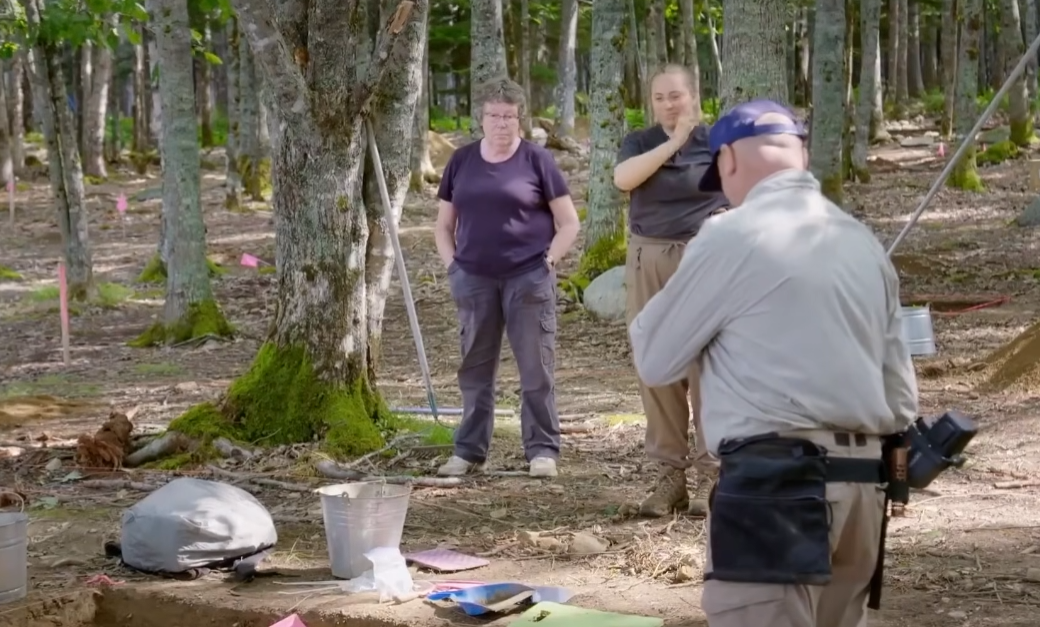
Season 13 may not have produced gold bars or jewel-encrusted chests. But it did present a moment that, at least on screen, felt transformative: a structured void, carved stone and symbols that challenge long-held assumptions.
Whether future excavation confirms a medieval refuge, an engineered misdirection system or a geological curiosity, the narrative has undeniably evolved. The Money Pit may no longer be viewed simply as a treasure shaft.
Instead, it may represent a threshold — one that shifts the focus from wealth to intent, from valuables to legacy.
As winter settles over Nova Scotia and the team prepares for another season, one reality persists: Oak Island continues to offer fragments rather than finality. And in that ambiguity lies the enduring power of its mystery.