THE GOLDEN TRAIL OF THE MONEY PIT: Breakthrough Voids and High-Value Outliers Detected Deep in Oak Island Trenches
The dynamic search grid across Oak Island’s enigmatic Money Pit sector has erupted into an aggressive new phase of discovery. In a rapid succession of operations spanning deep-borehole exploration and heavy surface reclamation, the Fellowship of the Dig has intersected what is believed to be a massive, undiscovered subterranean network. Initial laboratory analysis confirms the presence of highly concentrated precious metals at depth, including a “singularly unique” gold signature embedded within ancient structural timber.
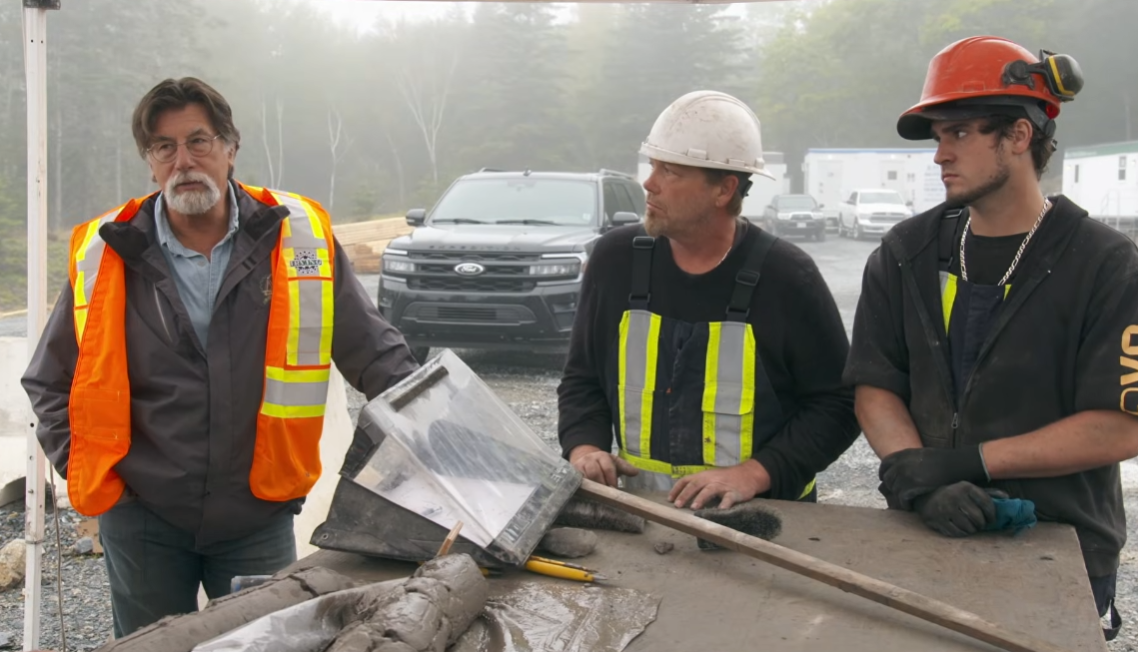
The operational breakthrough occurred during the strategic drilling of borehole DN 11.5, situated directly within the high-priority “Treasure Zone.” Overseen by veteran site historian Charles Barkhouse and geologist Terry Matheson, the commercial drill rig abruptly broke through dense strata at approximately 90 feet below grade.
Intercepting the Secret Tunnel Alignment
“Right at about 90 feet, I could feel the rods break through something,” reported drill operator Mike Bolton, who noted an immediate loss of resistance as the machinery plummeted through a foot-and-a-half-wide open space. “There’s a void down there.”
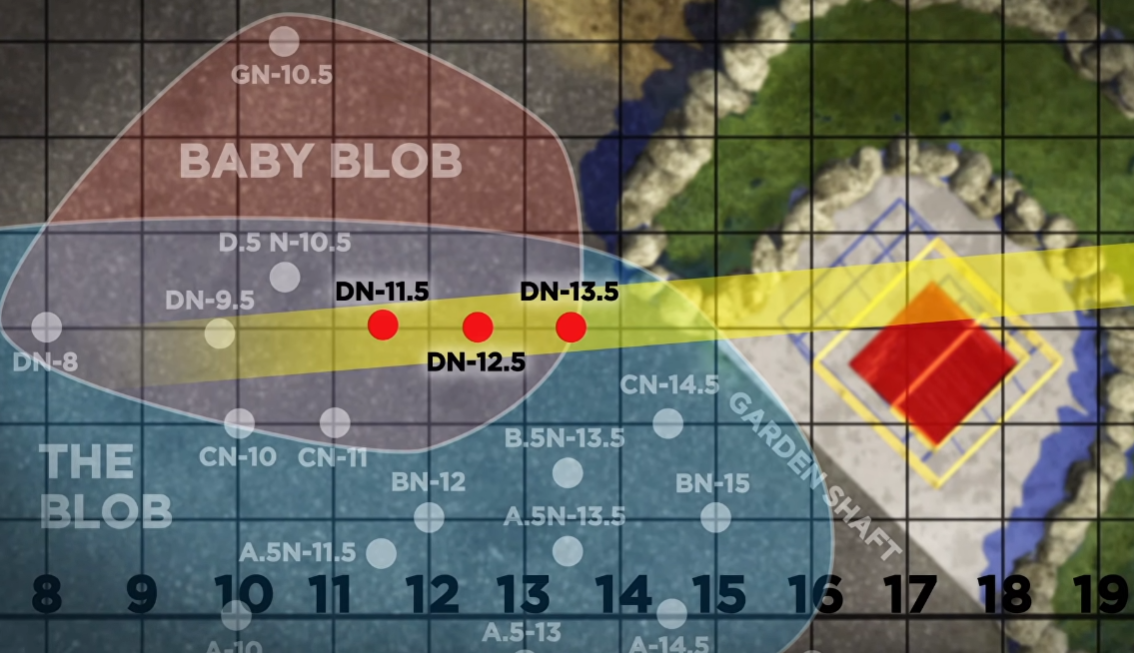
The structural vacancy sparked immediate excitement across the command team. According to site records, the precise depth and position of the DN 11.5 void directly correlates with previous subterranean intercepts in nearby boreholes DN 12.5 and DN 13.5. Together, these points establish a distinct East-West trajectory heading straight for the infamous Garden Shaft perimeter. The team strongly believes it has breached the ceiling of a major historical transit tunnel—a conduit closely linked to the lucrative “Baby Blob” zone, where high gold values have been consistently detected in groundwater samples.
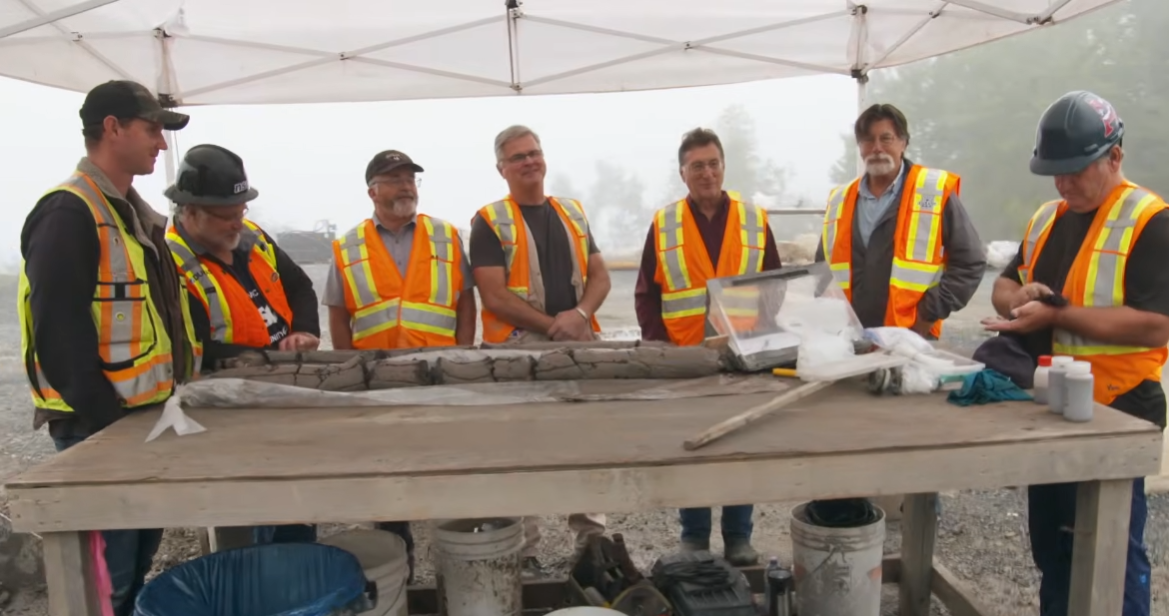
To verify the target, the crew extracted a substantial core sample overflowing with fragments of old wood. The sample was rushed to the Oak Island Interpretive Center for emergency forensic screening by archaeometallurgist Emma Culligan and senior archaeologist Laird Niven. Utilizing an X-Ray Fluorescence Spectrometer (XRF) to bombard the dried wood with gamma rays, researchers isolated standard natural elements before identifying a profound structural anomaly.
“We are seeing some quantities of gold,” Culligan confirmed to project partners Rick Lagina and Craig Tester, labeling the chemical readout a massive statistical outlier. The discovery establishes an undeniable evidence trail, linking the gold values previously floating in the island’s water table directly to the structural wood of the tunnels. Simultaneously, neighboring borehole D2 yielded an ancient piece of metal buried alongside wood carbon-dated to 1488. A secondary XRF analysis performed by geoscientist Dr. Ian Spooner revealed a staggering gold concentration of 700 parts per million embedded on the steel artifact.
Unearthing the Dunfield Spoils
While drilling teams zeroed in on the subterranean grid, parallel surface operations delivered key physical artifacts just east of the Money Pit on Lot 18. Heavy equipment operator Billy Gerhardt utilized his precision excavator to slice through the massive earthworks known as the Dunfield Spoils—thousands of tons of unsearched dirt left behind by Robert Dunfield’s aggressive, 100-foot-wide open-pit excavation in 1965.
Sifting through the deep gravel layers, Gerhardt spotted a massive, hand-hewn structural timber jammed in the mud bank. Metal detection expert Gary Drayton and Jack Begley immediately scanned the beam, uncovering a massive, heavily oxidized iron “Caribbean spike”—a heavy-duty fastener traditionally used in pre-1830 tunnel engineering.
Moments later, Drayton’s detector isolated a substantial iron signal near the hand-cut timber layer, unearthing a heavy, intact hand-point chisel. Because hand-hewn timbers and point chisels predated mechanized mid-19th-century construction tools, the artifacts provide clear evidence of the original, pre-discovery engineering crew. Project specialists are already speculating whether the recovered chisel could be the exact tool used to carve the cryptic hieroglyphic message onto the island’s legendary, long-lost “90-foot stone” discovered in 1804.
With every core sample yielding gold and the historic spoil piles surrendering critical industrial tools, the operational narrative has fundamentally shifted. The team is no longer blindly chasing a myth; they are systematically retracing the physical footprints of the individuals who altered Oak Island’s geography centuries ago.