THE MYSTERY OF ANTHONY GRAVES: New Swamp Finds Point to a “Hidden Vault” and Spanish Silver
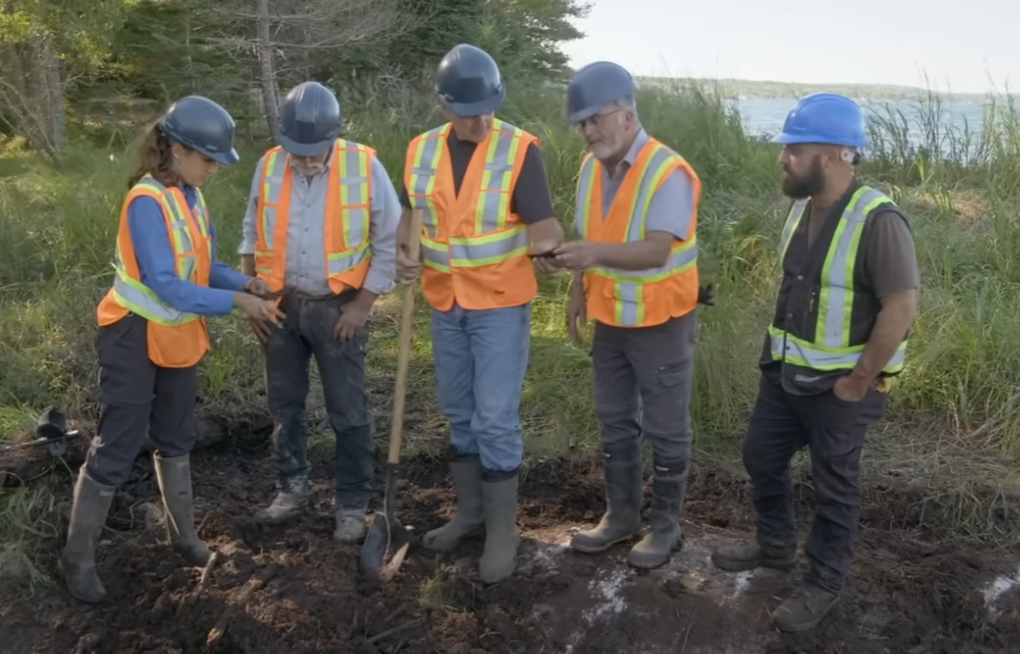
The enigma of the Oak Island swamp has deepened this week as Rick Lagina and his team unearthed a series of artifacts that may finally explain the “mysterious wealth” of a 19th-century farmer. In a high-stakes search just north of a recently discovered stone vault, the team recovered a hand-hammered iron spike, a potential stone-working chisel, and remarkably preserved fragments of leather footwear.
These finds are now being linked to Anthony Graves, the man who owned much of Oak Island in the mid-1800s and was famously known to spend Spanish silver coins on the mainland—despite never having officially found the “Money Pit” treasure.
A “Grand Scheme” in the Muck
The discovery began in the northern region of the swamp, an area increasingly defined by a “grand scheme” of man-made structures. Working alongside Tom Nolan and Jack Begley, Katya Drayton first identified a wooden survey stake with unique “four-cut” axe marks, differing from previous finds along the island’s mysterious cobblestone pathway.
The search quickly shifted from wood to metal. A sharp, non-corroded hit on the detector led the team to a hand-hammered iron spike and a heavy metal tool that Tom Nolan identified as a potential chisel.
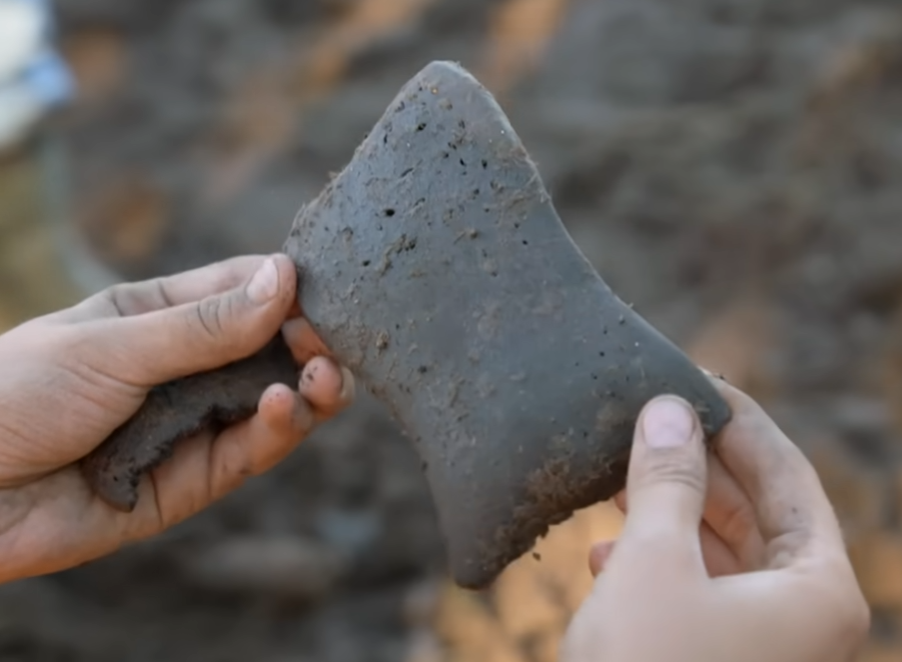
“I love the fact that that looks hand-hammered,” Rick Lagina remarked upon inspecting the spike. “It’s strange metal, though—there’s no corrosion whatsoever.” The presence of stone-working tools just yards from a “vault-like” stone structure has led the team to believe they are standing on the site of a major, yet undocumented, engineering project.
The “Military” Boot
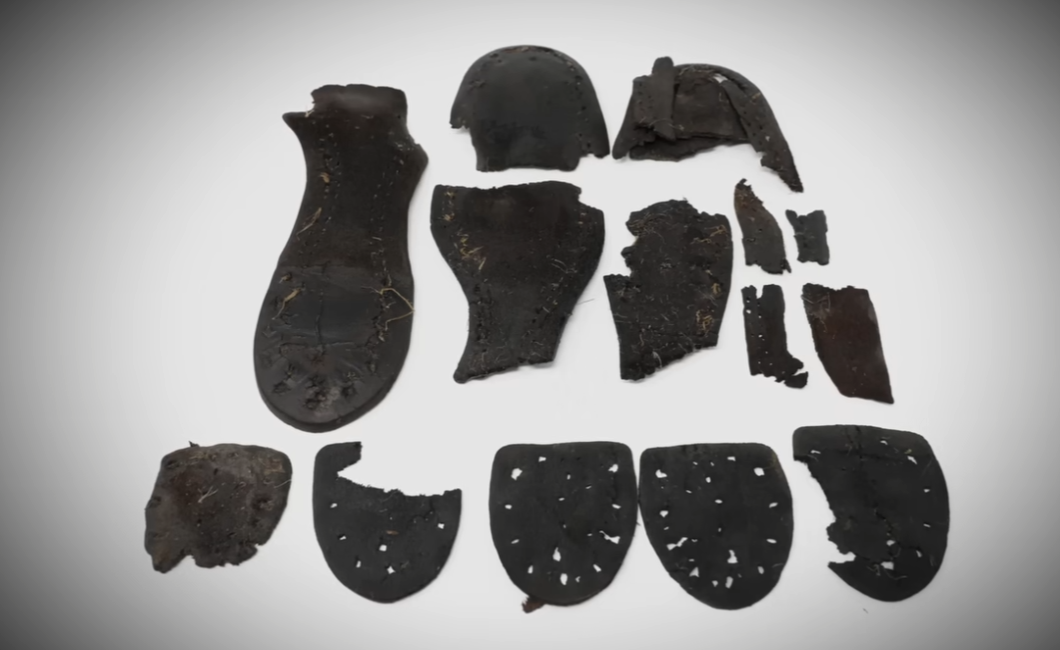
The most telling evidence, however, was organic. The team recovered several thick pieces of leather, which were immediately rushed to the Oak Island Research Center for analysis by ancient documents and leather expert Joe Landry.
Landry identified the fragments as part of a heavy, “oak-tanned” boot, likely constructed from bark-tanned hide designed for extreme durability. “This almost gives the impression of being like a military boot,” Landry noted, pointing to the heavy sewing and the weight of the leather.
Critically, Landry dated the leather to between 1830 and 1900. This timeline places the footwear directly in the era of Anthony Graves, who purchased the island in 1857.
The “Mystery Man” of Mahone Bay
For the Laginas, the connection to Graves is a potential “smoking gun.” Historically, Graves was a “mystery man” who lived a quiet life on the island but frequently surfaced in nearby Mahone Bay to buy goods with silver Spanish coins.
The team now suspects that Graves may have discovered the “swamp vault” himself over 150 years ago. If the vault they recently uncovered was found empty, it raises a tantalizing question: Did Anthony Graves find the treasure that was originally stored there?
“Anthony Graves certainly had proximity to the bog,” Rick Lagina observed. “Maybe his precious items were found there. And if that is the case, it leads me to believe that there is another vault somewhere else.”
As the team prepares to expand their excavation in the swamp, the focus has shifted from the legendary Money Pit to the muddy depths of the bog. If “eyes and boots” continue to lead to 19th-century clues, the team may be only days away from finding the second vault—and the Spanish silver that Anthony Graves might have left behind.