Secrets of the Viking Explorers: Oak Island Team Follows Medieval Trail from Europe to North America
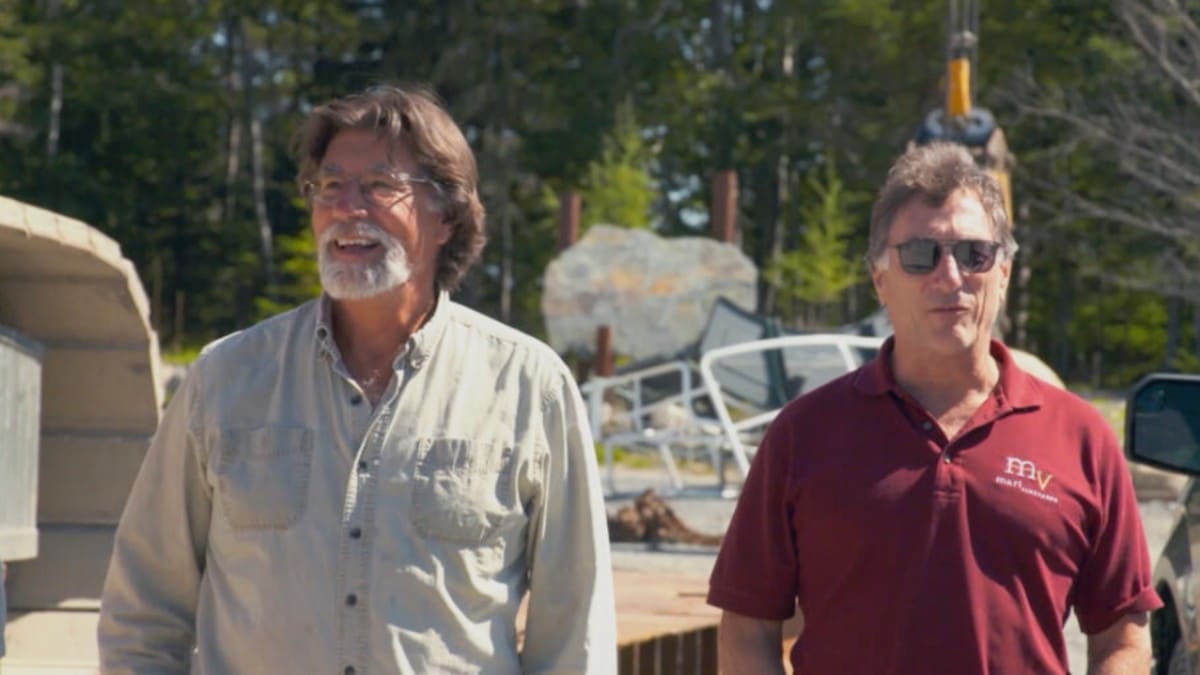
The Curse of Oak Island has long explored theories linking the small Nova Scotia island to medieval orders, lost treasures and early European explorers. In one of its most ambitious investigative arcs, the team now pursues a bold question: did Viking explorers and the Knights Templar cooperate to bring sacred treasures across the Atlantic and hide them on Oak Island?
The latest episode traces that investigation along a sweeping route: from a medieval prison beneath a castle in the Netherlands, to a Viking museum in Denmark, and finally to the only confirmed Norse settlement in North America at L’Anse aux Meadows in Newfoundland.
The journey begins more than 3,200 miles east of Oak Island, at Valkenburg Castle in the Netherlands. There, Rick Lagina, his nephews Alex and Peter, along with researcher Doug Crowell and architect Emiliano Sacchetti, meet author Corjan Mol and historian Jacquo Silvertant. The 12th-century fortress once served as a prison where members of the Knights Templar are believed to have been held during the suppression of the order in the early 14th century.
Guided into a dungeon beneath the castle, the team examines carvings on a 14th-century wall. Among the engravings, they spot two symbols that immediately resonate with their work on Oak Island: a four-dot cross and a so-called “goose paw” motif. Versions of the four-dot cross have previously been found on the mysterious H+O Stone on Oak Island and at other sites across Europe associated with Templar activity. The goose paw, Corjan explains, is recognised as a mark used by medieval Masons linked to the Templar Order.
For the team, these repeating symbols form part of an emerging pattern. If the same motifs appear in Templar prisons in Europe, on shorelines in Nova Scotia, and on artifacts connected to Oak Island, they may indicate a common network of movement and influence. Corjan goes further, pointing to an engraving on the dungeon wall that appears to depict a boat with two masts—possibly a stylised medieval vessel. He suggests this may represent a link between Templar prisoners and maritime technology associated with northern Europe, including Viking seafaring traditions.
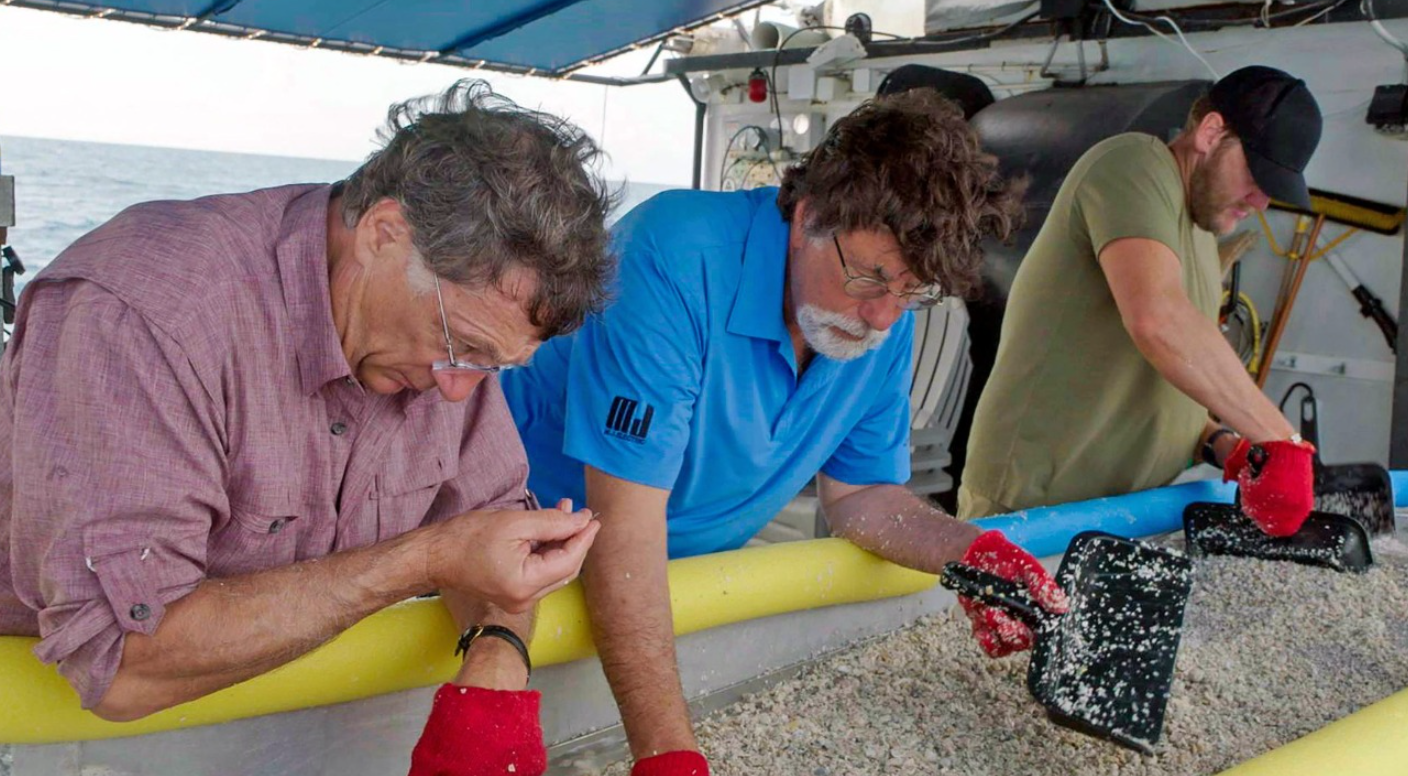
This idea builds on the work of retired professor Doug Symons, whose research proposes that the Templars may have partnered with Norse sailors during or after the Crusades. According to his theory, Vikings or their descendants, already experienced in navigating the North Atlantic, could have provided transport for Templar treasures seeking refuge far from European turmoil. If true, this collaboration could explain how sacred objects might have reached a remote location such as Oak Island centuries before the age of Columbus.
To test elements of this theory, the Oak Island team travels next to Kerteminde, Denmark, and the Ladby Viking Museum. There they meet curator Ane Jepsen Nyborg and present a photograph of an iron projectile point—long believed to be a medieval crossbow bolt—found on Oak Island in the 1960s by excavator Robert Dunfield.
Ane’s reaction is immediate. The artifact, she says, is “quintessentially” of the Viking Age. Comparing it with a replica from the museum, she identifies it not as a crossbow bolt but as an arrowhead for a longbow, a type widely used in Scandinavia from around AD 800 into the high medieval period, likely ending before 1300. Her assessment places the Oak Island find firmly in a Nordic context and potentially in the same time frame as other 13th-century dates the team has obtained from features on the island.
The episode then shifts 625 miles west to L’Anse aux Meadows in Newfoundland, Canada, where Marty Lagina and members of the research team meet Parks Canada staff and archaeologists at the national historic site. L’Anse aux Meadows is the only confirmed Norse settlement in North America, dating to around the year 1000. Excavations there have uncovered hundreds of Viking artifacts, building remains and an iron-working forge.
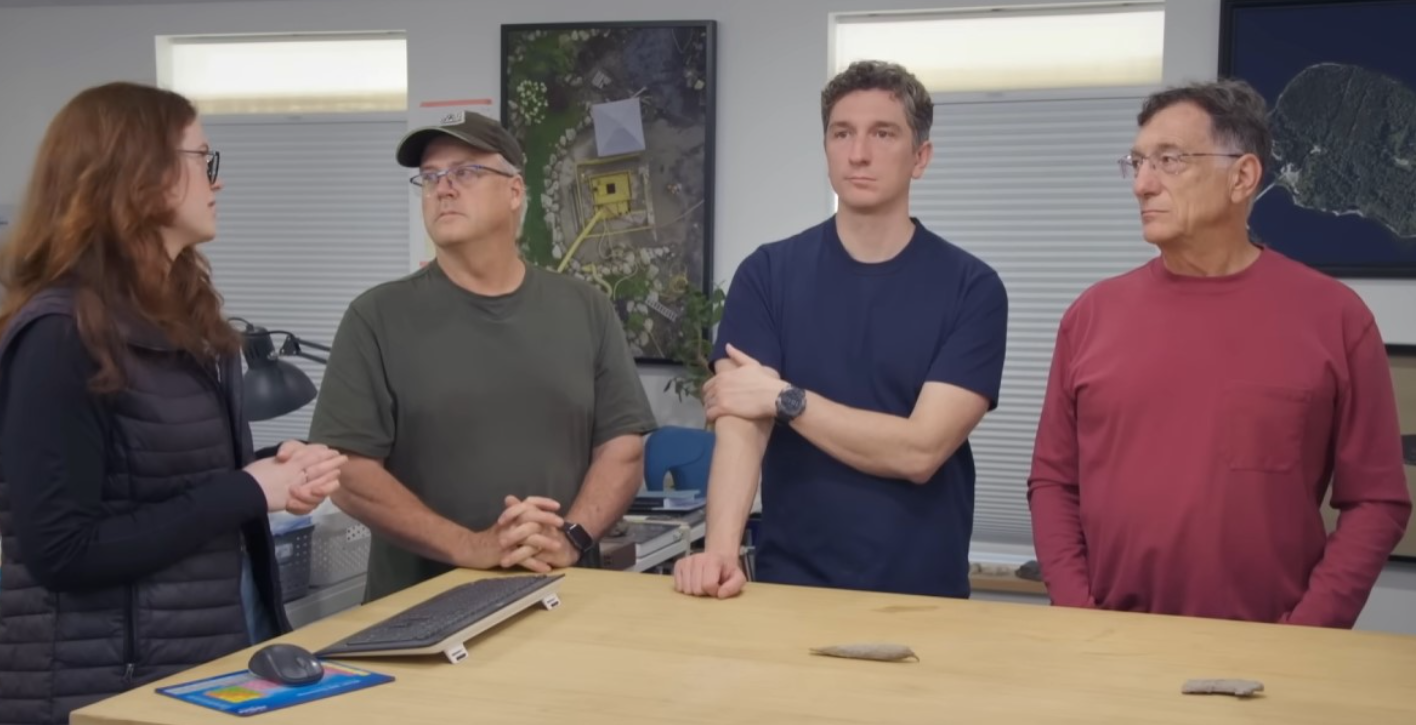
For the Oak Island team, the site offers critical context. If Norse explorers reached Newfoundland, could they also have travelled further south along the Atlantic coastline toward Nova Scotia? Archaeological evidence suggests they did. The L’Anse aux Meadows collection includes butternuts and a butternut burl—materials from a tree that has never grown that far north. The species’ northern range lies in the region of Nova Scotia and New Brunswick, indicating that Viking-era visitors ventured at least that far south in search of resources.
This supports the idea of seasonal Norse movements: L’Anse aux Meadows as a winter base, and a separate, unidentified summer camp referred to in the sagas as “Hóp”, thought to lie to the south. The presence of butternuts implies that Hóp could have been located somewhere in the Maritime provinces—raising the possibility that Norse ships once sailed within reach of Oak Island.
Back in the Viking longhouse at L’Anse aux Meadows, the team consults a blacksmith and re-examines the Oak Island arrowhead. Metallurgical tests conducted by archaeometallurgist Emma Culligan using X-ray fluorescence have already suggested a pre-1600 origin. The blacksmith confirms that the piece could be forged using early medieval techniques and that it resembles arrowheads he has made in Viking style. When the team is offered samples of local bog iron for future comparison, a new analytical path opens: if the composition of Oak Island iron artifacts matches bog ore from Viking-related regions, it would strengthen the case for Scandinavian involvement.
Taken together—the Templar carvings in a Dutch prison, the Viking-style arrowhead in Denmark, the confirmed Norse presence in Newfoundland and evidence of exploration as far south as Nova Scotia—the episode presents a layered argument rather than a definitive conclusion. The Oak Island team is careful to stress that many “usual suspects” remain under consideration. Yet the convergence of dates, symbols and materials continues to push Viking and Templar connections toward the centre of their investigation.

For viewers, the result is a widening of the Oak Island mystery beyond a single island. The search now spans castles, cathedrals, dungeons and longhouses across two continents, pursuing a tantalising possibility: that centuries before modern explorers arrived in the New World, an alliance between warrior-monks and northern seafarers may already have left its mark on a small, enigmatic island off the coast of Nova Scotia.