Oak Island S13: Possible Medieval Firearm Fragment Found in Swamp Raises New Questions
The search for answers on The Curse of Oak Island took a notable turn this week as the team revealed laboratory results from a discovery that could represent one of the oldest weapons ever found on the island. A corroded iron fragment recovered from the western edge of the swamp is now believed to be part of a medieval hand cannon, a precursor to modern firearms, potentially dating back several centuries before the first recorded searches for treasure on Oak Island.
Rick Lagina joined archaeologist Laird Niven and archaeometallurgist Emma Culligan in the Oak Island laboratory to review the findings. The artifact was recovered by Lagina alongside metal-detection expert Gary Drayton and heavy equipment operator Billy Gerhardt during a recent search of the swamp, an area that has long intrigued the team. The fragment was found just yards from a paved stone feature uncovered in 2019, which some researchers believe could be as old as 800 years.
At the time of discovery, the object’s identity was unclear. Initially thought to be a weight, the fragment drew increased attention as it dried out and revealed a tapered form. “When it started to dry,” Rick Lagina explained, “you could see the shape changing. That’s when the idea emerged that this might be part of a weapon.”
In the lab, Emma Culligan began by examining the object’s metallurgical composition. Swamp artifacts are notoriously difficult to analyse due to corrosion and mineral contamination, but Culligan was able to obtain several reliable readings. Her analysis showed a relatively clean iron composition with limited impurities and a naturally elevated sulfur content. According to Culligan, this sulfur profile is consistent with iron produced in the 1700s or earlier, and does not resemble metal made using modern blast furnace techniques.
“That tells us this is not a recent object,” Culligan said. “The lack of modern impurities suggests it could be European in origin.”
Laird Niven added historical context, noting that hand cannons fell out of use by the 1500s as more advanced firearms were developed. If the Oak Island fragment does indeed belong to such a weapon, it could predate the documented discovery of the Money Pit by more than a century.
Further analysis using CT scanning provided one of the most compelling pieces of evidence. The scan revealed a small hole in the fragment’s structure, consistent with a touch hole—the opening used to ignite gunpowder in early firearms. Gary Drayton immediately recognised the feature, confirming that it matched the firing mechanism of a hand cannon.
Hand cannons, also known as hand gonnes, originated in China as early as the 12th century and spread through the Middle East into Europe by the 14th century. They are widely regarded as the world’s first true firearms. By the time flintlock muskets became common in the 15th century, hand cannons had largely disappeared from use.
For the Oak Island team, the implications are considerable. A hand cannon fragment found in the swamp raises questions about who may have been on the island centuries ago, and why they were there. Rick Lagina described the artifact as “unusual in a very unusual place,” adding that it deserved further examination by a firearms specialist.

The discovery also renewed focus on the swamp itself, an area that Marty Lagina has long viewed as strategically important. Marty has previously suggested that flooding a swamp would be an effective way to conceal valuable material, leaving little trace behind. Standing near the find site, he reiterated that theory, saying it remains entirely possible that whatever is being sought on Oak Island could lie hidden beneath swamp sediments.
Encouraged by the laboratory results, the team returned to the western edge of the swamp to continue searching. Drayton, Gerhardt and crew member Derek employed metal detectors and hand excavation tools to probe deeper layers of clay and rock. Among the new finds were several iron objects, including a heavy fragment with sharply cut angles that appeared deliberately shaped rather than discarded slag.
Drayton noted that older iron is often heavier than expected for its size, a characteristic that matched the new piece. While its exact purpose remains uncertain, he suggested it could be part of a large iron buckle, possibly once attached to a chest or container. If confirmed, such a find could help explain the construction of the nearby corduroy road, believed to have been built to transport heavy loads across the swamp.
Another discovery—a small iron needle with visible patina—also caught the team’s attention. Although modest in size, such objects can provide insight into daily activity on the island and help narrow down timelines.
“Every artifact here has a story,” Drayton said. “Even the smallest piece can tell us who was here and what they were doing.”
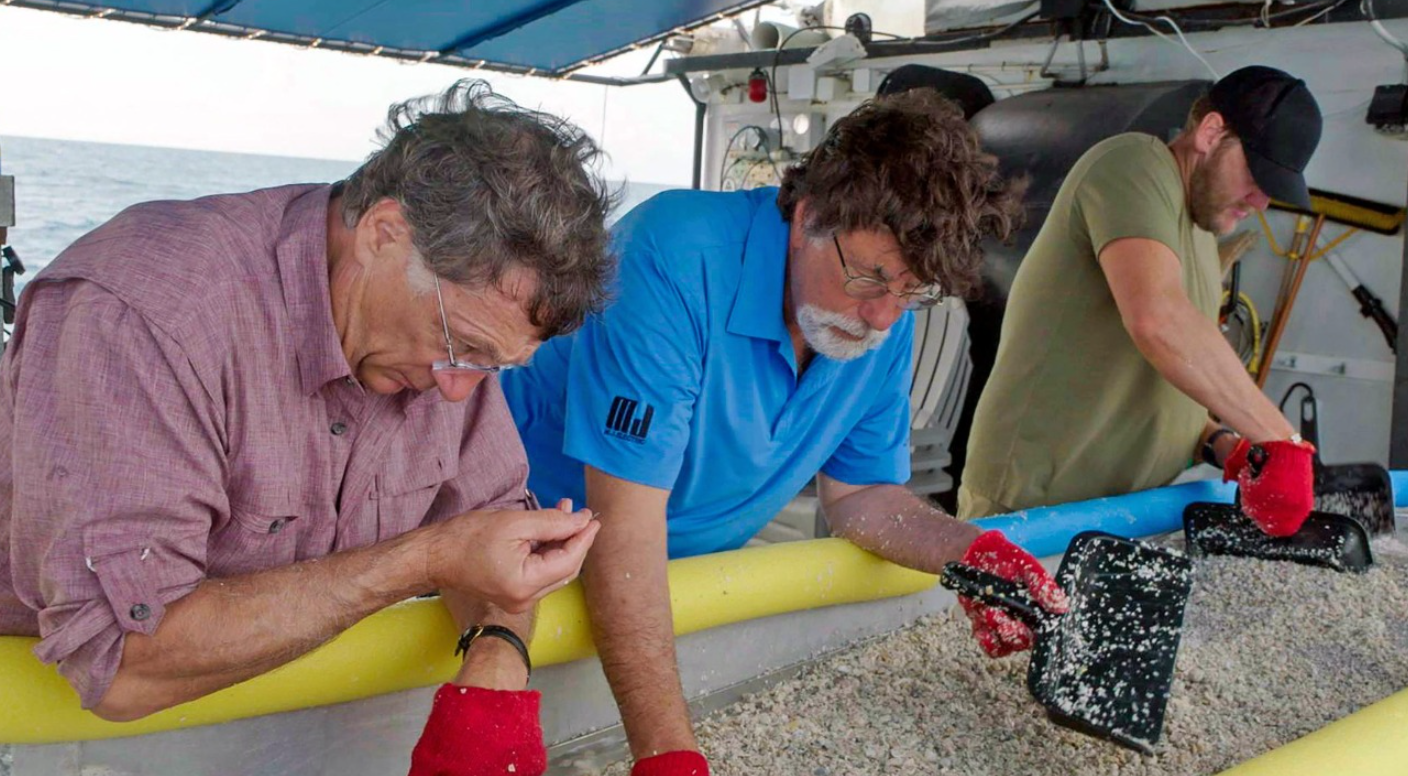
All newly recovered items will now be sent back to the lab for further testing and documentation. Emma Culligan is expected to conduct additional compositional analysis to determine whether the iron matches known production techniques from specific regions or periods.
As the episode concluded, Rick Lagina summed up the mood of the team. “We’re nowhere near done,” he said. “If something like this was left in the swamp, then there’s more to be found. We just have to keep going.”
With a possible medieval firearm fragment now added to the growing list of unusual discoveries, the Oak Island mystery continues to expand beyond familiar boundaries—linking the island not only to treasure legends, but to early technology, conflict, and transatlantic history yet to be fully understood.