The most mysterious ancient structures on Oak Island were discovered by Rick Lagina’s team.
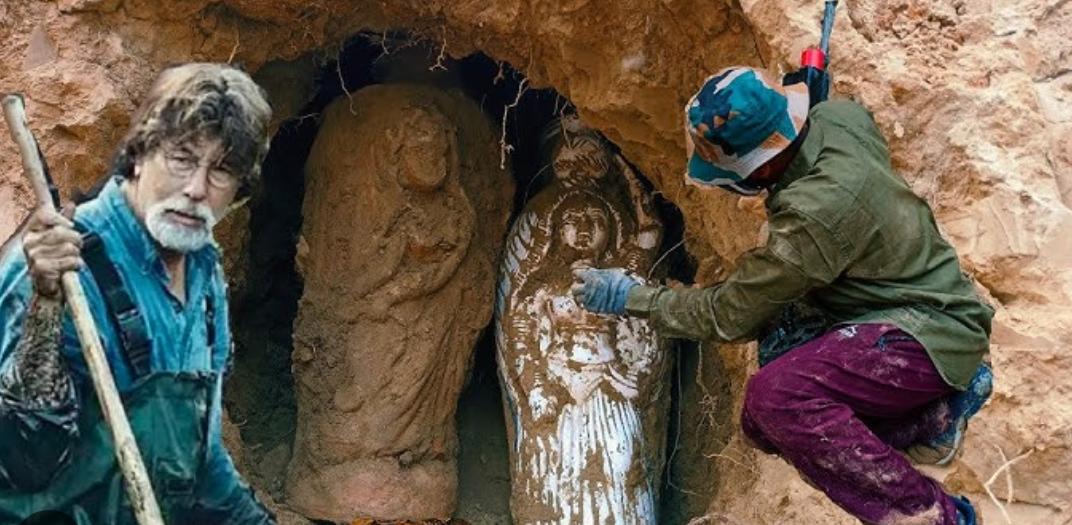
As cameras roll for the much-anticipated The Curse of Oak Island Season 11, Rick and Marty Lagina return to Nova Scotia with their relentless team of treasure hunters. Their mission remains the same — to uncover the truth behind the island’s 228-year-old enigma. But this time, the discoveries are rewriting the island’s history, suggesting that the mystery could be older, broader, and more complex than anyone ever imagined.
The new season doesn’t just revisit the Money Pit — the supposed heart of the treasure legend — but expands across Oak Island’s mysterious terrain. Three key discoveries — the Garden Shaft, the Circular Stone Depression, and the ancient Well on Lot 26 — are reshaping the team’s theories about who might have come to the island centuries ago and what secrets they left buried beneath its soil.
The Garden Shaft: Traces of Gold and a Link to the Money Pit?
Among the most promising developments is the Garden Shaft, a ten-by-ten wooden structure that was once thought to be a simple searcher tunnel. Initially preserved by Rick Lagina as a tribute to the women who’ve supported the centuries-long treasure hunt, the Garden Shaft has now become a potential key to the entire mystery.
In 2022, geoscientist Dr. Ian Spooner and hydrogeologist Dr. Fred Michel conducted water testing in and around the shaft. To the team’s amazement, the samples contained traces of gold. Further carbon dating of the timber used in the shaft revealed it to be more than 50 years older than the Money Pit’s discovery in 1795.
This revelation turned the shaft from a commemorative monument into a critical excavation site. The Laginas enlisted Dumas Contracting Ltd. to rebuild and reinforce the shaft, allowing the team to explore its depths safely. At 82 feet down, while they didn’t uncover a chest of gold, metal detection expert Gary Drayton’s scan revealed a “screaming” non-ferrous target — a strong signal of metal, possibly gold, buried deeper still.
As Drayton put it with his trademark enthusiasm, “Where there’s muck, there’s treasure, mate.”
For Marty Lagina, the Garden Shaft may be more than just a remnant of old searcher tunnels. It could be a pathway leading directly toward the elusive treasure vault, a structure possibly designed centuries earlier by highly skilled engineers.
The Circular Stone Depression: A Mirror of the Money Pit
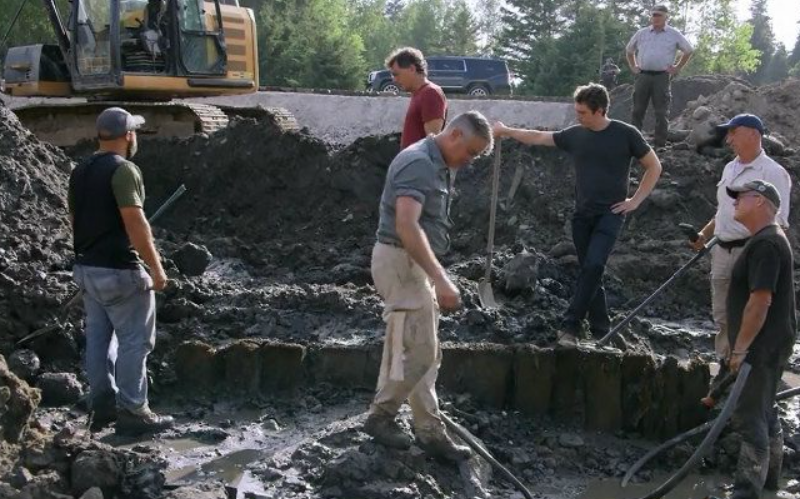
Over on Lot 5 — a recently acquired section of the island once owned by treasure hunter Robert Young — the team stumbled upon a mysterious circular stone-lined depression. When archaeologist Laird Niven and the crew measured it, they were stunned: it measured exactly 13 feet in diameter — the same size as the original Money Pit described in 1795.
At first glance, the structure appeared to be the foundation of an old barn cellar. But deeper excavation revealed carefully placed stones, pottery shards from the 1750s, and layers suggesting multiple phases of construction — some possibly dating back centuries earlier.
The discovery led the team to speculate whether the site could be “The Hatch”, a feature marked on a 14th-century map given to them by researcher Zena Halpern. The map, believed to be of Templar origin, depicted “The Hole Under the Hatch” — a potential access point to underground tunnels or vaults.
If confirmed, this finding could dramatically alter the timeline of human activity on Oak Island, potentially pushing its origins back to medieval Europe. As Marty noted on-site, “It’s so odd, so unique to this island, that it could change the whole story.”
The Well on Lot 26: Silver Traces from the 11th Century
Meanwhile, on Lot 26, another discovery has captured the team’s imagination — an ancient well that may be the oldest man-made structure ever found on the island.
Water testing by Dr. Spooner revealed unexpected traces of silver, one of the few such findings outside the Money Pit area. When carbon dating was performed on organic material taken from the well’s bottom, the results were nothing short of astonishing: the samples dated between 1028 and 1172 AD.
That means this structure predates the discovery of the New World by centuries — placing its origins potentially within the era of the Knights Templar or early European explorers. As Rick Lagina reacted, “If that well is that old, you’ve got to really think about what happened on this island.”
These results open the door to radical possibilities — that Oak Island’s secrets might not begin in the 18th century but a full 700 years earlier. The team now suspects that the island could have been a pre-Columbian outpost, used by European seafarers who left behind cryptic clues and hidden caches.
The Bigger Picture: History, Faith, and Fortune
As The Curse of Oak Island enters its eleventh season, the stakes have never been higher. Each of these discoveries — the Garden Shaft’s traces of gold, the ancient well’s medieval timeline, and the mysterious circular depression — points toward a larger interconnected system beneath Oak Island.
The Laginas’ Fellowship of the Dig is more convinced than ever that the treasure legend isn’t just about gold — it’s about a hidden chapter of world history. Theories involving Templar voyages, early Portuguese builders, or lost royal artifacts are all back on the table.
Rick Lagina summed up the mood perfectly: “Oak Island is an island of ‘what ifs’ and possibilities. But we want more than that. We want answers.”
And as the new season unfolds, those answers may finally be within reach. One thing is certain — whether the team unearths gold or simply more mysteries, the world will be watching as Oak Island continues to defy time, science, and logic itself.