THE DECOY DEBATE: RICK LAGINA UNCOVERS EVIDENCE OF “SECOND MONEY PIT”
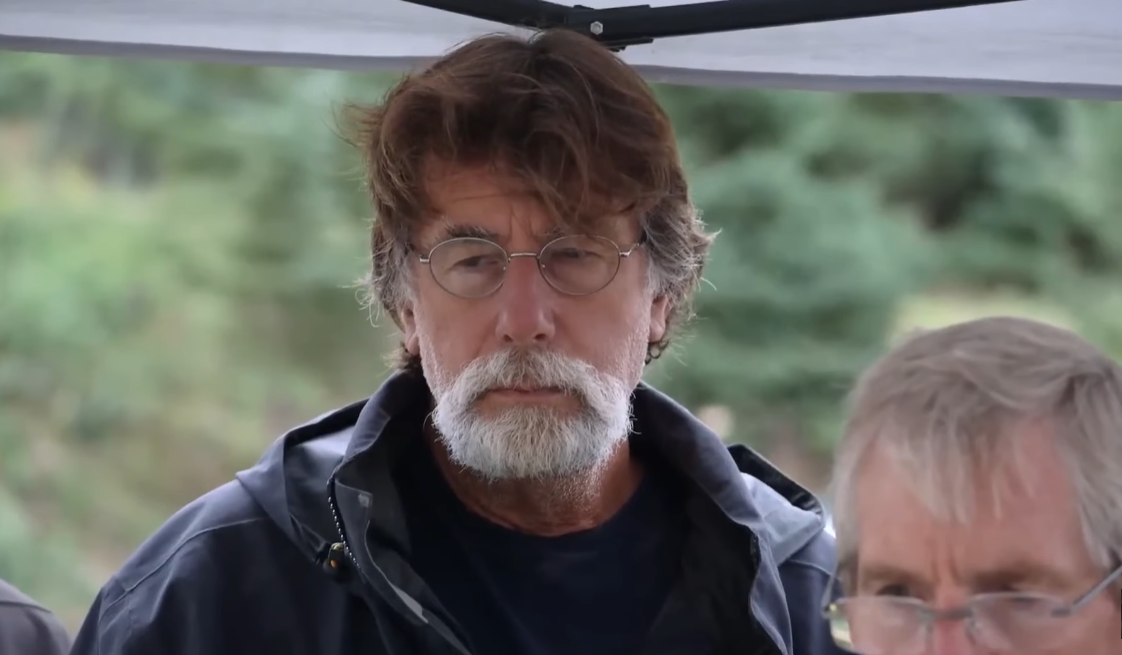
For over two centuries, treasure hunters from Franklin D. Roosevelt to Rick and Marty Lagina have focused their attention on a single, cursed coordinates: the original Money Pit. But today, February 13, 2026, as the search enters a mid-season hiatus, the fellowship has released data that suggests the world has been digging in a decoy for 231 years.
New evidence points to a secondary, untouched underground structure located in a high-density zone west of the Garden Shaft known as the “Baby Blob.” This discovery, corroborated by cutting-edge Muon tomography, may finally explain why the legendary treasure has remained elusive despite millions of dollars in excavation.
The “Smoking Gun” in the Water
The breakthrough began not with a shovel, but with chemistry. Dr. Ian Spooner, the project’s lead geoscientist, identified a “Baby Blob” of water chemistry that defied geological norms. Analysis revealed spikes in gold, zinc, and copper at parts per billion ten times higher than background levels.
“Gold doesn’t dissolve easily,” Spooner explained. “To see this kind of signature, the water has to be in contact with a massive surface area of metal—the equivalent of a dump truck of silver.”
While the original Money Pit was famously rigged with flood tunnels that turned the site into a “soup of mud and timber” in 1861, the Baby Blob appears to be a “clay-sealed bubble.” This suggests that while generations of searchers were trapped in the rigged “lobby” of the Money Pit, the actual vault sat dry and safe just feet away.
Muon Data Reveals “The Back Room”
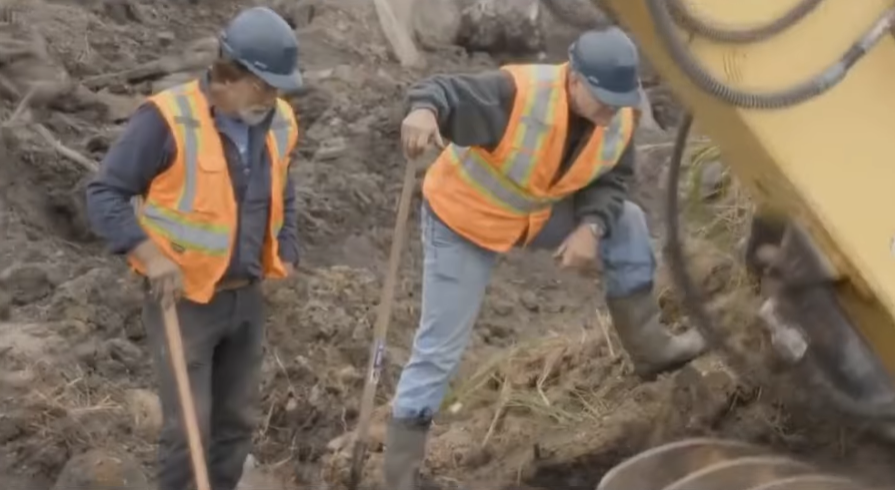
The most definitive proof comes from recently processed Muon tomography data. By using cosmic rays to map sub-surface density, the team has identified a low-density, rectangular anomaly at a depth of 140 feet.
“Nature doesn’t build rectangles underground,” Marty Lagina noted during a recent briefing. Unlike the irregular sinkholes typical of Nova Scotia geology, this structure features distinct corners and dimensions that align with the “Chapel Vault” descriptions of the 1930s—but at a significant offset from the original shaft.
The discovery was punctuated by a sonic drill hitting a definitive obstruction at 140 feet. The core sample brought to the surface contained chaotic clay mixed with coconut fiber—the exact “ceiling material” described by 19th-century searchers, yet located in an area that has never been previously excavated.
Artifacts and Ancient Alignments
The site is already yielding more than just data. Metal detection expert Gary Drayton has recovered pottery shards with a glaze dated to the mid-1600s and hand-hewn wood chips shaped by an adze—a tool used by 17th-century shipwrights. These artifacts suggest the pit was constructed by a disciplined military or naval operation, far predating the 1795 discovery.
Furthermore, a geometric re-evaluation of Nolan’s Cross and the surface markers of the 90-foot stone suggests a “coded map” that has been hiding in plain sight. When overlaid with the new Muon data, these markers intersect directly over the Baby Blob.
The Government Standoff
Despite the momentum, the team faces a new hurdle: the Nova Scotia Department of Communities, Culture, Tourism, and Heritage. New permit requirements regarding potential indigenous artifacts have slowed the “Big Dig” to a series of surgical 6-inch boreholes.
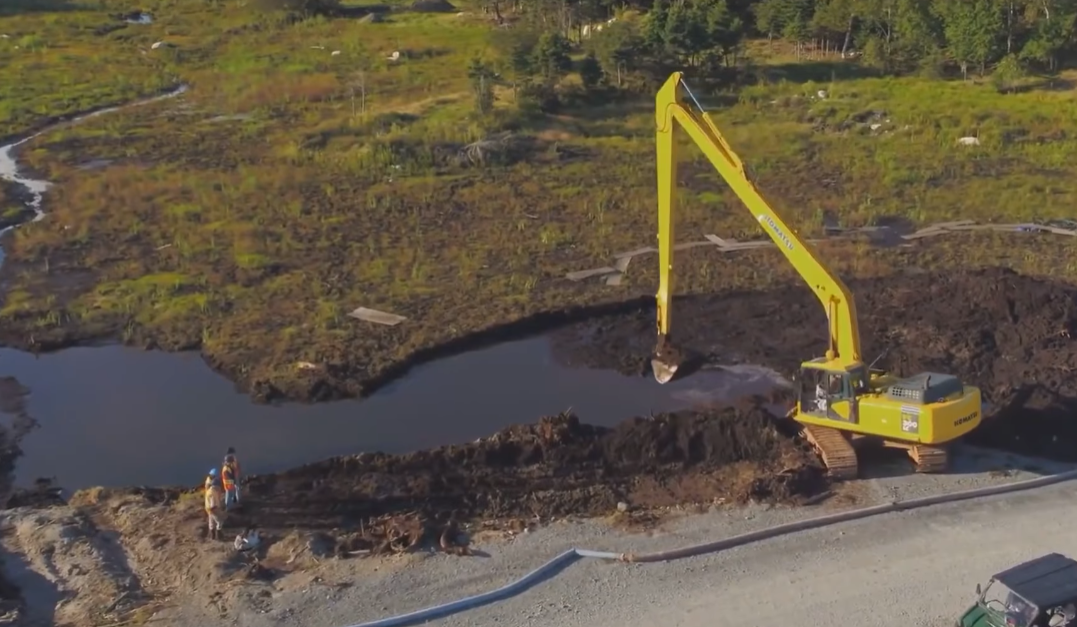
While the delay is a source of frustration for the crew, Rick Lagina remains undeterred. “We aren’t chasing a ghost anymore,” Rick stated. “We’re chasing a blueprint.”
If the boreholes confirm the presence of bullion, the fellowship is reportedly considering a massive “ice wall” engineering project to freeze the ground and allow for a dry recovery. After 200 years of broken dreams, Oak Island may finally be ready to surrender its secret—not to a shovel, but to science.