Jeremy Clarkson’s Multi-Million Pound Farm – What’s Really Hidden Inside?
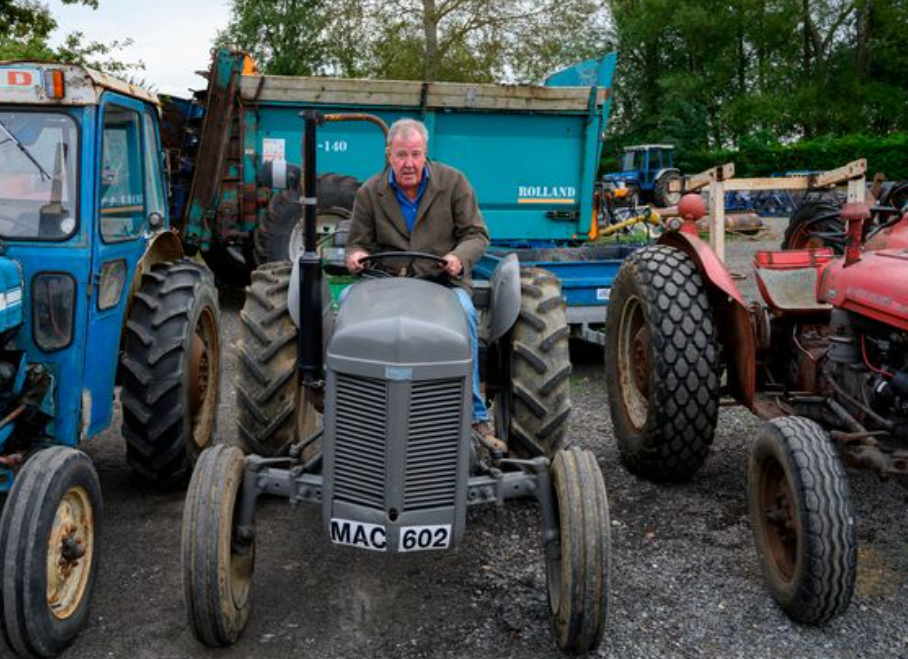
In 2008, as global markets convulsed and banks collapsed, Jeremy Clarkson made a decision that many considered eccentric, if not reckless. Best known at the time for high-performance cars and sharp-tongued television commentary, he quietly spent £6 million on 1,000 acres of farmland in the Cotswolds.
To friends, it looked like a midlife diversion involving tractors rather than supercars. Clarkson himself has admitted he knew little about agriculture at the outset. But the purchase, he now argues, was less romantic impulse than financial calculation.
“Land in Britain is one of the safest investments you can make,” he has said. While stock markets fluctuate, farmland tends to appreciate steadily. By current estimates, the property — now known as Diddly Squat Farm — is valued at around £12.5 million, roughly double its purchase price. Agricultural property relief further enhances its long-term financial appeal by reducing inheritance tax liabilities.
Yet the transformation of the farm from investment to enterprise was anything but smooth.
In its first full year under Clarkson’s direct management, the operation generated a profit of just £144. Machinery breakdowns, adverse weather and the steep learning curve of farming eroded margins quickly. Newspapers mocked the figure. Critics questioned whether a television presenter could realistically manage agricultural production.
What the balance sheet did not show, however, was a parallel development. Clarkson’s work on The Grand Tour reportedly earned him between £10 and £12 million annually. More significantly, the farm itself was about to become a television project.
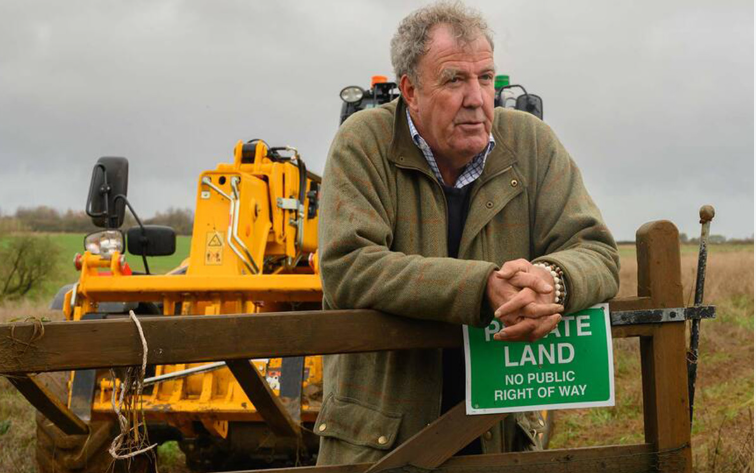
When Clarkson’s Farm launched on Amazon Prime Video, it quickly became one of the platform’s most watched UK originals. Viewers were drawn to the unscripted chaos: arguments with farm manager Kaleb Cooper, mechanical failures, council disputes and crop losses.
The agricultural struggles, while financially modest, proved commercially powerful as content.
Clarkson has since acknowledged that the farm effectively became a film set as much as a production site. “The farm wasn’t the business,” he has suggested. “The farm was the set.”
One of the earliest turning points came from an unexpected problem: surplus potatoes. Producing around 40 tonnes in his first significant harvest, Clarkson discovered that supermarkets were uninterested in small quantities from a novice supplier. Rather than accept spoilage, he erected a small wooden shed to sell produce directly.
That shed evolved into the Diddly Squat Farm Shop.
What began as a practical solution became a destination. After the show aired, visitor numbers surged. Within a year, the shop’s assets reportedly increased from £44,000 to £1.34 million. Traffic congestion stretched for miles along rural lanes, prompting police intervention and drawing the attention of West Oxfordshire District Council.
Planning disputes soon followed. Applications to expand parking facilities and improve access roads were refused, as authorities cited the need to protect the Cotswolds, designated an Area of Outstanding Natural Beauty. Clarkson framed the disputes as bureaucratic obstacles; the council viewed them as regulatory obligations.
The tension, once again, translated effectively to television.
Diversification became the next phase. Instead of selling barley as a raw commodity, Clarkson launched Hawkstone Lager. By March 2025, Hawkstone’s reported sales had reached £21.3 million, nearly tripling the previous year’s total. Distribution expanded into thousands of pubs and major supermarkets.
The strategy reflected a shift toward vertical integration: controlling not just the crop but the finished product.
Hospitality followed. Clarkson invested approximately £1 million renovating a nearby countryside pub, rebranded as The Farmer’s Dog. The concept emphasised British-sourced ingredients exclusively — even down to domestically grown pepper substitutes — increasing costs but reinforcing branding. Though margins were slim, the pub functioned as both a retail outlet and filming location, while providing a channel for Hawkstone products.
A proposed farm restaurant, however, faced planning resistance and operated for only a month before being closed following enforcement action.
Regulatory constraints also shaped the farm shop’s supply chain. A condition limiting products to those sourced within a six-mile radius initially appeared restrictive. Instead, it prompted collaboration with local producers, turning the shop into a showcase for regional agriculture.
Throughout the transformation, Kaleb Cooper has remained central. Once earning modest wages as a young contractor, Cooper has leveraged the show’s visibility into book deals, touring events and growing personal assets reportedly approaching £1 million. Despite rising profile, he continues to oversee day-to-day farming operations.
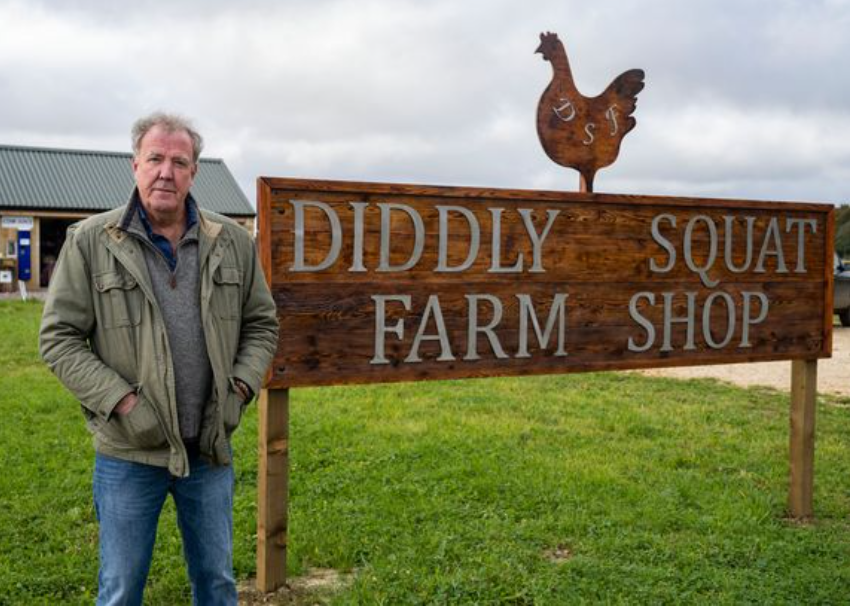
Today, the Diddly Squat enterprise encompasses farmland valued at more than £12 million, a farm shop with annual turnover in excess of £1 million, a fast-growing brewery brand and a hospitality venue employing more than 100 people. Plans have even been floated for large-scale agricultural gatherings expected to draw tens of thousands of visitors.
What began as a £6 million farmland purchase during a financial crisis has evolved into a multifaceted commercial ecosystem blending agriculture, media, retail and tourism.
For Clarkson, the experiment underscores a broader lesson. Traditional farming alone rarely yields significant profit margins. But in combination with storytelling, branding and controlled product chains, it can underpin a far larger enterprise.
Whether viewed as savvy entrepreneurship or fortuitous timing, the journey from £144 annual profit to multi-million-pound turnover illustrates how modern farming — particularly when televised — can extend far beyond the field.
And for a presenter once synonymous with horsepower and hyperbole, the Cotswolds have become the unlikely foundation of a distinctly rural business empire.