Royal Idealism Meets Rural Reality: Jeremy Clarkson STRIKES BACK at King Charles Over British Farming
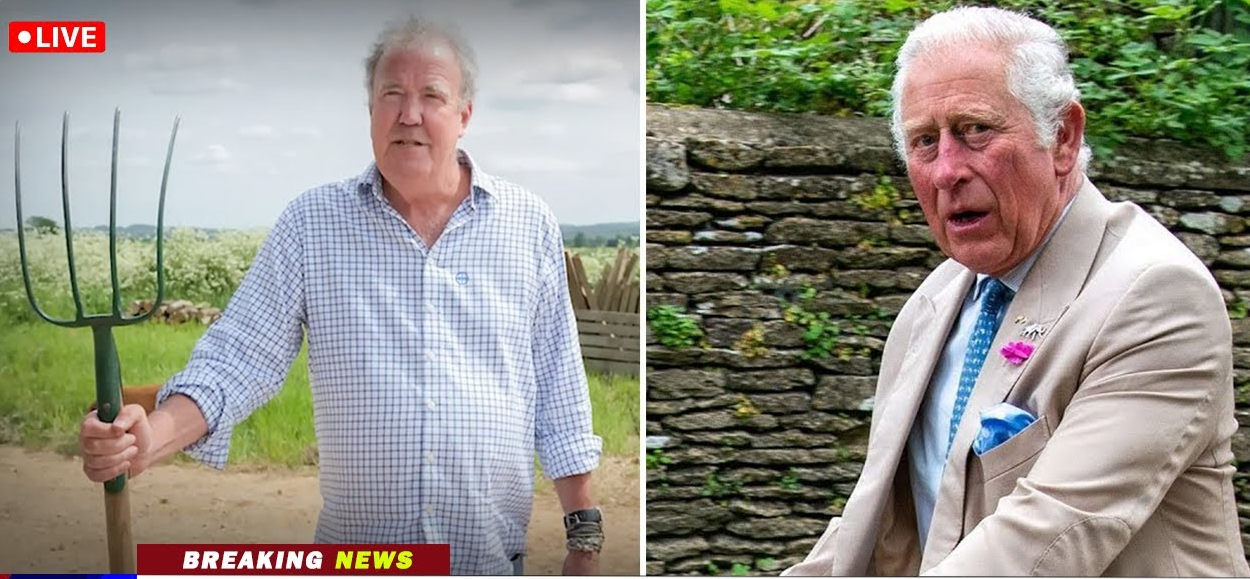
On a wet evening at Diddly Squat Farm, with machinery stalled and paperwork piling up, Jeremy Clarkson found himself watching a familiar disconnect play out on national television. From the manicured lawns of Windsor, King Charles spoke about returning British agriculture to nature—reducing chemicals, accepting short-term hardship, and prioritising long-term environmental health. The tone was calm and hopeful. For many farmers watching from kitchens and sheds, it felt detached from the financial reality they face every day.
Clarkson’s objection is not rooted in opposition to environmental care. On the contrary, he argues that farmers live closest to the land and have the strongest incentive to protect it. The tension, he says, lies in the gap between ideals and economics. Nature, he points out, does not issue invoices. Banks do. At the end of every month there are fuel bills, loan repayments, wages, and repair costs that cannot be postponed by good intentions. One poor harvest or a sudden rise in costs can end a business outright.
This is not a theoretical complaint. Clarkson has experimented with low-input farming on his own land, following the advice often promoted in speeches and policy papers. Without chemical fertilisers or pesticides, the results were stark: pests spread quickly, weeds surged, yields fell, and the farm’s accounts deteriorated. Advocates urged patience and faith in long-term benefits. But patience, he counters, does not fix broken machinery or satisfy lenders. Farming is not a lifestyle trial; it is food production under constant financial pressure.
At the heart of the argument is output. Organic systems praised for their environmental credentials typically produce far less grain per acre than conventional methods. The difference is not marginal. Clarkson argues it is the difference between national self-sufficiency and reliance on imports. A rapid, nationwide shift to lower-yield models would reduce domestic production, raise prices, and increase dependence on food sourced from countries with lower environmental and labour standards. Emissions are not eliminated; they are relocated.

This, he says, is where the debate becomes uncomfortable. Policies shaped far from fields tend to overlook who absorbs the risk. When regulations change, farmers shoulder the immediate cost. If a policy underperforms, the business fails; the policymaker does not. Subsidies promised as support often arrive late, burdened with conditions, and rarely compensate for lost income. The imbalance, Clarkson argues, breeds anger rather than cooperation.
The consequences extend beyond individual farms. Reduced output leads to higher imports and strategic vulnerability. Land that leaves agriculture does not always return to nature; it is often sold to investors or developers. Rural communities hollow out, and food production becomes an abstract line on a balance sheet rather than a lived practice passed between generations. Once lost, farms are rarely rebuilt.
Clarkson insists this is not a rejection of change. Farmers, he says, want healthier soils, less waste, and thriving wildlife. What they reject is a one-directional demand that ignores economic limits. Sustainability, in his view, has three pillars: environmental, social, and financial. Remove one and the structure collapses. A farm that cannot pay its way cannot protect hedgerows or habitats, because it will not exist.
The divide is also cultural. Urban audiences applaud ambition and moral clarity; rural communities hear uncertainty and loss. One side speaks the language of vision; the other speaks in yields, weather forecasts, and cash flow. Both believe they are acting responsibly, yet they rarely meet on shared ground. Clarkson does not question the sincerity of royal concern for the environment. He questions whether a future without viable farmers can ever be sustainable.

Distance, he argues, is the real problem—distance from risk and consequence. When decisions are made without facing the possibility that a single bad year ends everything, proposals appear simpler and cleaner. On the ground, every decision is weighed against survival. That is why farmers feel instructed rather than consulted, told what they must become rather than asked what can work.
The warning is clear. Move too fast, driven by applause rather than evidence, and damage becomes irreversible. Environmental progress must be tested on working farms and shaped with those who bear the cost. Otherwise, policies resemble experiments that can be abandoned quietly if they fail. Farms cannot.
Britain’s agricultural future, Clarkson concludes, does require greener thinking—but also honesty about money, output, and limits. The land does not respond to speeches, and neither do banks. Until policy recognises that reality, the country will remain caught between noble aspiration and practical necessity, unable to reconcile the two worlds that must ultimately depend on each other.