The Enigma of the Shroud: Josh Gates and the Science of Faith
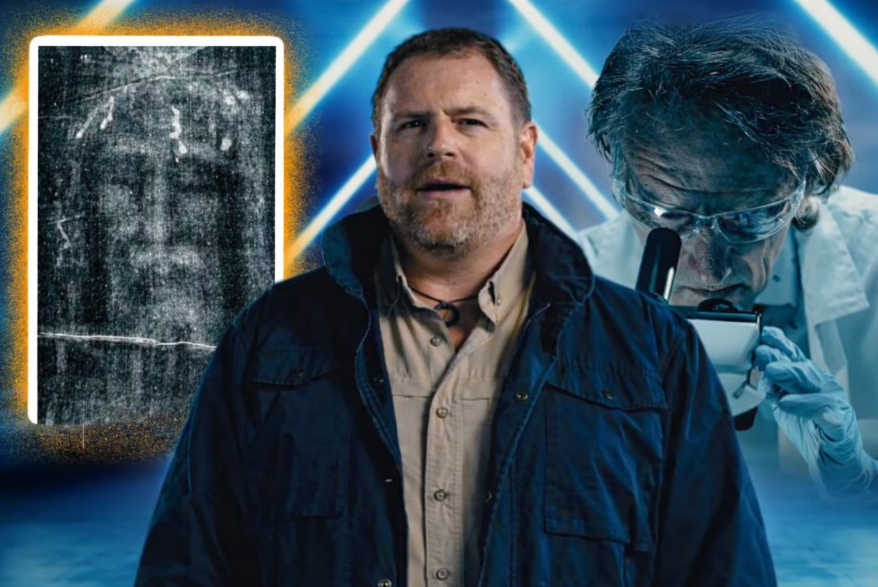
For centuries, the Shroud of Turin has stood as the world’s most famous and controversial religious relic. In a compelling investigation for Expedition Files, Josh Gates dives into the heart of this ancient mystery, weighing the heavy claims of faith against the cold, hard scrutiny of modern science. Is it the actual burial cloth of Jesus Christ, or the most sophisticated hoax in human history?
A Ghostly Image Frozen in Time
The Shroud of Turin is a 14-foot linen cloth bearing the faint, sepia-toned image of a man who appears to have suffered the specific horrors of Roman crucifixion. Josh Gates begins his journey by highlighting the eerie nature of the relic. The image is not a painting; there are no pigments, dyes, or brushstrokes. Instead, it functions like a photographic negative, a detail discovered only in 1898 when the first photograph of the shroud revealed a startlingly realistic human face.
Gates explores the physical evidence embedded in the fibers: bloodstains that match the biblical descriptions of the crown of thorns, the scourging, and the spear wound in the side. For believers, it is a “divine snapshot” of the Resurrection. For skeptics, it is an impossible artifact that defies explanation.
The 1988 Carbon Dating Bombshell
The investigation pivots to the most significant blow the shroud’s authenticity ever received. In 1988, the Vatican allowed three independent laboratories in Oxford, Zurich, and Tucson to perform radiocarbon dating on a small sample of the cloth. The results were unanimous and devastating for the faithful: the flax used to make the linen dated back to between 1260 and 1390 AD—the Middle Ages.
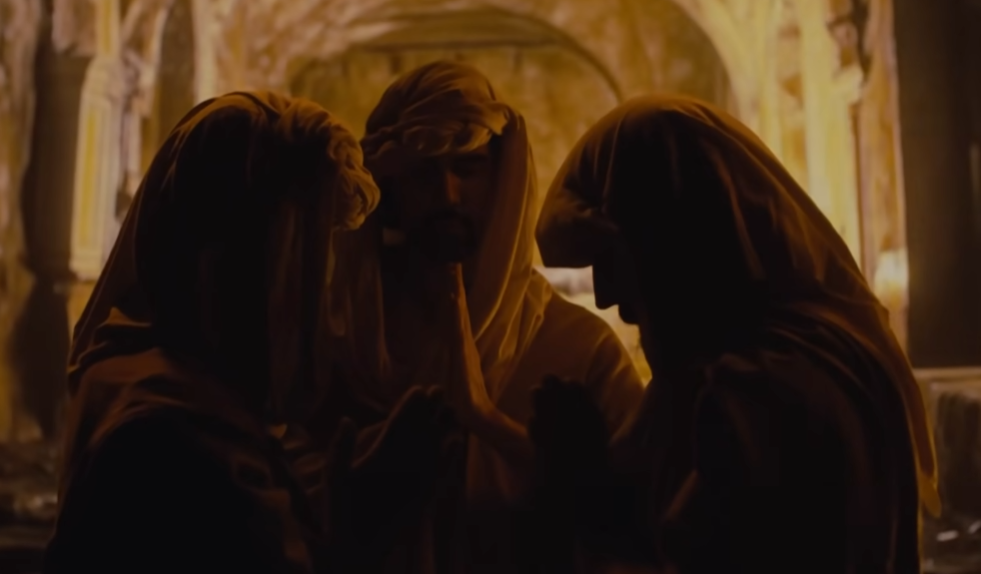
Josh Gates revisits this “scientific verdict,” which led many to conclude the shroud was a medieval forgery. However, as Gates reveals, the story didn’t end there. In the decades since, the 1988 tests have come under intense fire. Critics argue the samples were taken from a corner of the shroud that had been repaired by medieval nuns after fire damage, meaning the scientists dated a patch rather than the original cloth.
New Science Reopens the Case
Gates introduces viewers to groundbreaking new research that challenges the medieval theory. Using Wide-Angle X-ray Scattering (WAXS), Italian scientists recently re-examined the cellulose aging of the linen fibers. Their findings suggest the shroud is actually much older—potentially 2,000 years old, placing its origin squarely in the era of Jesus.
Furthermore, Gates investigates the “impossible” nature of the image itself. Even with today’s technology, scientists have been unable to replicate the image’s unique characteristics. It only exists on the uppermost microscopic layer of the fibers. Some researchers theorize it was created by a massive, instantaneous burst of vacuum ultraviolet radiation—a phenomenon some associate with the moment of Resurrection.
The Leonardo Connection?
The investigation also touches on one of the more colorful theories: could the shroud be a “prototype photograph” created by the ultimate Renaissance man, Leonardo da Vinci? Gates examines the similarities between the shroud’s face and da Vinci’s self-portraits. While the timeline of the shroud’s known history makes this theory difficult to prove, it underscores the relic’s status as a masterpiece of mystery.
The Verdict of the Heart
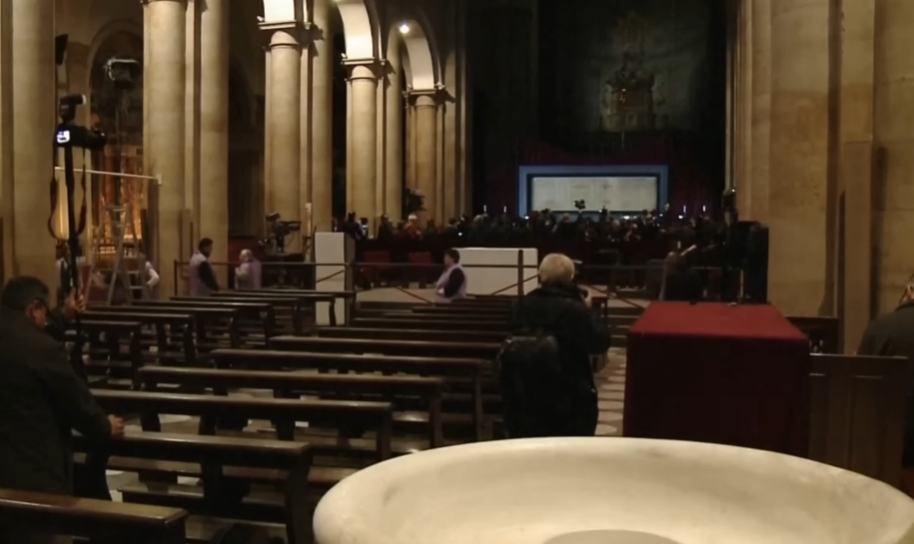
As Josh Gates concludes his investigation, he notes that the Shroud of Turin remains in a scientific “no-man’s-land.” While carbon dating points to a hoax, X-ray analysis and the physics of the image-making point to something miraculous.
Ultimately, Gates suggests that the Shroud may never be “proven” one way or the other. Perhaps its true purpose isn’t to provide scientific certainty, but to remain an enigma that forces us to look closer at the intersection of history, science, and faith. Whether it is a miraculous relic or a medieval marvel, the Shroud of Turin continues to be a powerful mirror of human belief.