Fred Lewis Stuns the Yukon With Reported $75 Million Discovery, Challenging the Klondike Order
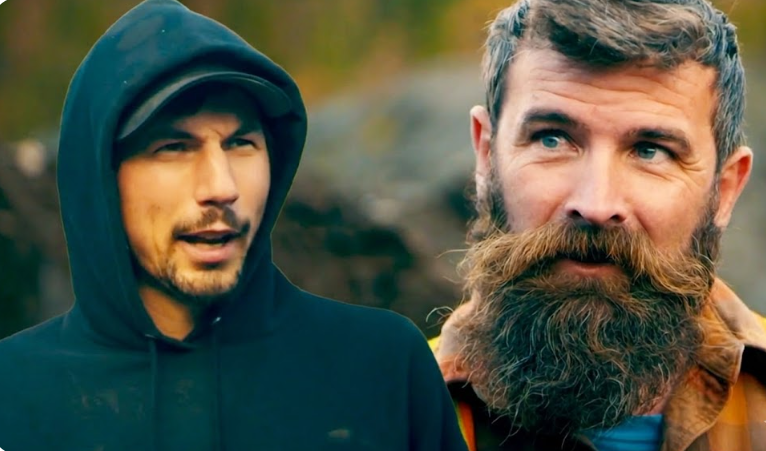
Fred Lewis, long cast as the determined outsider among the Klondike’s heavyweights, is reported to have uncovered a deposit valued at approximately $75 million in a remote stretch of Golden Valley Creek. If verified over a full season tally, the discovery would mark one of the most lucrative single pay zones revealed in recent Yukon mining history — and a dramatic reversal of fortunes for a miner many believed was on the brink of collapse.
For years, the hierarchy of the region has been defined by scale and consistency, particularly under the dominance of Parker Schnabel, whose operations routinely produce more than 7,000 ounces per season. Lewis, by contrast, has often battled mechanical setbacks, limited ground access and thinner margins. This season appeared no different — until it was.
The $20 Million Turning Point
Midway through the season, with morale sagging and equipment failure rates climbing, Lewis made a bold acquisition that raised eyebrows across the Klondike. He reportedly committed $20 million to secure a frozen claim in Golden Valley Creek — ground previously considered too deep and too technically challenging to justify commercial stripping.
Local observers described the move as an all-or-nothing decision.
“He went from having liquidity to carrying serious exposure overnight,” said one equipment appraiser familiar with regional claim valuations. “Most operators wouldn’t touch that ground without a major infrastructure plan.”
The target production figure was equally ambitious: 10,000 ounces. For a crew struggling to keep its core machinery online, the projection sounded more aspirational than operational.
Yet Lewis framed the purchase not as a risk, but as a necessary pivot. The traditional model — incremental cuts and standard wash plant throughput — had reached its ceiling. To compete with established leaders, he would need a structural advantage.
Engineering the “Golden Beast”
That advantage came in the form of a custom-built wash plant nicknamed the “Golden Beast.” Dissatisfied with standard sluicing systems, Lewis reportedly spent two years researching alternative recovery technologies, including maritime and heavy-aggregate processing methods abroad.
The result was a $5 million processing unit designed specifically for Golden Valley’s dense, rocky paydirt. Unlike conventional plants optimized for lighter gravels, the Golden Beast was engineered to handle oversized material and maintain recovery efficiency under extreme load conditions.
The early weeks were not smooth. Hydraulic hoses burst under pressure. Calibration issues reduced throughput. At one point, crew members questioned whether the new plant would survive the season.
But persistence paid off. As stripping operations pushed through roughly 50 feet of permafrost — a natural barrier that had deterred previous operators — the crew reached what geologists now describe as an ancient, undisturbed riverbed.
The Riverbed Revelation
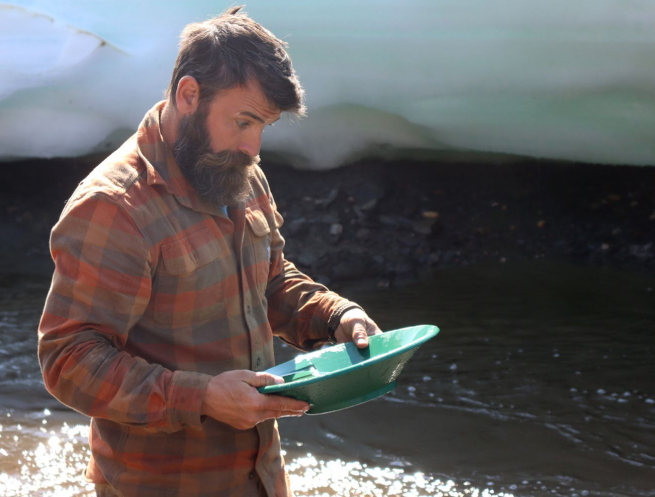
The exposed zone has been estimated to contain more than 3,700 ounces of high-grade gold. At current market prices, that volume equates to a valuation approaching $75 million, depending on purity and final recovery totals.
The defining moment came when the crew fractured a large boulder obstructing the cut face. According to those present, the stone revealed thick, visible veins of gold, including an estimated 250 ounces of clustered nuggets in a single mass.
In Yukon terms, it was a textbook “bonanza” moment — the type miners recount for decades.
Whether the broader pay zone sustains that grade across its full footprint remains to be seen. However, the concentration alone has altered perceptions of Lewis’s strategic gamble.
A Challenge to the Established Order
For years, Parker Schnabel has set the performance benchmark in the region, combining scale, logistics and disciplined cost control to produce consistent seasonal totals exceeding 7,000 ounces — often valued at roughly $14 million per year in realized revenue.
Lewis’s reported discovery differs not in total annual output, but in grade density and projected value concentration. A single high-yield zone valued at $75 million would eclipse many full-season tallies in terms of gross potential.
The comparison underscores two distinct mining philosophies: Schnabel’s model of sustained, multi-cut throughput versus Lewis’s targeted, high-risk ground acquisition strategy.
Industry analysts note that both approaches carry exposure. Scale demands capital stability and workforce depth; concentrated plays depend on geological accuracy and engineering execution.
Questions and Scrutiny
As with any headline-grabbing discovery, skepticism has followed.
Some observers have questioned the timing, noting the dramatic narrative arc of a struggling operator turning the tide mid-season. Others speculate about potential financial backing from silent partners, suggesting that multi-million-dollar acquisitions often require deeper capital pools than publicly acknowledged.
Such discussions are not new to televised mining. The Klondike has seen its share of overextended ventures, environmental compliance disputes and exaggerated projections. From the Hoffmans’ underwhelming Guyana results to regulatory penalties faced by established operators, the region’s history is complex.
In Lewis’s case, however, the gold recovered and weighed remains the central metric. If assay reports and final season totals align with current projections, the discovery will stand on measurable output rather than narrative momentum.
Strategy or Serendipity?
The broader question facing the Yukon mining community is whether Lewis’s success represents strategic foresight or geological fortune.
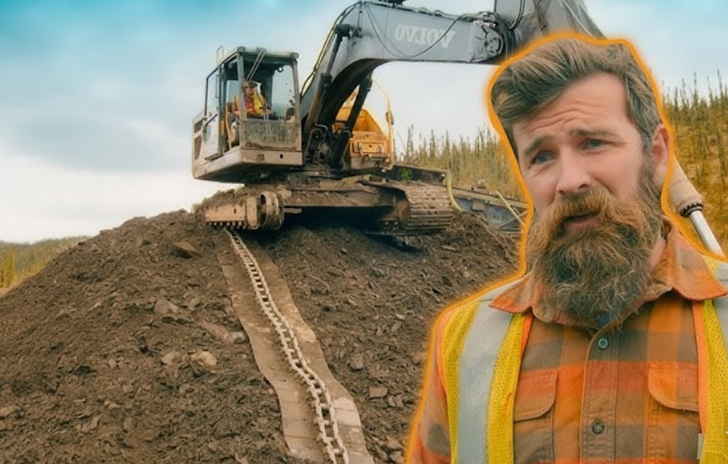
Targeting deep, previously overlooked ground required not only capital but confidence in subsurface modeling. Clearing permafrost layers demanded specialized machinery and sustained operational discipline. The Golden Beast, once stabilized, appears to have provided the recovery efficiency necessary to capitalize on the pay zone.
Yet mining, by its nature, contains an irreducible element of unpredictability. No amount of engineering guarantees grade distribution.
For Fred Lewis, the distinction may ultimately be academic. After a season defined by pressure and doubt, the numbers now speak loudly. Whether this marks the beginning of a sustained shift in Yukon leadership or a singular breakout year will depend on how the next cuts perform.
For now, the veteran miner once labeled an underdog stands at the center of the Klondike conversation — not as a cautionary tale, but as a contender.