Tony Beets discovered mammoth tusks while mining, a surprising find.
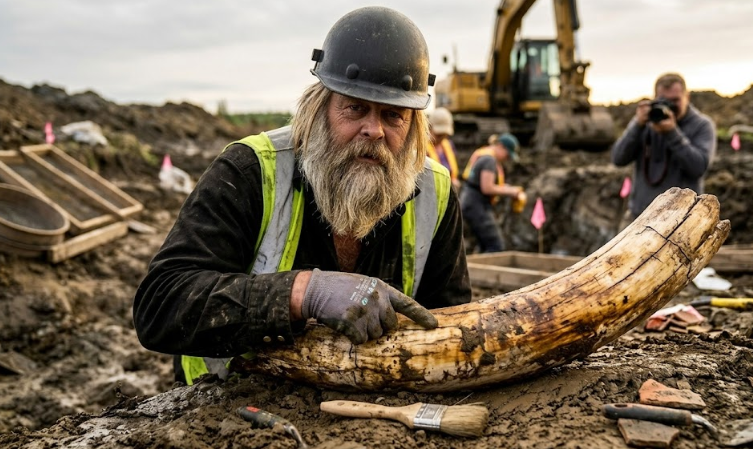
In the Klondike, gold is rarely the only thing buried beneath the permafrost. Over the years, miners have uncovered everything from ancient bison bones to fragments of Ice Age vegetation preserved in frozen ground. But if Tony Beets were to uncover a mammoth tusk while stripping pay at one of his Yukon claims, the implications would stretch far beyond a simple curiosity.
From a production standpoint on Gold Rush, such a discovery would represent more than an unusual interruption. It could become a defining storyline — one that blends the raw economics of placer mining with the deep-time history of the Yukon.
The Reality Beneath the Pay Layer
Tony Beets operates in some of the richest placer ground in the Klondike, including Indian River and Paradise Hill. These claims sit within ancient river channels — particularly the legendary “white channel” gravels — which were formed during the Pleistocene epoch. That same epoch was home to woolly mammoths.
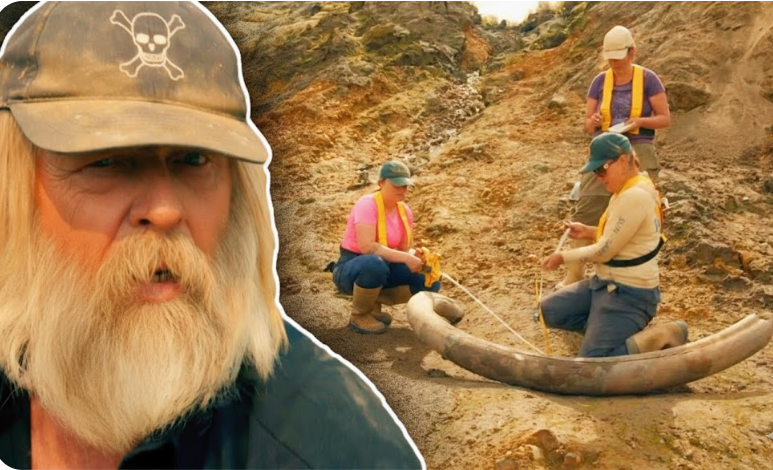
It is not uncommon for Yukon miners to encounter Ice Age remains. The region’s permanently frozen ground acts as a natural preservation chamber. Tusks, bones, and even soft tissue have been found by placer miners who cut deep into old riverbeds.
If Tony’s excavator were to expose a curved ivory tusk embedded in frozen muck, the immediate reaction would likely be a mix of fascination and frustration. Fascination, because such finds are rare and scientifically valuable. Frustration, because any paleontological discovery brings regulatory obligations.
In Yukon, significant fossil finds must be reported. Work in the immediate area can be paused while specialists assess and recover the specimen. For an operation targeting 6,500 ounces — roughly $20+ million at current prices — even a few days of downtime matters.
Production Pressure vs. Preservation
Tony’s mining model depends on momentum. His operations at Indian River often run 24 hours a day, pushing hundreds of truckloads of overburden to reach pay. A mammoth tusk discovery would likely halt stripping in that section until territorial authorities and paleontologists secure the site.
From a strategic perspective, the key question becomes: how large is the affected zone?
If the tusk is isolated, recovery might be swift. But if it indicates a broader fossil layer, Tony could face weeks of limited access to that ground. In a season already shaped by mechanical breakdowns and shifting crew leadership, another external delay would test operational resilience.
As a program analyst, I would expect the show to frame this as a clash between deep history and modern industry. Tony is pragmatic. He respects the land, but he measures success in ounces. The tension between scientific preservation and gold recovery would be compelling television — particularly if the crew is on the edge of hitting a major production milestone.
Financial Implications
There is also the economic dimension beyond lost sluicing time.
Mammoth ivory has commercial value in certain legal markets, though regulations are strict. In Canada, fossil ownership and sale are governed by territorial law. Depending on the claim location, the tusk may belong to the Crown rather than the miner.
If Tony cannot profit from the find directly, the immediate financial benefit is zero — while the cost of downtime could reach six figures in lost production.
However, the indirect value is significant. Gold Rush thrives on moments that remind viewers the Klondike is more than a gold field — it is a frozen archive of Earth’s past. A mammoth tusk discovery could elevate the narrative, drawing new audience interest and reinforcing the scale of what lies beneath Tony’s cuts.
Crew Dynamics and Leadership
There is another layer worth examining: leadership optics.
Tony has increasingly delegated responsibility to Mike and Monica at Paradise Hill, while Kevin operates independently at Scribner Creek. If the tusk were discovered under Mike’s supervision, it would become a leadership test. How quickly does he secure the site? How does he communicate with authorities? How does he balance production targets with compliance?
A well-managed response could strengthen Mike’s credibility as a future steward of the Beets empire.
Alternatively, if communication falters or production losses mount, Tony may step back in more forcefully — reinforcing his reputation as the ultimate decision-maker in crisis.
Narrative Ripple Effects
The discovery could also shift strategic priorities.
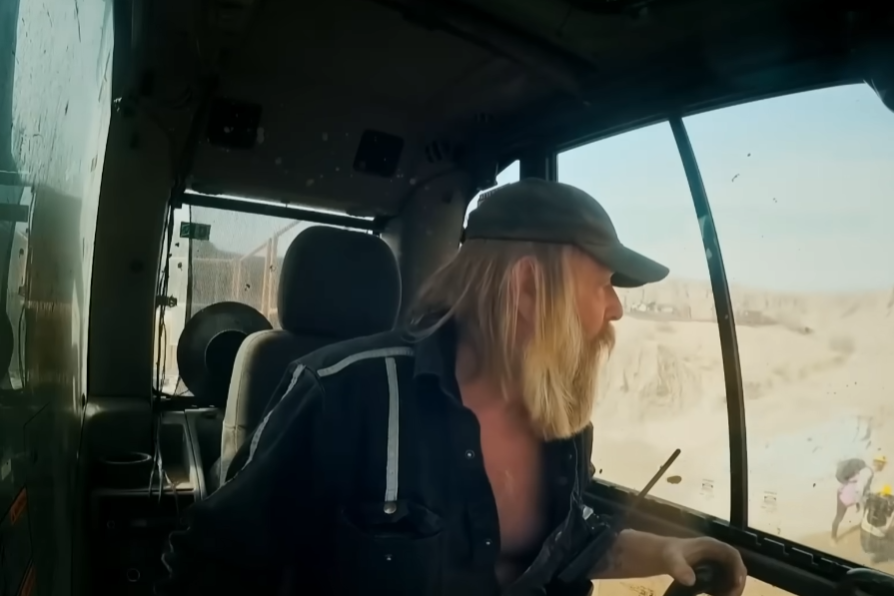
If one section of ground becomes temporarily inaccessible, Tony might accelerate development elsewhere. That could mean redeploying rock trucks, moving an excavator to a backup cut, or increasing throughput at a secondary wash plant.
Such a pivot would reveal the depth of his operational planning. Experienced miners do not rely on a single cut. They maintain contingency zones precisely for moments like this.
From a broader storytelling perspective, the tusk symbolizes the layered nature of the Klondike. Gold in placer deposits was itself transported by ancient rivers. Those same rivers carried and buried Ice Age fauna. The fact that Tony’s machines can uncover both $2 million cleanups and 30,000-year-old ivory underscores the geological scale of the region.
What Happens Next?
If Tony Beets discovers a mammoth tusk this season, I predict three likely developments:
-
Temporary production slowdown in the immediate area while authorities document and recover the fossil.
-
Operational shift to maintain gold output elsewhere, demonstrating the redundancy built into Tony’s mining strategy.
-
A narrative expansion on the show, emphasizing the Ice Age history of the Yukon and reinforcing the uniqueness of the ground the Beets family works.
Ultimately, such a discovery would not derail Tony’s season — but it would test his ability to adapt under pressure.
Gold may be the primary objective, but in the Klondike, every bucket of pay dirt carries echoes of a world long gone. If a mammoth tusk emerges from the permafrost under Tony Beets’ watch, it will serve as a reminder that while miners chase ounces, they are digging through time itself.