A 2,000-Year-Old Artifact in Nova Scotia? The Oak Island Find That Defies Easy Explanation

A remarkable archaeological discovery on Oak Island’s Lot 5 has sparked renewed debate about the island’s long-debated past. A corroded metal disc, initially believed to be a colonial-era artifact, has now been identified as a Roman coin dating back nearly 2,000 years — a finding that is prompting both excitement and caution among researchers.
The artifact, revealed through CT scanning at the Oak Island research facility, bears the profile of Emperor Claudius II, who ruled the Roman Empire between 268 and 270 AD. According to numismatic specialist Sandy Campbell, the coin appears to have been minted at the Empire’s ninth workshop and shows characteristics consistent with genuine Roman currency of the late third century.
The discovery immediately raises a question that challenges conventional timelines: how did a Roman coin from the height of the Empire find its way to Nova Scotia?
An Unexpected Artifact
Oak Island, located off the coast of Nova Scotia, has been the focus of treasure hunting and archaeological investigation for more than two centuries. While past discoveries have included colonial-era objects, maritime relics and evidence of 18th- and 19th-century activity, the identification of a Roman coin introduces a far older chronological layer.
Historians widely agree that there is no accepted evidence of Roman voyages across the Atlantic. The mainstream academic position maintains that sustained contact between Europe and North America began centuries later.
However, the presence of Roman artifacts in medieval European and Middle Eastern contexts is well documented. Roman coins were often preserved, traded and repurposed long after the Empire’s decline. That historical reality has led researchers to consider alternative explanations that do not necessarily imply a Roman expedition to North America.
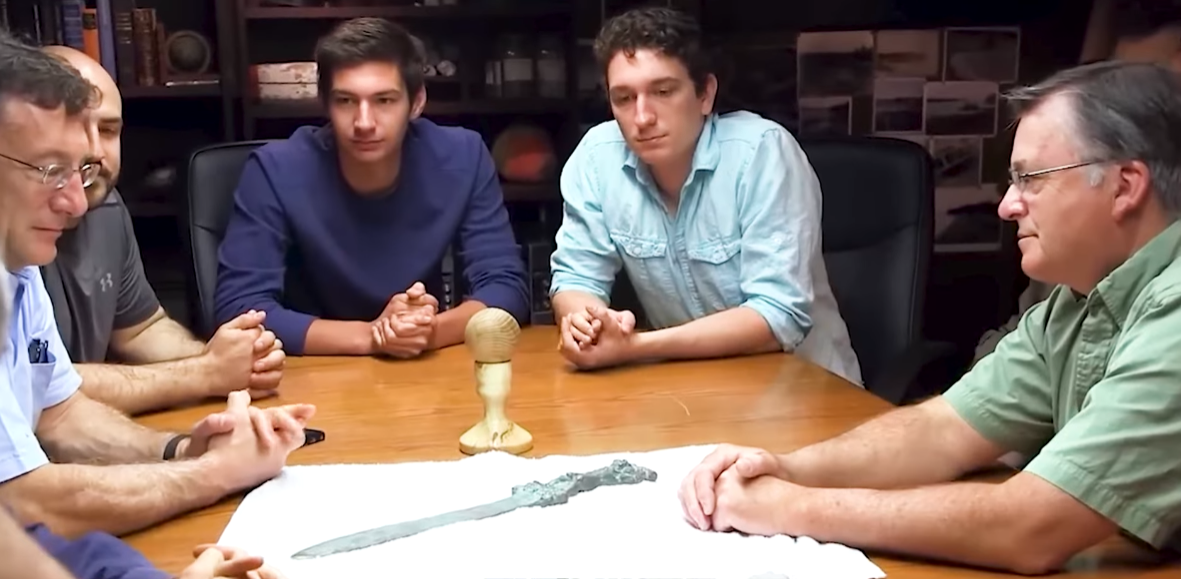
A Multi-Period Site
The coin is not the only artifact drawing attention. Excavations on Lot 5 have yielded pottery fragments dated between the 1600s and 1800s, along with metal buttons and decorative glass beads linked to European trade networks.
Archaeologist Fiona Steel has described the area as showing evidence of prolonged, organized human activity rather than a single isolated event. The pattern of finds suggests that Oak Island may have served multiple purposes across different centuries.
Lead researchers Rick and Marty Lagina have discussed what they describe as a “multigenerational theory” — the idea that various groups may have used the island at different times. Rather than representing a single treasure deposit, the site could reflect overlapping layers of activity connected to trade, settlement or concealment of valuables.
The Templar Hypothesis
One theory gaining renewed attention involves the Knights Templar. The medieval order, founded in the 12th century, was known not only for its military role but also for its involvement in financial networks and construction projects.
Roman coins are frequently found at Templar-associated sites in Europe, often preserved as relics or currency. Some researchers suggest that if the Templars transported valuables or historical objects during periods of political upheaval — particularly after the suppression of the order in 1307 — such artifacts could have traveled far from their original context.
Under this interpretation, the Claudius II coin would not represent Roman navigation of the Atlantic but rather a medieval object carried centuries later by European travelers.
It remains, however, a hypothesis. There is no direct evidence linking the coin to a specific medieval expedition, and scholars caution against drawing conclusions without broader archaeological context.
Reports of Operational Pause
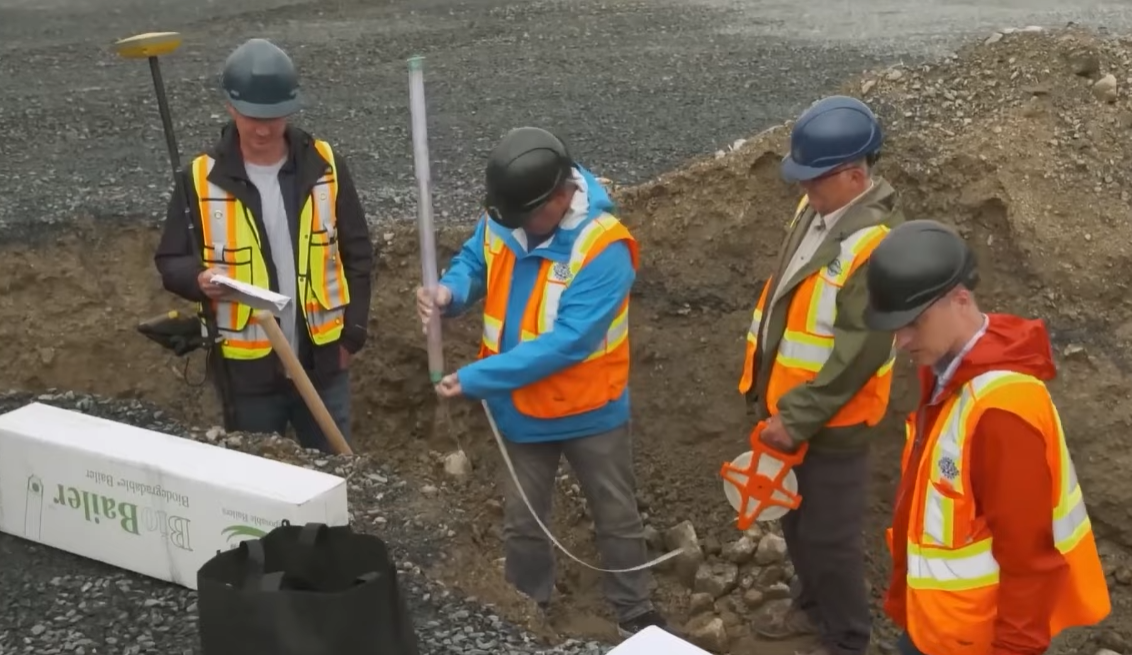
Adding to the intrigue are unconfirmed reports of a temporary halt in drilling activity at Lot 5. Individuals familiar with site operations have suggested that access to certain areas has been restricted while findings are reviewed.
There has been no official statement indicating a permanent suspension of work. It is common practice in archaeology for excavation plans to adjust following significant discoveries, particularly when regulatory permissions or preservation protocols are involved.
Without formal confirmation, speculation about a “shutdown” remains just that — speculation.
A Cautious Approach to Interpretation
Academic historians emphasize that isolated artifacts must be evaluated within a broader evidentiary framework. Roman coins have been discovered in unexpected places before, often transported through trade, collection or later settlement patterns.
The presence of a single coin does not, on its own, prove ancient transatlantic contact. It does, however, underscore the complexity of global artifact circulation over centuries.
Oak Island’s layered history — spanning indigenous use, colonial settlement, maritime trade and treasure hunting — creates an environment where objects from different eras can converge.
What Comes Next?
The research team is expected to conduct further metallurgical analysis and soil-context examination to better understand how and when the coin was deposited.
If additional artifacts from similar periods are uncovered in controlled contexts, the conversation could shift significantly. Until then, the Claudius II coin stands as a fascinating anomaly rather than definitive proof of a rewritten history.
For now, Oak Island remains what it has long been: a site where archaeology and legend intersect. Each discovery adds a new piece to a puzzle that spans centuries, inviting both rigorous investigation and careful skepticism.
Whether the Roman coin ultimately reshapes historical understanding or simply deepens the island’s mystery, one thing is clear — Lot 5 continues to challenge assumptions about who may have visited, used or valued this remote stretch of the North Atlantic coast.
As excavations proceed, researchers and historians alike will be watching closely, aware that extraordinary claims demand equally extraordinary evidence.