THE OAK ISLAND SHUTDOWN: Has a 2,000-Year-Old Roman Secret Finally Been Unearthed?
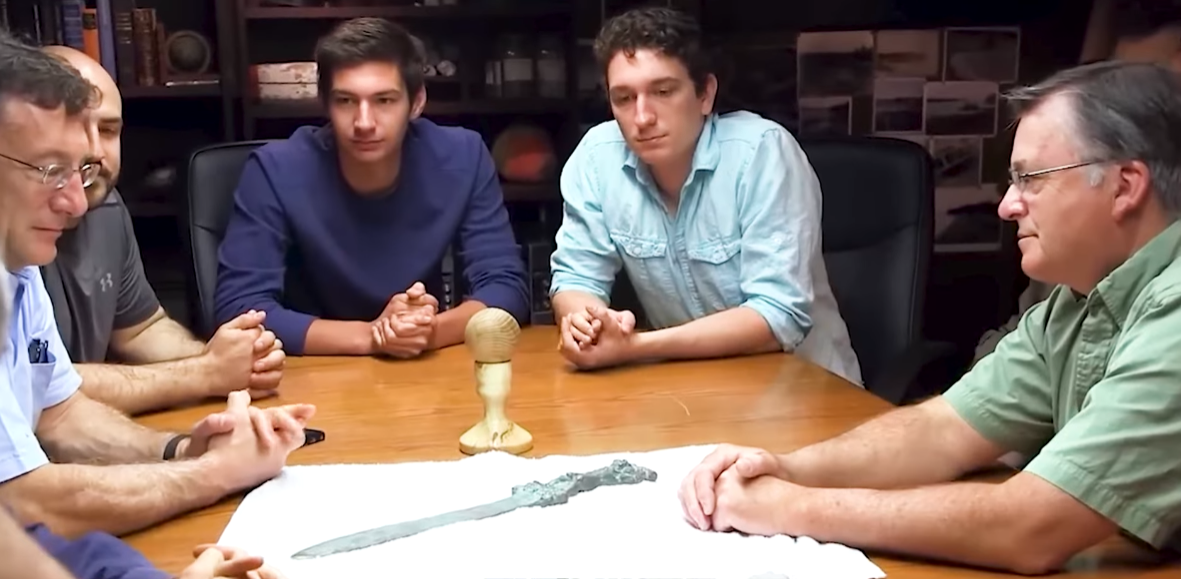
Rumors of a total media blackout and a sudden cessation of operations have gripped the local community following a series of “impossible” discoveries on Oak Island’s enigmatic Lot 5. While the official narrative remains one of cautious archaeology, insiders claim that what has been pulled from the mud of the North Atlantic coast has the potential to dismantle nearly every established timeline of North American history.
The Face of an Emperor
The atmosphere inside the Oak Island research center shifted from excitement to stunned silence last week as a CT scanner revealed the true identity of a corroded metal disc found in the soil. It was not a colonial button or a pirate’s token, but a coin bearing the unmistakable profile of Roman Emperor Claudius II, who ruled from 268 to 270 AD.
Numismatic expert Sandy Campbell confirmed the find as a genuine Roman artifact, specifically minted at the Empire’s 9th workshop. The discovery poses a radical question: How did a 2,000-year-old coin from the height of the Roman Empire end up in Nova Scotia, more than a millennium before Christopher Columbus ever set sail?
A “Grand Central Station” of History
While mainstream history suggests the Romans never crossed the Atlantic, the evidence on Lot 5 suggests that Oak Island was far more than a simple burial site for 18th-century pirate booty. Archaeologist Fiona Steel recently uncovered fragments of sophisticated earthenware pottery dating between 1600 and 1800, suggesting a long-term, organized human presence.
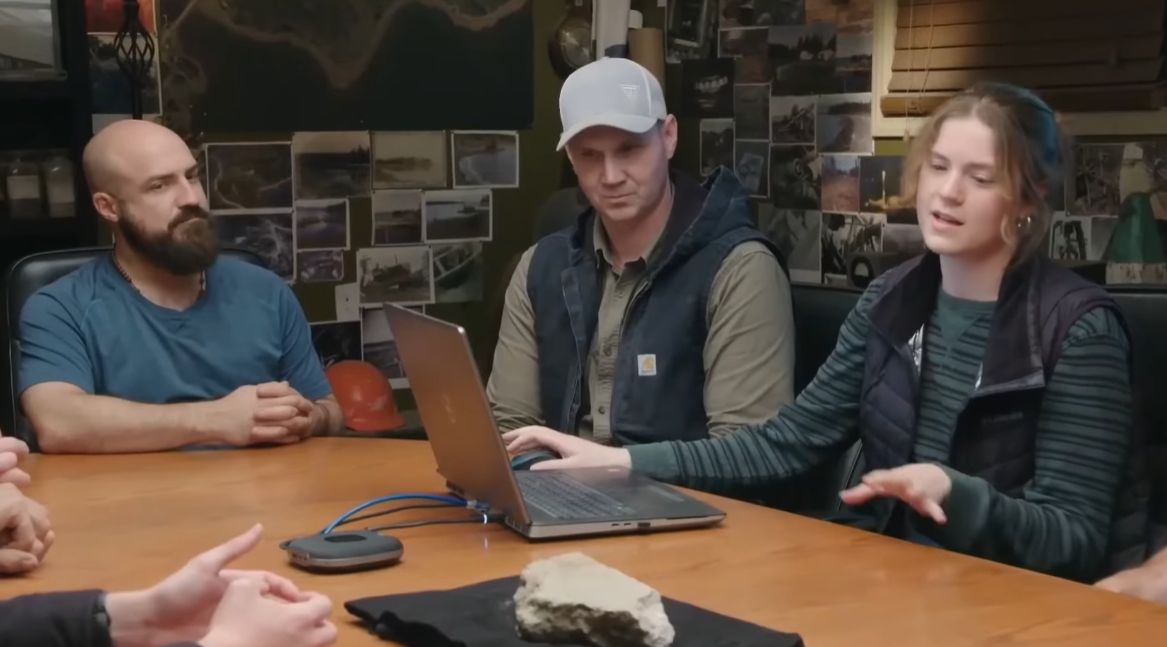
This has led lead researchers Marty and Rick Lagina to propose a “multigenerational theory.” Rather than a single event, Oak Island appears to have served as a clandestine hub for various groups across centuries. From military personnel indicated by metal buttons to wealthy traders signaled by Venetian glass beads, the island is beginning to look like a “secret Grand Central Station” used by those with access to ancient wealth and global trade networks.
The Templar Connection: The Missing Link?
The most compelling theory for the coin’s presence involves the Knights Templar. Known not just as warriors but as meticulous excavators of the Temple of Solomon in Jerusalem, the Templars were the “archaeologists” of the 12th century. Researcher Doug Crowell pointed out that Roman coins are frequently found at Templar sites across Europe and the Middle East.
When the Templar fleet vanished in 1307 to escape the reach of the King of France, it is theorized they carried with them a vast treasury of ancient relics and currency. To the Templars, a Roman coin was an asset of intrinsic value. If the order reached North America to safeguard their treasures, the Claudius II coin may not represent a Roman voyage, but a Templar fingerprint—a piece of ancient currency carried by medieval refugees.
The Great Silence
Perhaps most unsettling are the reports of a sudden halt in drilling. According to site workers who spoke on the condition of anonymity, a drill camera captured an “impossible” image deep beneath the surface moments before an order was given to shut down the operation. No press releases followed. Access to certain sectors of Lot 5 has since been restricted.

Whether the “shutdown” is a temporary regulatory hurdle or a genuine effort to suppress a truth that “shouldn’t exist,” the coin of Claudius II remains as proof that the history of the New World is far older and more complex than the textbooks allow. As the team at Oak Island continues to peel back the layers of loose gravel and mystery, the world waits to see if the next discovery will be a chest of gold or a revelation that changes everything we know about the past.