BREAKTHROUGH ON LOT 8: PRE-1800s “HEAVY LOAD” CHAIN RECOVERED NEAR MYSTERIOUS BOULDER FEATURE
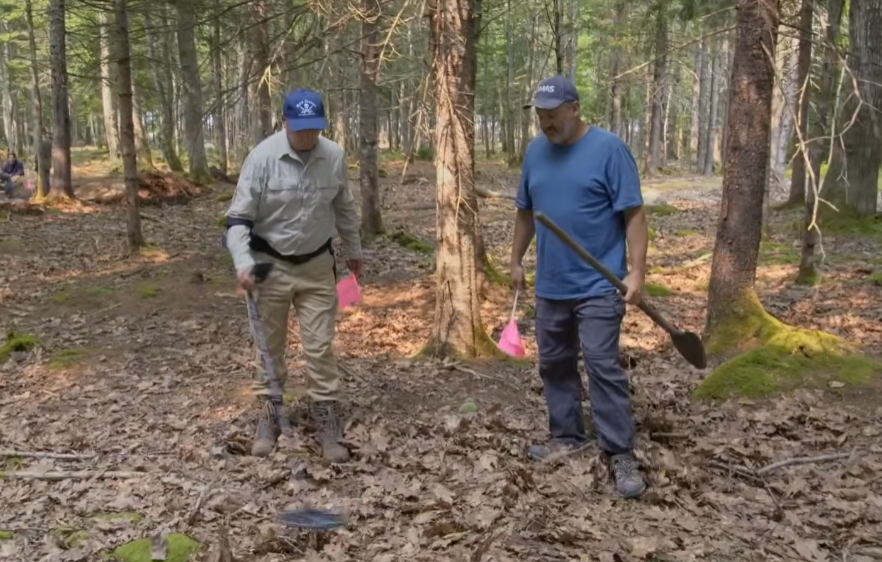
The search for answers on Oak Island has reached a fever pitch following the discovery of a hand-forged iron chain that experts say dates back as far as the 1500s. The artifact, recovered by metal detection expert Gary Drayton and surveyor Scott Barlow, provides a crucial “missing link” that may explain how massive geological anomalies were manipulated on the island centuries ago.
The Discovery on Lot 8
While sweeping a rocky stretch of Lot 8 near the site of a previously discovered musket flintlock, Drayton and Barlow encountered a powerful non-ferrous signal. Excavation revealed several links of an “older-style” oval chain, heavily encrusted but clearly hand-crafted.
The find is situated just twenty yards from a massive, 50,000-pound boulder that has become the focus of intense scrutiny. The team has long suspected the boulder was deliberately moved and placed atop a ring of smaller stones—a feat of engineering that would have required immense pulling power.
“Chains are used for pulling and hauling,” Drayton noted at the site. “When you look at the connections to this mysterious stone boulder, it doesn’t get any better than this. This could be the link we’ve been searching for.”
Lab Analysis: A “Hard Life” in the 1600s
The artifact was immediately rushed to the island’s research center for analysis by metallurgist Emma Culligan. Using CT scanning and X-ray fluorescence, Culligan determined the chain is composed of 99% pure iron—a hallmark of pre-industrial manufacturing.
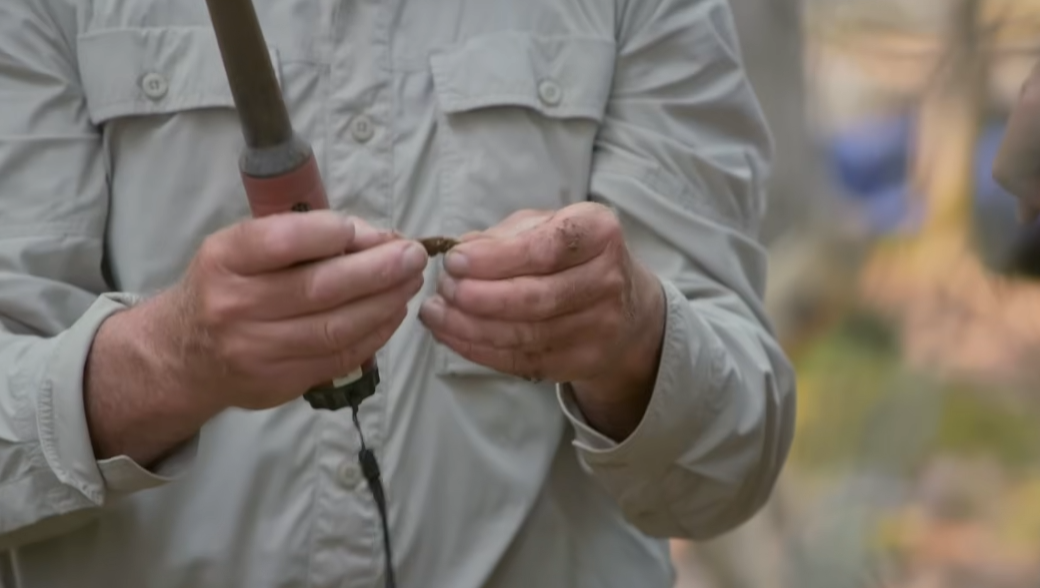
“I’d say comfortably 1600s based on the composition, but technically it could go back to the 1500s,” Culligan reported to a stunned Rick Lagina. She further noted traces of phosphorus, which aligns with the iron-working industry of that era.
Most tellingly, the CT scans revealed significant wear patterns on the curves of the links. According to Barlow, the “collapsed” and thinned nature of the iron suggests the chain was subjected to a “heavy workload,” possibly the literal weight of the nearby 25-ton boulder.
The Knights of Malta Connection
The dating of the chain has sent shockwaves through the Fellowship’s historical research team. The 1600s timeline aligns precisely with the presence of the Knights of Malta in the region, specifically under the command of Isaac de Razilly.
Rick Lagina theorized that the chain, the flintlock, and the boulder feature may all be part of a singular, coordinated effort to conceal something of immense value. “We know they were at Fort Point,” Lagina stated. “This timeline fits.”
What Lies Beneath?
The discovery has shifted the team’s focus to the ground directly beneath the Lot 8 boulder. While some speculate the stone marks a ceremonial site or a “sacred interment,” others believe it acts as a massive capstone for a hidden shaft.
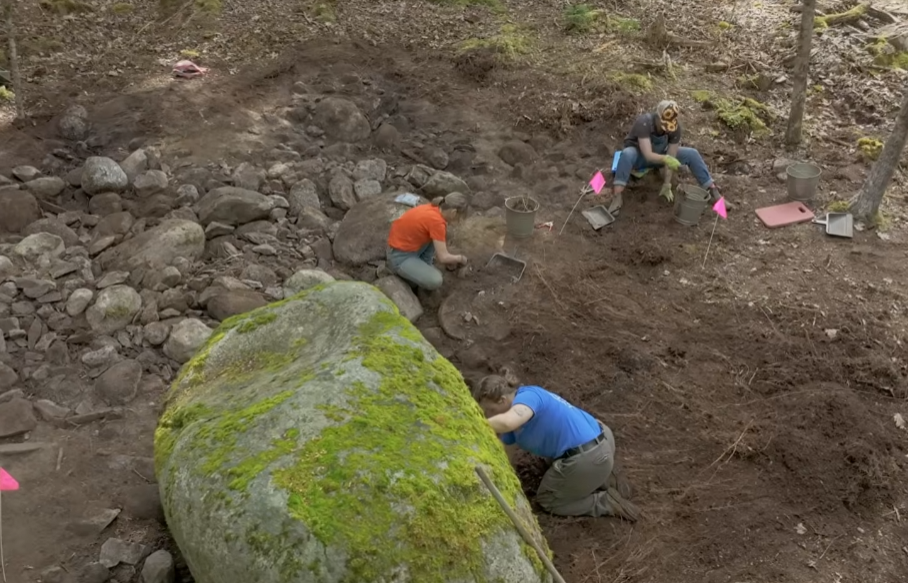
“Can you imagine when that boulder is moved?” Drayton asked. “Maybe this chain was used to lower something down there. There might be some other chain there—but a different color. Maybe gold?”
While the team waits for the logistical clearance to move the 50,000-pound stone, the “mystery lead” and the 1600s chain have been added to the island’s growing “heat map,” which tracks the age and location of artifacts to solve the 230-year-old puzzle. For Rick Lagina and his crew, the chain isn’t just a piece of iron; it is the physical evidence of a massive, ancient operation that refused to leave its secrets behind.