A Season of Breakthroughs: Oak Island’s Biggest Discoveries of 2025
The 2025 season of The Curse of Oak Island has delivered one of the most consequential chapters in the long-running search for answers beneath the mysterious Nova Scotia island. Across multiple sites—from ancient wells and swamp structures to deep shafts in the Money Pit area—the Lagina brothers and their team uncovered evidence that strongly suggests Oak Island’s story stretches far deeper, and far earlier, than once believed.
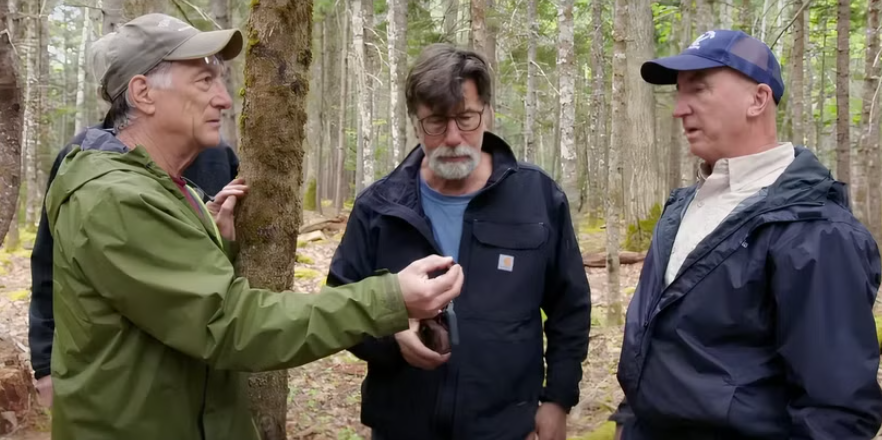
One of the most striking investigations took place on Lot 26, where Jack Begley, archaeologists Laird Niven and Helen Sheldon, and later archaeometallurgist Emma Culligan, returned to a stone well believed to be nearly 900 years old. The well had already attracted attention after water testing revealed unusually high traces of silver. To the team, that chemical signature hinted at something more than simple groundwater.
After pumping out the well, Jack manually scooped layers of muck and debris, which were carefully preserved for later sifting. As the spoils dried and were examined, Helen and Emma identified a strange iron object. At first glance, it resembled a nail—but closer inspection suggested otherwise. The piece appeared hand-wrought, with a rounded, intentional tip and high sulfur content, indicating it was forged in a low-temperature furnace.
Laboratory analysis later confirmed the iron was likely pre-1840 and possibly dated to the early 1700s or earlier. The find reinforced the idea that human activity on Lot 26 occurred well before the documented discovery of the Money Pit in 1795. For the team, this raised a critical question: who built the well, and what purpose did it serve?
Meanwhile, work in the Money Pit area reached a dramatic point with the completion of the team’s sixth and final large-diameter steel shaft of the year, known as “The One Thing” (TOT-1). Lowered nearly 200 feet into a massive solution channel filled with collapsed debris, the caisson was designed to vacuum and recover anything that might have fallen into the cavity over centuries of failed excavations.
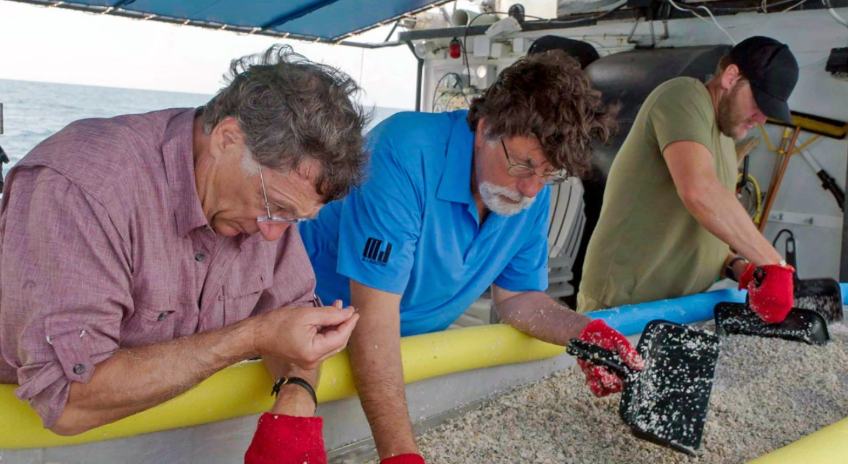
Sorting through the TOT-1 spoils at Smith’s Cove, metal detection expert Gary Drayton made another headline-grabbing discovery: a fragment of a small pickaxe head. The tool’s size and weight suggested it was used for tunneling rather than surface work. When compared with a similar pick fragment found earlier in the season, metallurgical analysis revealed both pieces shared nearly identical compositions.
Emma Culligan dated the tools to at least the early-to-mid 1700s, with the possibility they could trace back to the mid-1600s. For Rick and Marty Lagina, this was powerful confirmation that people were digging deep underground on Oak Island long before modern searchers arrived. The implication was clear: the Money Pit area was not a myth born in 1795, but the site of much older, intentional underground activity.
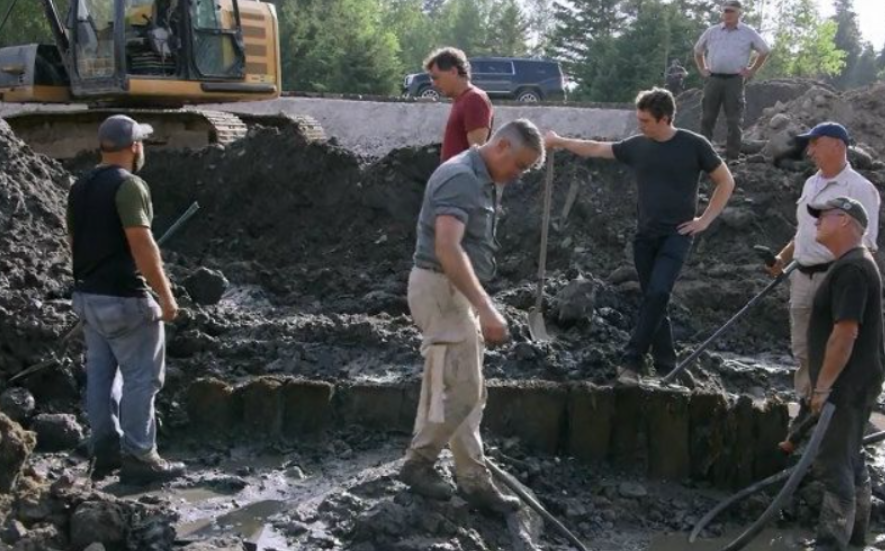
Perhaps the most tantalising discovery came at Smith’s Cove, where excavation uncovered large quantities of coconut fiber buried alongside wooden structures. Scientific testing confirmed the material was indeed coconut fiber—a substance famously linked to historic flood tunnel systems described in 19th-century accounts of the island. Since coconut trees grow thousands of miles away, its presence strongly suggests deliberate transport and engineering.
For Rick Lagina, the confirmation was pivotal. Coconut fiber had long been described as part of a sophisticated filtration system designed to protect something valuable. Its reappearance in undisturbed contexts suggested the team may be closer than ever to identifying the original flood tunnel that thwarted treasure hunters for more than two centuries.
The swamp, long regarded as one of Oak Island’s most enigmatic zones, also produced major revelations. Excavation in the northern swamp uncovered a stone pathway and a vault-like structure with precisely cut slate and brick. Artifacts recovered from within—including a wrought iron handle and hook—were dated to the late 1700s, predating documented ownership by farmer Anthony Graves.
Adding to the intrigue, a glass gemstone-like object found on Lot 5 was identified as high-lead “paste,” a type of simulated gemstone developed in early 18th-century France. Its presence suggested that individuals of wealth and status were active on the island during that era, potentially overseeing or participating in treasure-related operations.
By season’s end, the team gathered in the war room to reflect on a year defined less by recovered treasure and more by mounting evidence. Ancient wells, pre-1795 tools, coconut fiber, engineered tunnels, and elite personal items collectively painted a picture of Oak Island as a carefully planned and repeatedly used site—one shaped by intention, engineering skill, and secrecy.
As Rick Lagina emotionally noted, the true treasure of 2025 may be knowledge itself: proof that the Oak Island mystery is grounded in real historical activity. With new data reshaping old assumptions, the team leaves the island convinced that the story is far from over—and that the answers may finally be within reach.