BEYOND THE MYTH: $98M TEMPLAR VAULT UNCOVERED 180 FEET BENEATH THE SWAMP
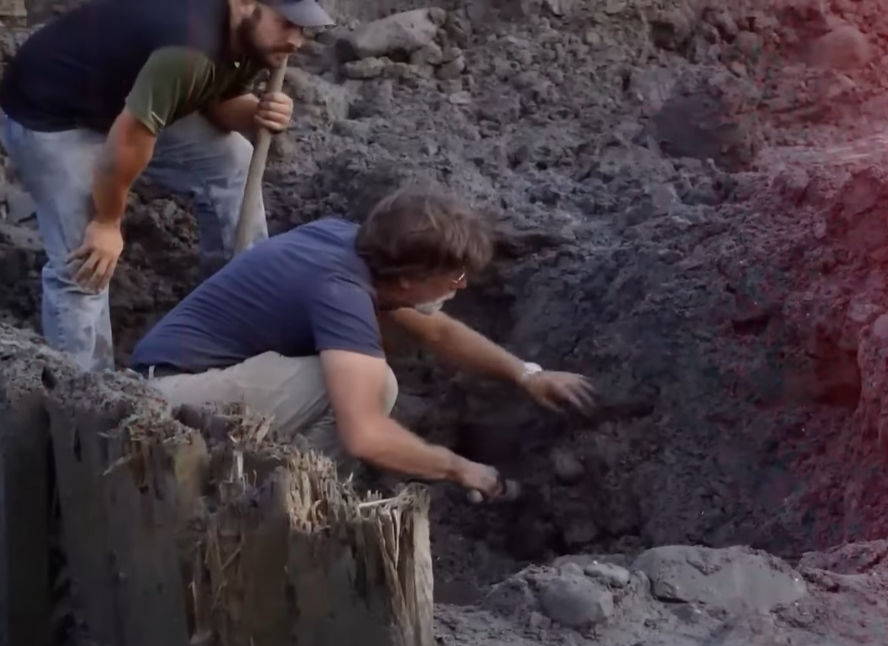
In a development that has effectively rewritten the history of the North American continent, Rick Lagina and his team have officially breached a sealed Templar vault located 180 feet beneath the Oak Island swamp. The discovery, valued at a staggering $98 million in precious metals and historical artifacts, confirms a centuries-old theory: Oak Island was never just a treasure hunt; it was a masterfully engineered sanctuary for the exiled Knights Templar.
The Breach at 180 Feet
The breakthrough came following an exhaustive sonar mapping project that identified an anomaly beneath the bedrock, directly aligned with the original Money Pit. Unlike previous excavations, which focused on wooden shafts, this chamber was cut directly into the stone and sealed with marine clay—a sophisticated technique used to prevent saltwater corrosion.
Upon breaching the outer seal, the team discovered a limestone slab bearing a weathered cross pattée, the unmistakable symbol of the Knights Templar. Carbon dating has placed the stone’s placement in the early 14th century, predating Christopher Columbus by nearly two hundred years.
The “Guardian Mechanism”
Archaeologists and maritime engineers were stunned to find that the vault was protected by a “Guardian Mechanism”—a complex lattice of brass pulleys and wooden valves interwoven through the bedrock.
Experts recognize these structures as being derived from 14th-century naval architecture. This suggests that the builders were seafaring Templars who repurposed their ship-rigging expertise to create a self-destructing defense system. Had the team used conventional drilling methods, the entire chamber would have been flooded or collapsed by these ancient “booby traps.”
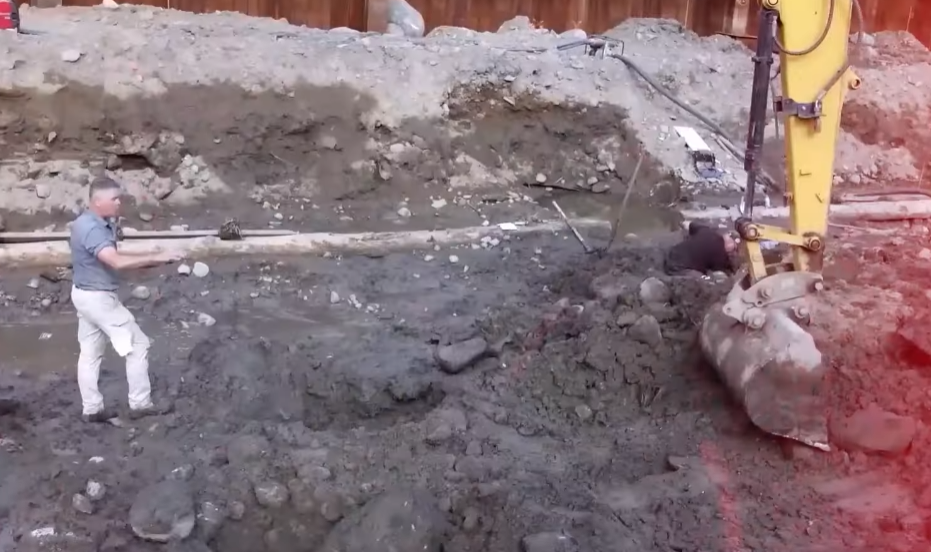
The Golden Chalice of Two Worlds
The crowning jewel of the recovery is a ceremonial chalice found centrally located within a chamber adorned with a blooming rose—a symbol later adopted by the Rosicrucians.
Laboratory testing conducted on-site revealed the chalice is composed of a unique metallurgical blend: Byzantine gold and Frankish silver. This “metallurgical bridge” suggests a union of Eastern and Western craftsmanship unseen since the Crusades. The interior rim bears the Latin inscription Veritas sub rosa (“Truth beneath the rose”), a reference to the Templar oath of absolute secrecy.
A Global Diplomatic Incident
The discovery has transcended television entertainment and entered the realm of international diplomacy. Representatives from the Vatican’s Sacred Antiquities Department have already arrived in Nova Scotia, citing papal records from 1312 that mention a “missing sacred container” that matches the chalice’s dimensions.
As legal monitors from Canada, France, and the Holy See establish conservation protocols, the site has been transformed into a high-security archaeological facility. Access is currently restricted as officials determine the chain of custody for artifacts that could qualify as consecrated religious property.
The “Greater Repository”
Perhaps most chilling is the realization that Oak Island may only be the beginning. Using infrared imaging on the limestone “entryway stone,” researchers found hidden coordinates indicating a remote landmass 1,200 kilometers away in the North Atlantic.

The accompanying Latin text, Hic est aramino, arma ultra est (“This is the lesser repository, the greater exists beyond”), suggests that the artifacts found this week—despite their $98 million value—are merely the directional guides to a far larger cache. For Rick Lagina, the mystery has not been solved; it has simply expanded into a global search for a hidden Templar fleet that may still hold the world’s most sacred relics.