Did Oak Island Just Uncover Pieces of a Lost Ship Beneath the Swamp?
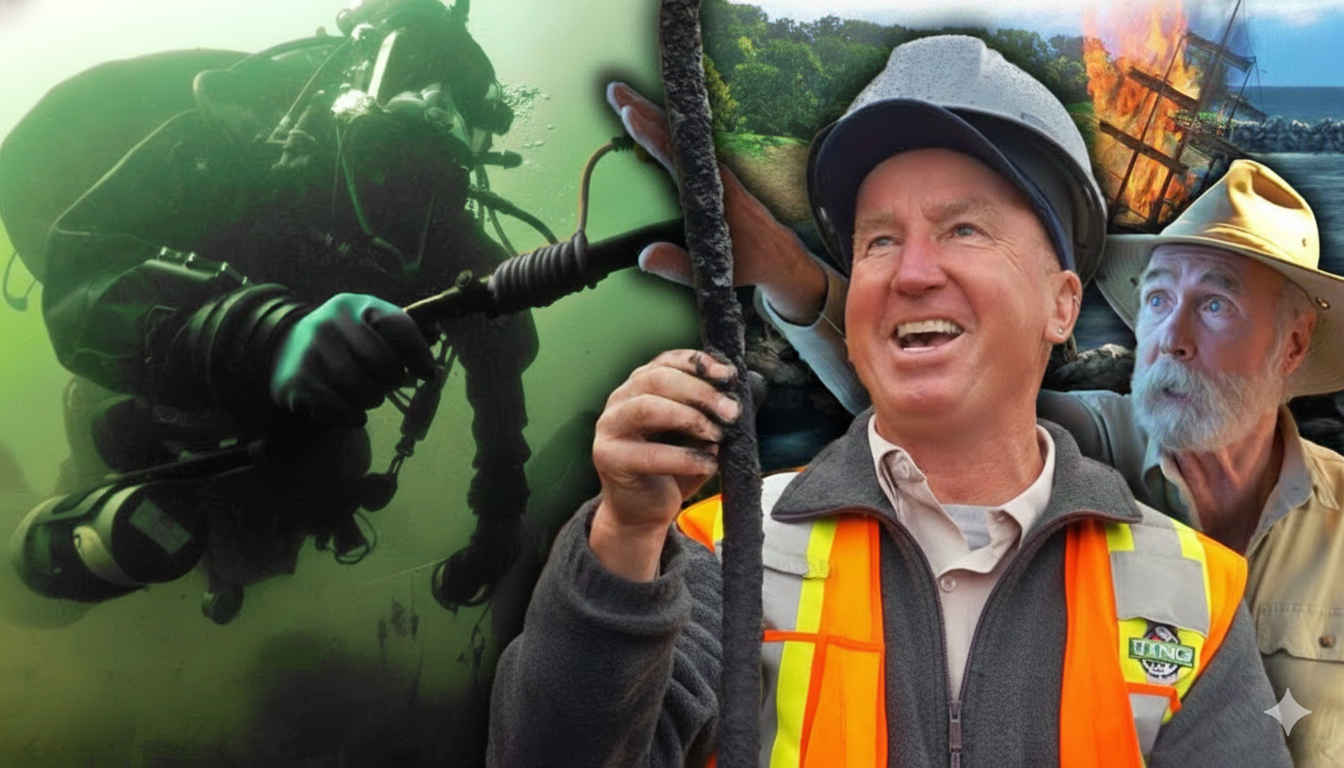
For more than two centuries, the mystery of Oak Island has circled around one central question: did a ship once sail into what is now the swamp, unload its cargo, and then vanish beneath mud and seawater? In the latest phase of the investigation, Rick and Marty Lagina’s team move closer than ever to turning that long-held theory into something far more concrete, uncovering a growing chain of evidence that points toward a buried vessel, a working wharf, and deliberate efforts to hide both.
The week begins along the eastern edge of the swamp, near the now-famous stone pathway that many believe once served as a causeway or working platform. Metal-detecting expert Gary Drayton, joined by David Fornetti, picks up a strong iron signal among ancient boulders. Digging down, the pair recover a heavily bent and broken iron object – a thick, circular form that Gary quickly identifies as a possible ring bolt, the kind used to secure ropes or chains to large timbers, often on ships or wharves.
The size of the iron bar — roughly an inch and a quarter thick — and the obvious signs of stress raise immediate questions. What kind of force twisted it into shape? And why was it buried near the stone pathway? Rick, always cautious but clearly impressed, sends David to consult archaeologist Aaron Taylor for a more detailed assessment. At the lab, the story takes another turn: the iron is not just old, it is burnt. Charcoal still clings to the surface, indicating exposure to intense fire while attached to a wooden structure, quite possibly large ship timbers.
That assessment reinforces a theory already circulating within the team. Over recent seasons, they have recovered other ring bolts along the same pathway, some dating as far back as the 17th century. When combined with seismic data showing a ship-shaped anomaly in the swamp and the discovery of what appears to be a stone-built working surface, the evidence increasingly suggests that Oak Island once had an active landing point, used to offload cargo from a sizeable vessel. If that vessel was then burned and buried, the ring bolt’s fire damage might be a direct echo of its last moments.
While activity intensifies in the swamp, another line of inquiry unfolds offshore. In the war room, the team welcomes veteran underwater archaeologist Dr Lee Spence, a man with more than 50 years of experience and over 100 identified shipwrecks to his name. Using recent magnetometer data from CSR Geo Surveys, they review several intriguing anomalies in the waters north and east of Oak Island – including one near Lot 5 and a particularly strong cluster near Frog Island Shoal.
Dr Spence does not hesitate. The signatures, he says, look very much like shipwreck targets. With local law tightly regulating underwater excavation, the team cannot dig, but they can conduct a non-invasive inspection. Diver Tony Sampson, Dr Spence, and their crew head out by boat, equipped with a handheld Aquascan DX200 magnetometer and cameras. The mission is clear: find visible evidence – a cannon, an anchor, exposed timbers – that could justify a formal excavation permit.
Conditions, however, work against them. At a depth of around 20 feet, the seafloor is covered in heavy kelp and silt. The magnetometer registers strong hits – confirming significant metal hidden beneath the seabed – but nothing protrudes through the vegetation. A second sweep produces more promising readings in a sandy patch, yet again there is no visible hardware. Back on deck, Dr Spence is candid: he is convinced there is a shipwreck in the area, but without something exposed to the eye, regulators are unlikely to grant permission to dig.
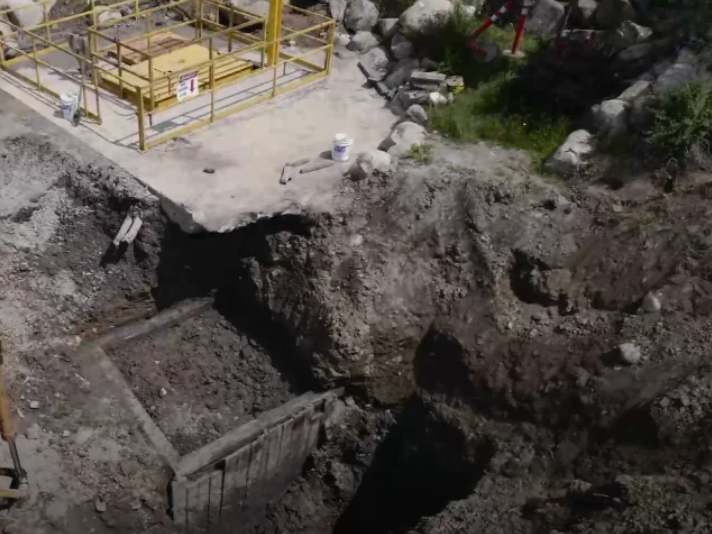
Back on Oak Island, the swamp itself continues to offer more tangible clues. Excavator operator Billy Gerhardt uncovers a smooth, carefully shaped piece of wood deep in the southern portion of the swamp. The find immediately catches the team’s attention. The wood is rounded, polished, and clearly worked by hand – not driftwood, not random debris. In Gary and others’ view, it looks remarkably like a section of ship’s railing, complete with a squared recess where an iron fastener might once have been set.
Crucially, this timber comes from around 10 feet below sea level, and Billy reports that something large beneath it is blocking the excavator bucket. Whatever lies at depth is substantial enough to prevent them from reaching the true bottom of the feature. Combined with the earlier seismic scan that showed a 200-foot-long, ship-shaped anomaly in the same area, the suggestion is difficult to ignore: a large wooden structure – perhaps the hull of a vessel – may still be entombed beneath layers of mud, peat, and fill.
Archaeologist Laird Niven examines the railing fragment and agrees it is finely finished, and very much out of place in a natural swamp environment. The team concludes that the swamp is not simply a random wetland, but a constructed or heavily altered feature that has been used to conceal or preserve complex wooden structures. Rick, who has long described the swamp as “the keeper of secrets,” sees his intuition increasingly supported by hard evidence.
The week’s discoveries are not limited to the swamp. On land, a massive hand-wrought spike is unearthed – a ship spike, according to Gary Drayton, likely from the early 1700s. Laird confirms that the rose-headed nail is consistent with 18th-century construction methods. A brace consultation with blacksmithing expert Carmen Leg pushes the story further: he identifies the large burned ring-like iron piece as a brace from a nine-inch ship’s timber, typical of a sailing vessel from roughly 1710 to 1790, and notes that it appears to have been subjected to an intense fire.
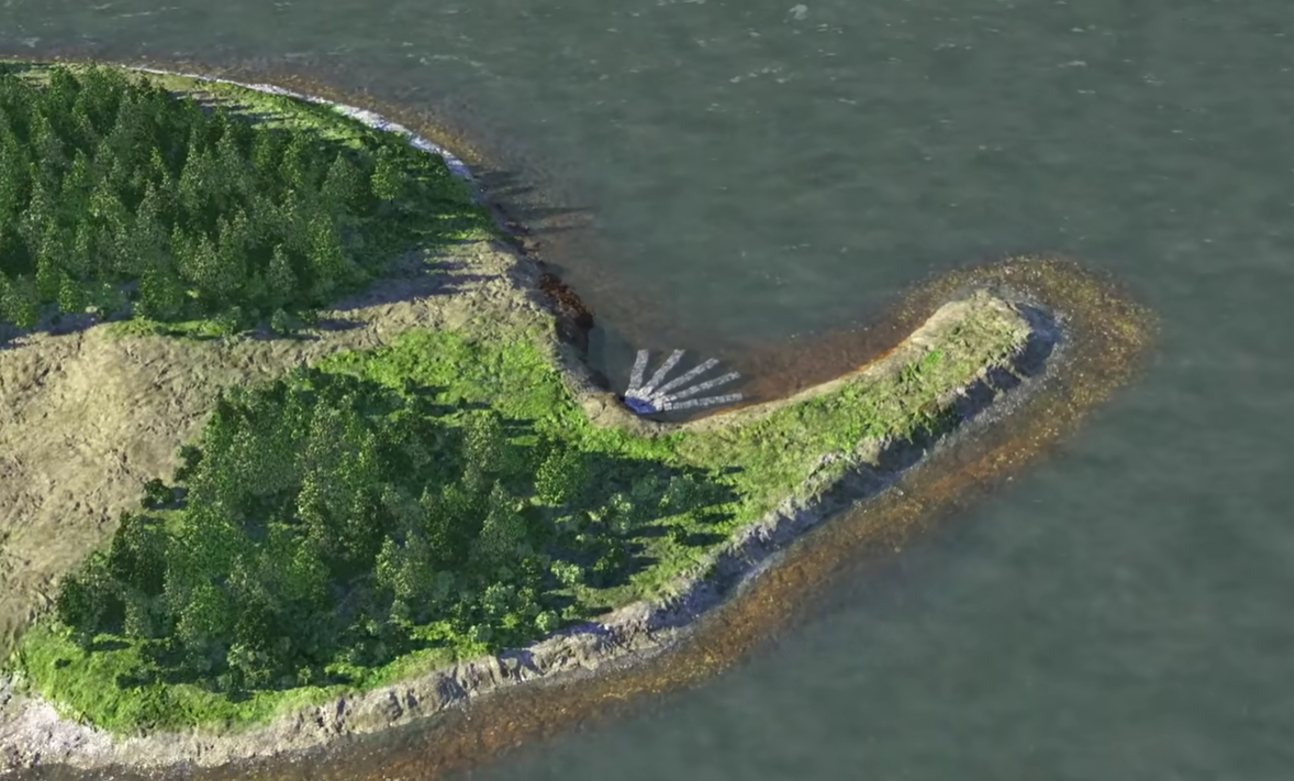
These independent data points – burned ship brace, 18th-century ship spike, finished railing, ring bolts along a stone pathway, a ship-sized anomaly beneath the swamp, and magnetic evidence of a wreck offshore – begin to weave into a single narrative. One longstanding theory resurfaces with renewed strength: a large ship entered a sheltered harbor where the swamp now lies, offloaded precious cargo onto a hastily built stone platform, and was either grounded, deliberately sunk, or burned to conceal its presence and purpose.
For Rick and Marty Lagina, the significance is twofold. First, the evidence strongly indicates that major maritime activity took place around Oak Island well before modern settlement – activity potentially linked to treasure, military stores, or high-value cargo. Second, it suggests that the swamp, long treated as an obstacle, may actually sit atop one of the most important engineered features in the island’s history.
As the day closes, the team gathers with a mix of satisfaction and impatience. Each new artifact provides another clue, but also raises new questions. Who built the wharf-like stone road? Why were ship components burned and buried? Was the vessel a merchant ship, a privateer, or something more secretive? And most importantly: is the hidden cargo already gone, or is it still waiting beneath the swamp and the surrounding waters?
For now, Oak Island continues to guard the full story. But with every ring bolt, railing, spike, and magnetic reading, the outline of a once-active harbor and a concealed ship becomes clearer. The mystery may not yet be solved, but the path the team is following – from swamp to shoreline to sea – is beginning to look less like speculation and more like carefully layered history waiting to be uncovered.