Emma Culligan Identifies a Rare Object Linked to a 17th-Century Colonial Figure
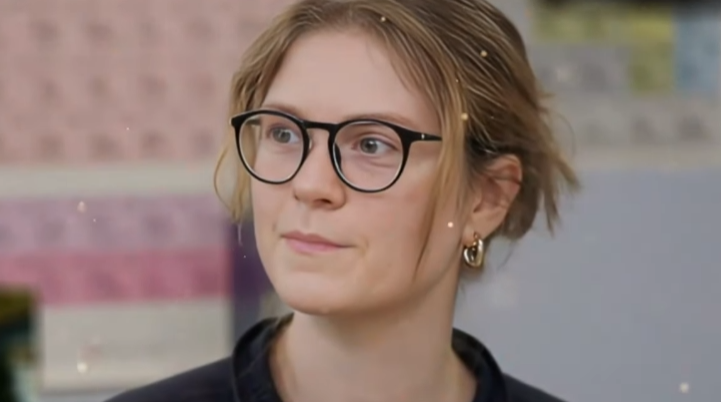
A newly recovered piece of ironwork from Oak Island has reopened long-running questions about early activity on the island, after laboratory analysis suggested the object may date to the late 17th or early 18th century. While the find itself is modest in size, its form, condition, and possible purpose have made it one of the more quietly intriguing discoveries of the current investigation.
The object was recovered during ongoing work tied to the Money Pit search area and nearby Lot 5, zones that have already produced layered evidence of repeated human activity. Described on site as a strap-like iron fragment, the piece stood out almost immediately. Unlike the countless nails, spikes, and broken fittings recovered over the years, this item appeared deliberately shaped. Its edges were cleaner than expected, and its profile suggested it had once served a specific mechanical function rather than being incidental debris.
That initial impression gained weight once Emma Culligan, whose role on The Curse of Oak Island centres on metallurgical and materials analysis, completed laboratory testing. Based on composition, corrosion patterns, and surface condition, Culligan placed the object within a time frame that overlaps with early colonial activity in North America. While the dating remains provisional, it immediately raised a larger question for the team: what role would a strap-like iron fitting from that era play in the same ground that has already revealed evidence of human work spanning multiple centuries?
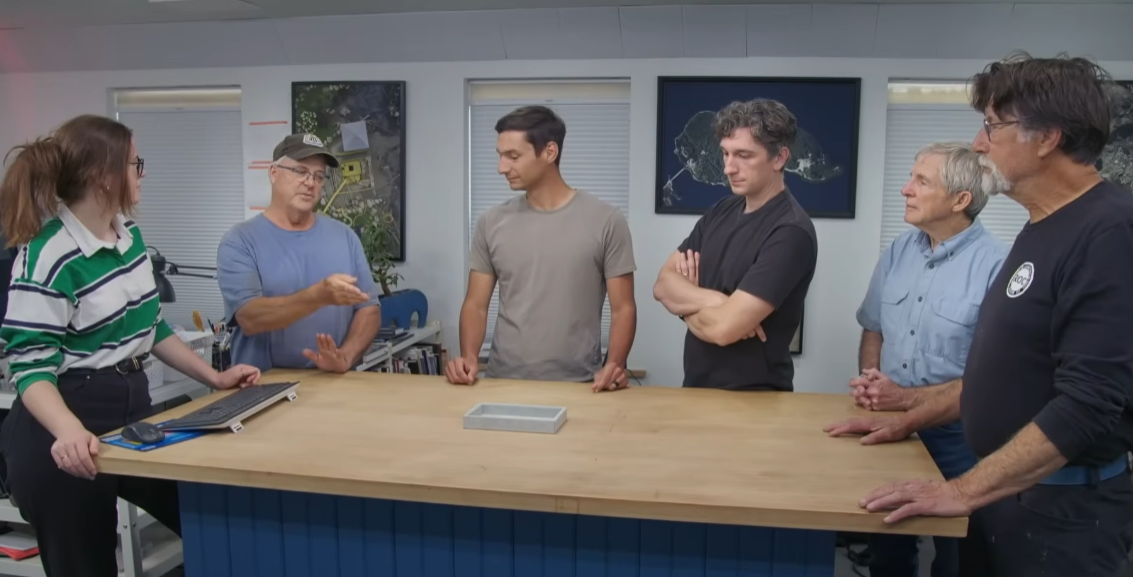
On camera, the discussion shifted from age to function. Several team members noted that iron straps of this type were commonly used to reinforce wooden containers such as chests, crates, or lockboxes. In practical terms, these fittings were structural, designed to secure contents during transport or long-term storage rather than to serve any decorative purpose. In an investigation defined by fragments and incomplete narratives, the possibility that the object once belonged to a reinforced container inevitably drew attention.
It was in this context that the name Sir William Phips resurfaced. The 17th-century colonial figure and treasure salvager has long occupied a place in Oak Island speculation, owing to his documented recovery of treasure from a Caribbean wreck and the enduring mystery surrounding what was officially declared versus what may have remained unaccounted for. The programme was careful to frame the connection as theoretical, but the overlap in dating invited renewed consideration of whether individuals linked to colonial power networks had both the means and the motive to move valuables discreetly.
Importantly, the production emphasised that this was not an isolated discovery. A previous iron strap-like fragment found on Lot 5 had already been catalogued as unusual, and the emergence of a second, comparable piece has prompted the team to consider whether they are seeing a pattern rather than coincidence. From a methodological standpoint, this shift matters. Patterns allow researchers to move beyond single-item speculation toward broader interpretations of activity, movement, and purpose.

The team discussed plans to compare the newly recovered ironwork with other artefacts from the same area, including fittings and hardware that might collectively suggest the presence of a larger container or reinforced structure. Such an approach reflects a growing emphasis within the investigation on contextual analysis—examining how objects relate spatially and functionally, rather than treating each find in isolation.
While discussion of the artefact unfolded above ground, activity below ground continued to reinforce the sense that Oak Island’s history is layered rather than linear. Work at the RP1 shaft brought up additional hand-cut timber, described by the team as inconsistent with modern construction. The character of the wood, including tool marks and shaping, suggested deliberate workmanship rather than natural breakage.
Some of the timber was tentatively linked to previously documented features, including the long-referenced Shaft 6, one of several early excavation sites associated with past search efforts. If that alignment holds, it could help refine the underground map of human intervention—identifying where earlier searchers dug, where collapses occurred, and where tunnels may have been altered or redirected over time.
The team also noted that portions of the recovered wood appeared displaced, raising the possibility that sections of underground works were moved following structural failures. This observation carries practical implications. Understanding how and where earlier tunnels collapsed could explain why so many historic efforts ended without clear results, and why later searchers repeatedly encountered dead ends.
None of these elements, taken alone, provide a definitive answer. The programme’s narration acknowledges this openly. A strap can be just a strap; old timber can reflect old digging rather than concealed valuables. Yet when considered together—datable metalwork, repeated fittings, and timber consistent with early excavation—the evidence forms a more coherent picture than any single find could offer.
For viewers, the episode leans into a familiar Oak Island tension: the space between verification and conclusion. What distinguishes this moment is not a bold claim, but a narrowing of possibilities. Culligan’s analysis does not confirm a specific theory, but it reduces the range of plausible explanations, sharpening the focus of the investigation.
In that sense, the iron strap functions less as a dramatic revelation and more as a structural clue—one that points toward organised activity, practical intent, and a level of planning that goes beyond chance. Whether it ultimately connects to a known historical figure or simply adds another layer to Oak Island’s complex human history remains unresolved. What is clear is that the island continues to reward careful analysis over spectacle, offering fragments that, when assembled thoughtfully, bring the past into slightly clearer focus without surrendering all of its secrets.