Evidence That Raises New Questions: A Curious Find on Lot 5 Deepens the Oak Island Mystery
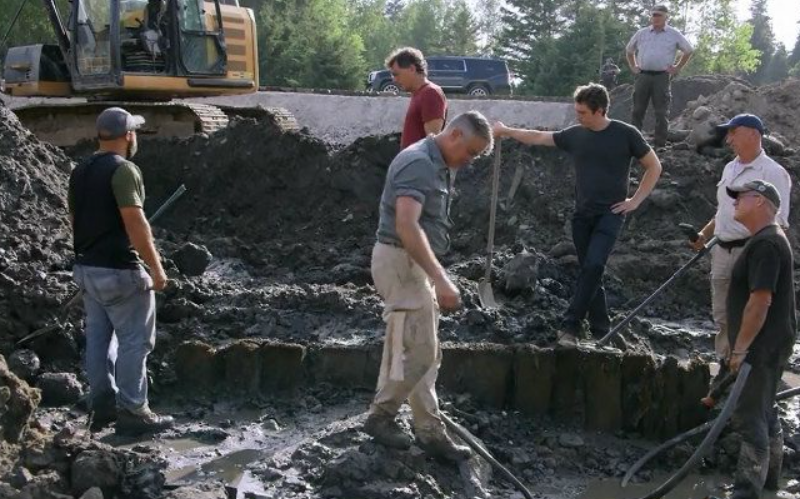
As The Curse of Oak Island advances through its thirteenth season, a modest but provocative discovery from Lot 5 is prompting the team to reassess long-held assumptions about who came to the island—and why. The object in question is unassuming at first glance: a small, trifold piece of copper recovered from spoil piles during a systematic metal-detecting sweep. Yet its implications are anything but small.
The artifact was located by Gary Drayton, whose experience across European sites immediately raised eyebrows. Folded copper pieces, he explained, are not casual losses. In Britain and parts of continental Europe, such objects were deliberately altered to serve as talismans—items imbued with spiritual intent, often meant to ward off misfortune or to invoke protection before perilous journeys.
Back in the lab, Rick Lagina joined archaeologist colleagues and materials specialist Emma Culligan to determine whether the object was indeed a coin and, if so, when it might date from. Advanced imaging and compositional analysis revealed a copper alloy containing zinc, lead, and trace arsenic—elements consistent with post-medieval metallurgy. While no clear reliefs or inscriptions could be identified due to the tight folds, the chemistry suggested a timeframe stretching from the late 1600s into the 1700s.
The trifold itself proved especially intriguing. Single or double folds are documented in historical records, but three precise folds imply intention beyond concealment or damage. As Culligan noted, folding a coin removes it from circulation, effectively sacrificing value. That sacrifice, experts say, is the point. In ritual traditions tied to Christianity, particularly in maritime contexts, folding copper coins was believed to trap ill fortune or symbolically transfer danger away from the bearer.
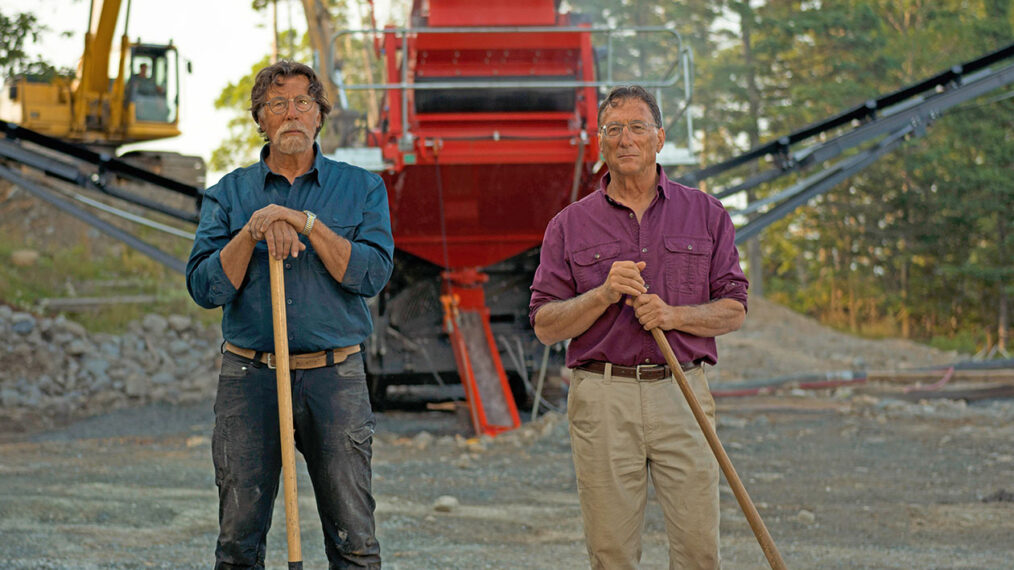
To probe the cultural context further, the team consulted numismatist Sandy Campbell, who confirmed that such practices were widespread during the early modern period. Copper, he explained, carried both monetary and symbolic weight—valuable enough to matter, but accessible enough to be given up for spiritual reassurance. Importantly, these rituals persisted well beyond the medieval era, evolving through the age of exploration when sailors and soldiers alike sought protection against uncertainty.
That observation resonates strongly with other finds on Lot 5. Over recent seasons, the area has produced buttons, trade beads, and architectural features aligned along an east-west axis—an orientation commonly associated with religious structures in Europe. Some researchers have suggested links to the Knights Templar or their later successors, the Knights of Malta, both of whom operated during periods that match the artifact’s likely age.
No single object proves such a connection, the team is careful to stress. But the folded coin adds a new dimension to the accumulating evidence. Unlike tools or trade goods, a talisman implies belief, ritual, and intention—suggesting that visitors to Oak Island may have viewed the site as more than a logistical stop or a place to bury valuables. It raises the possibility that Lot 5 served a symbolic or preparatory role, perhaps tied to voyages, military activity, or the safeguarding of something deemed spiritually significant.
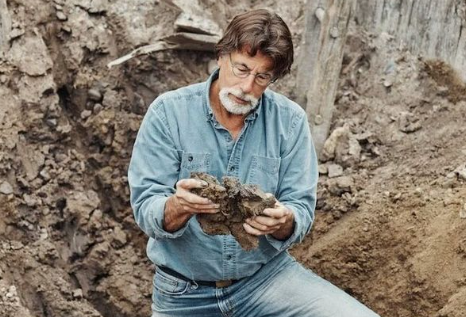
For now, the coin remains folded, its interior sealed by history. Unfolding it would destroy the very qualities that make it meaningful, leaving questions unanswered. Yet in Oak Island fashion, those questions are precisely what drive the investigation forward. As Rick Lagina put it, each artifact is a puzzle piece. With enough pieces, a clearer picture may finally emerge—one that explains not just what was hidden on the island, but the beliefs and intentions of those who came before.
In Season 13, Lot 5 continues to shift from a peripheral curiosity to a focal point of interpretation. And with each careful discovery, the mystery of Oak Island grows richer, more complex, and harder to dismiss as coincidence alone.