A Century-Long Breakthrough on Oak Island: Unveiling the Most Mysterious Treasures Ever

The mystery surrounding Oak Island, one of the most enduring and fascinating treasure hunts in history, has taken a new turn. The Curse of Oak Island, which has captivated millions of viewers and treasure hunters alike, has now prompted new theories and deeper questions following a recent breakthrough in the investigation.
For over two centuries, Oak Island has been the site of numerous expeditions, each seeking to uncover the legendary treasure believed to be hidden beneath its soil. From pirates to the Freemasons and even the Knights Templar, there have been countless theories about who might have left the treasure and what it could be. But the recent findings on the island have led the Lagina brothers, Rick and Marty, to consider a bold new hypothesis: that the treasure might have been known to, or even retrieved by, the founding fathers of America.
The most recent revelation comes after the team uncovered an ancient structure in Smith’s Cove, thought to date back to 1769—just before the discovery of the original Money Pit in 1795. This structure, long speculated to be of significant importance, was the focus of recent excavations, and its age raises intriguing questions. Could this be evidence that the treasure, or at least part of it, was recovered long before the modern treasure hunters arrived?
Rick Lagina, who has been at the forefront of the search for Oak Island’s secrets, spoke about the implications of this discovery. “I am of the complete and absolute belief that this is not just temporal wealth. There may be wealth here, but it’s not just about the gold. It’s about understanding why this treasure was hidden and what motivated those who left it behind.” This theory, while speculative, suggests that the treasure hunt may be far older than originally thought, potentially tied to the turbulent political climate of the late 18th century.
The timing of the discovery is particularly significant. The American Revolution, which began in 1775, was a time when the United States was in dire need of funds to finance the war effort. As historian and Oak Island researcher Marty Lagina pointed out, the connection between the American Revolution and the treasure may not be as far-fetched as it seems. “What if some of the founding fathers knew about this treasure and were involved in its retrieval or concealment?” he suggested. “It fits with the timeline of the revolution, and the French, who were allies of the Americans, had strong ties to Nova Scotia. It’s not hard to imagine that they could have been involved in hiding or recovering the treasure.”
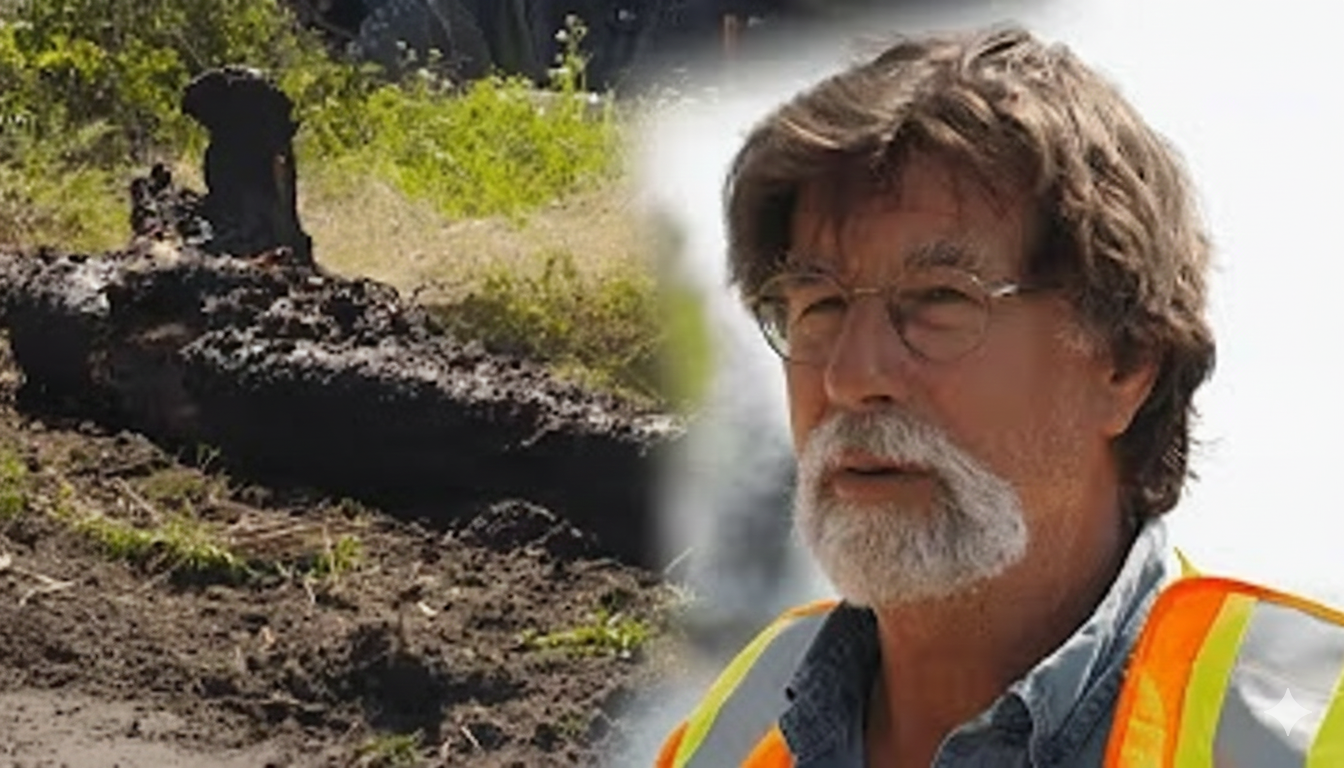
Adding another layer of intrigue to the mystery, the recent excavation near Smith’s Cove revealed a massive stone-paved area, which could provide further clues to the operations that took place on the island in the 18th century. This discovery was initially overlooked but is now being re-examined in the context of the possible involvement of historical figures like Benjamin Franklin and Thomas Jefferson, who had known connections to France and could have had access to valuable information about the treasure’s location.
The recent findings have also sparked new theories about the nature of the treasure itself. In addition to the 1769 structure, the Oak Island team has uncovered other intriguing artifacts, including gold-plated jewelry and a suspected gold coin found on Lot 21, which has been identified as a rare and ancient find. The discovery of these items has led many to speculate that the treasure may not just be a cache of gold but could involve a larger historical and political context that has yet to be fully understood.
One of the more intriguing artifacts uncovered was a “bobby dazzler,” a term used by metal detector expert Gary Drayton to describe a gold-plated brooch found on the island. The brooch, which dates back approximately 600-700 years, was analyzed at St. Mary’s University in Halifax, where it was confirmed to be a piece of genuine treasure. This discovery marked the first verified piece of gold found on Oak Island, and it added weight to the theory that Oak Island could be the final resting place for a much larger treasure—one with ties to both the old world and the new.
While the search for the treasure has been ongoing for centuries, the Lagina brothers and their team have made significant progress in piecing together the island’s mysterious past. Their work, which has involved excavating large areas and using advanced technologies such as seismic scanning, continues to yield results that suggest there is much more to discover on Oak Island.
However, as they uncover new clues, the team is also confronted with the fact that the treasure may never fully be recovered. As Rick Lagina puts it, “History is a fascinating topic, and this search has affirmed the importance of uncovering the truth. But ultimately, it’s not just about the gold. It’s about the journey, the mystery, and the people who have been involved in this search for centuries.”
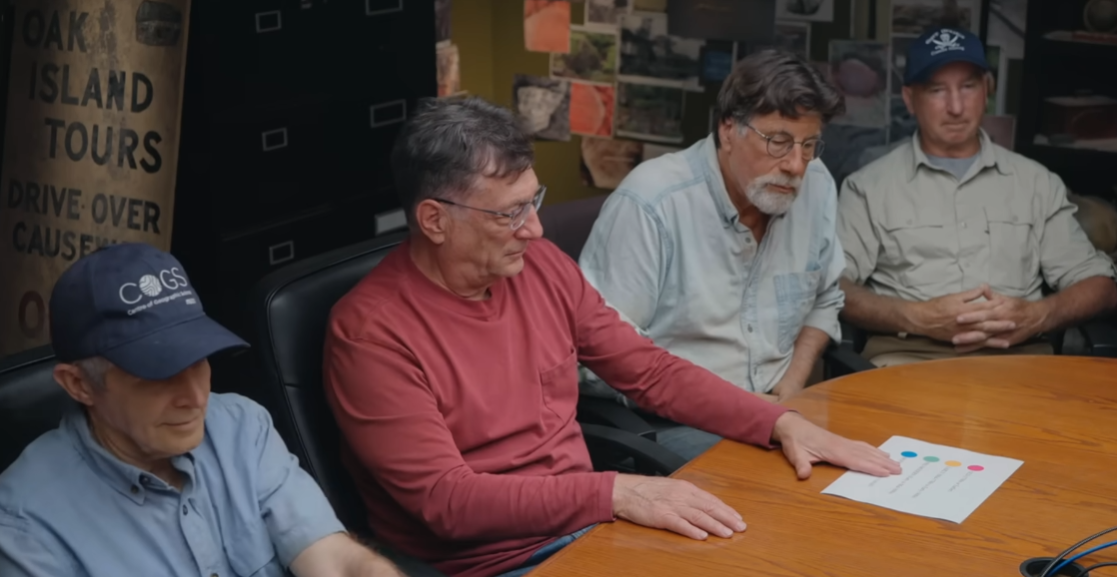
As the team continues to investigate the possibility of a connection between the treasure and the founding fathers, one thing is clear: the mystery of Oak Island is far from solved. New discoveries, both historical and archaeological, continue to surface, adding more questions to an already complex puzzle. Could the treasure have been recovered in secret, or is it still buried on the island, waiting for the right combination of knowledge, technology, and luck to uncover it? Only time will tell.
For now, the team remains focused on their goal, knowing that each new discovery brings them one step closer to unraveling the truth behind the 223-year-old mystery of Oak Island. With every layer they uncover, they move closer to understanding not just what is buried on the island but also the rich history that has shaped the world we know today.
The next episode of The Curse of Oak Island promises more revelations as the team continues their search. Will they uncover the treasure the world has been waiting for? Only time will tell.