Oak Island Team Uncovers Stunning Evidence of the Legendary Flood Tunnel as Coconut Fiber Reappears After 200 Years
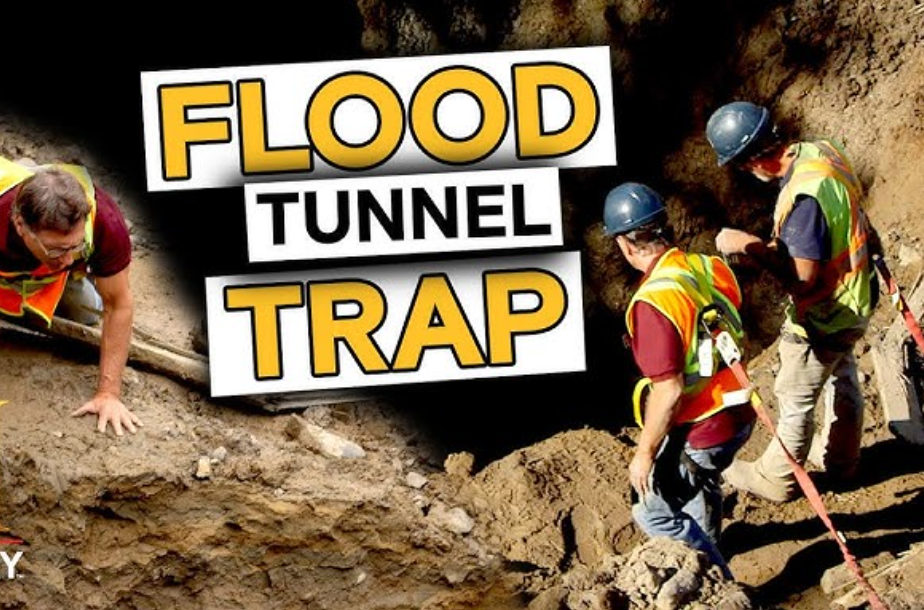
Oak Island has seen countless theories, dead ends, and tantalizing clues. But this week’s developments may rank among the most important in more than a decade of televised investigation — and more than two centuries of historical pursuit. For the first time since the 1800s, the team has uncovered confirmed coconut fiber inside a wooden structure deep beneath the surface, suggesting they may finally be closing in on the original flood tunnel system that has protected the Money Pit since the 18th century.
From unstable shafts to buried wood structures, collapsed tunnels, and the unmistakable presence of exotic material once used in the island’s famous box drains, the evidence is mounting rapidly. And for Rick and Marty Lagina, the signs could not be more encouraging.
A Dangerous Discovery Beneath the Uplands
The episode opened with an atmosphere of tension. As heavy equipment clawed into unstable earth above Smith’s Cove — the area believed to hide the legendary booby-trap flood system — the team encountered an alarming void reinforced with wooden boards.
“It looks like a tunnel to me,” Rick Lagina said as the excavator camera revealed stacked timbers, double-walled supports, and a long, linear cavity disappearing into the earth.
But the scene was dangerous. The walls were collapsing, and the ground above was undermined. Excavation had to be paused.
Instead, the crew mounted a camera to the excavator arm, lowering it into the void to record the evidence safely. What they captured set the entire War Room buzzing: layered timbers, upright beams, and void space consistent with a constructed tunnel, not a natural feature and not later searcher work.
Paul Troutman observed, “It looks like a collapsed tumbler shaft.” Others noted that the dimensional lumber differed between left and right walls — a sign of deliberate construction.
Craig Tester’s calculations further strengthened the theory. The tunnel lined up precisely with his modeled coordinates based on the mysterious U-shaped structure previously discovered — believed by some to be part of the original flood system.
“If the dendrochronology comes back pre-1795, then it almost has to be original works,” Marty said.
But just as excitement peaked, bad news hit: their permit required the cofferdam at Smith’s Cove to be removed immediately. Heavy equipment would soon arrive, meaning they had less than 24 hours before all digging in the area had to stop for the rest of the year.
The timing could not have been worse.
A Wooden “Pandora’s Box” — and Something Even More Unusual
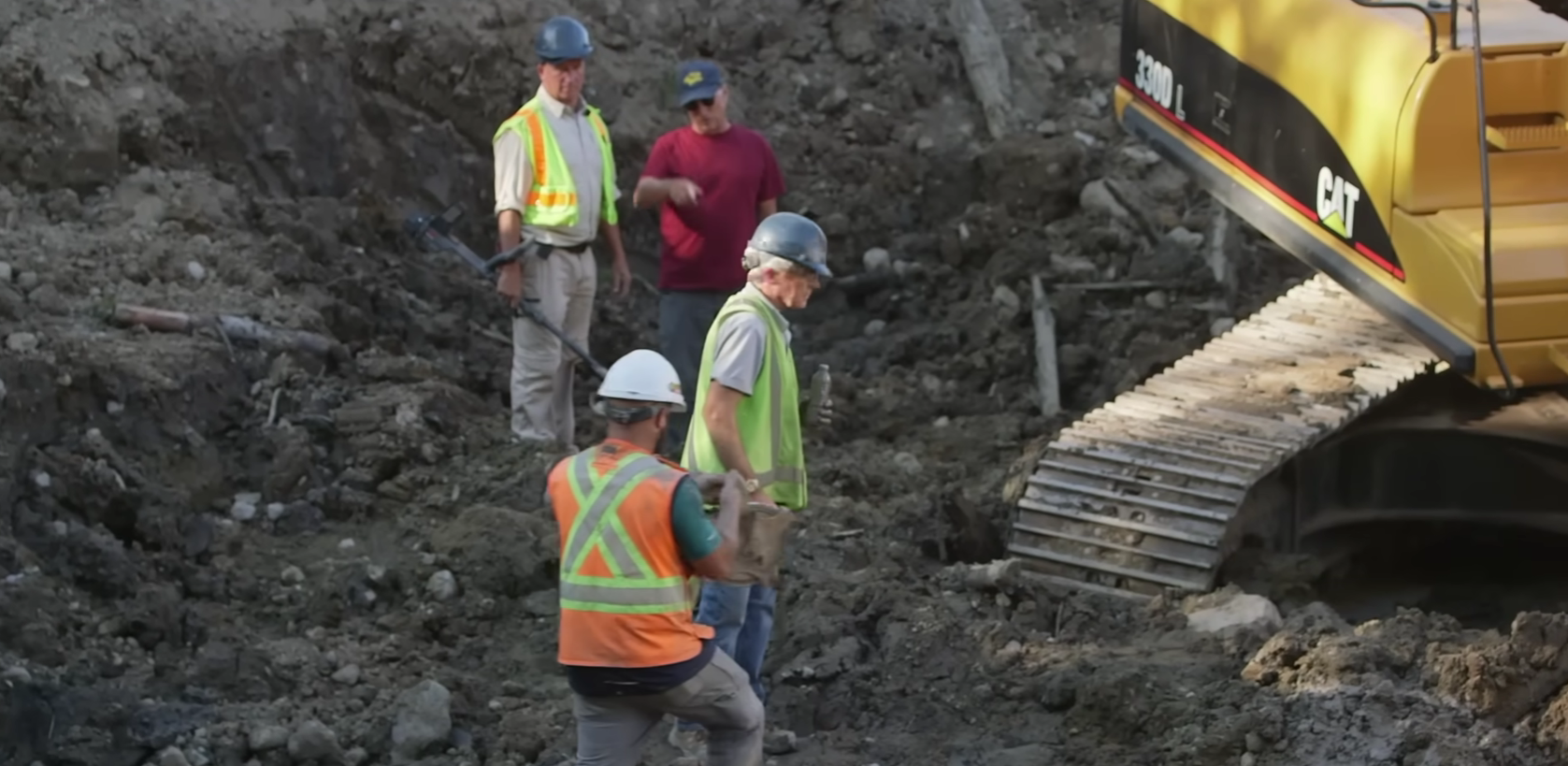
Before shutting down, the team opened a final area to verify whether the structure truly connected to the flood tunnel system. What they found next stunned everyone.
“Come here, look at this!” Jack Begley called out.
Embedded within the collapsed wooden structure were long, fibrous strands mixed with soil.
“Is this coconut fiber?” Jack asked.
The material was hair-like, clumped, and distinct — unmistakably similar to what early searchers found in the original Money Pit (1804) and, later, in the engineered stone box drains at Smith’s Cove (1850).
The nearest coconut-producing regions are 1,500 miles away. No settlers or searchers in the region ever used coconut fiber for construction. The only known historical usage? The filtering system of the flood tunnel booby trap.
Rick reacted immediately:
“One of the few things absolutely unique to this search is coconut fiber.”
The team carefully collected samples without contaminating them and prepared them for scientific testing. If verified, the presence of the fiber would prove they had intersected original 1700s construction — and perhaps the flood tunnel itself.
Scientific Confirmation: Coconut Fiber Found
The next day, the team gathered in the War Room for a conference call with geoscientist Dr. Ian Spooner. Excitement and skepticism collided in the room — a mix that Oak Island fans know well.
Spooner did not hesitate:
“It’s coconut fiber.”
The room erupted in relief and renewed motivation. For the first time in modern Oak Island history, coconut fiber was scientifically confirmed in a context that could not be attributed to searchers, backfill, or contamination.
“This says there was original work here,” Marty said.
Rick added, “We’re absolutely closing in.”
The discovery solves one long-standing mystery and ignites several more:
-
Was the team standing on the remains of the flood tunnel?
-
Did the tunnel collapse under centuries of pressure?
-
Does the void lead toward the true Money Pit location?
-
And if so, how close are they to the sealed chamber that searchers have pursued for 200 years?
Why Coconut Fiber Matters
The significance cannot be overstated. Coconut fiber has only appeared at three moments in Oak Island’s documented history:
-
1804 — Deep inside the original Money Pit
-
1850 — As filter material for the engineered drains at Smith’s Cove
-
Now, in 2025 — Adjacent to timbers consistent with tunnel construction
Not only is the fiber exotic, but its presence directly ties the modern excavation to the earliest known workings — works believed to be connected to a sophisticated attempt to protect something of great value.
The Oak Island “booby trap” suddenly looks less like myth and more like engineered reality.
The Search Pauses — But the Mystery Accelerates
Despite the discovery, the team must suspend work while Irving Equipment begins removing the steel cofferdam. But with the confirmation of coconut fiber, the flood tunnel is no longer speculation — it is an active target with scientific validation.
Rick summed it up:
“We were looking for evidence that would corroborate the old story. Now we have it.”
And for the first time in years, the Oak Island mystery feels closer than ever to breaking open.