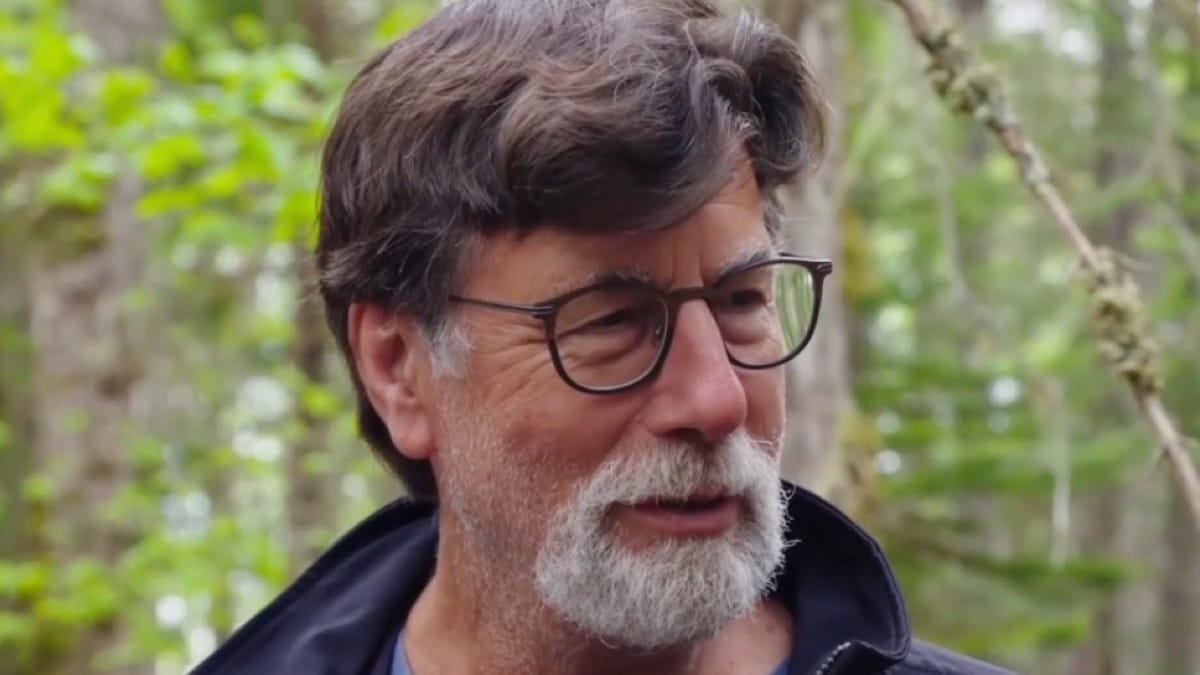
Rick Lagina discovered a $110 million pirate treasure buried deep in Oak Island’s well.

A dramatic new chapter in the Oak Island legend unfolded this week in a fictional account circulating among treasure-hunt fans: Rick Lagina and the long-running search team allegedly identified — and then accessed — a sealed underground chamber linked to Captain Kidd lore, with a claimed haul valued at roughly $110 million.
In the story, the breakthrough begins not with heavy equipment, but with paperwork.
According to the narrative, Lagina acquired a weathered leather journal at a small Halifax auction after a local historian urged him to take a look. The book, described as salt-stained and packed with hurried 17th-century handwriting, reads less like a romantic sailor’s tale and more like an engineering brief: measurements, bearings, cautions, and references to a “stone-toothed guardian” protecting a room “full of waiting gold.”
Most striking, the journal reportedly included star charts and coastal sketches that, when overlaid onto modern mapping, indicated a precise point in the Money Pit zone — close to prior drilling but never fully explored at the identified depth.
Using ground radar and seismic imaging, the fictional team then “confirmed” a highly symmetrical anomaly: a rectangular void around 49 metres below the surface, far beneath the most familiar collapse layers. Its geometry — straight edges, consistent dimensions, and a clean boundary — is portrayed as inconsistent with a natural cavity.

In the account, the team opted for a controlled caisson approach: a large steel-and-concrete cylinder lowered to bedrock to isolate unstable, water-saturated ground and minimise interference from known flood systems. The operation is described as punishingly expensive, with setbacks ranging from tool wear to constant water ingress — a familiar theme for anyone who follows the show’s real-world challenges.
When the caisson reached target depth, the story claims crews encountered a fitted granite slab with corroded metal hardware that resembled hinges. The surface allegedly carried engraved symbols — a skull motif, a compass-and-square, and a cross — presented as a deliberate blend of maritime legend and secret-society iconography.
A diamond-wire cutting setup was brought in, and a central portion of stone was removed. A remotely operated camera was then lowered into darkness, where the lens caught what the story calls an unmistakable glint: stacked gold bars on wooden pallets, suggesting storage and inventory rather than a hurried burial.
What follows is written like a scene from an emergency operations manual.
Inside the chamber, the narrative describes heavy chests, scattered coins, and gemstones — but also a trap: subtly recessed pressure plates under sediment. Once triggered, concealed sluices allegedly released surging seawater into the room from multiple points, activating a booby-trap flood design that had foiled searchers for centuries.

The team, as portrayed, responded by lowering industrial pumps and stabilising the water level while extracting cargo by hand. Bars were lifted individually, netted, and hauled up the 49-metre shaft. Waterlogged chests, now far heavier, were rigged in reinforced slings and slowly winched to the surface, each lift treated as a high-risk move in confined space conditions.
Then, the story pivots to a second “find” it presents as more important than metal: a smaller cedar chest, built to resist moisture, containing ledgers and rolled maps sealed in waxed cloth. The documents, written in a layered cipher combining shorthand and symbolic notation, supposedly came with a key: a small guidebook describing the code’s structure and vocabulary.
Interpreted by outside experts in the tale, the papers are said to describe a structured transatlantic network — a consortium of notorious captains operating with rules, shared resources, and hidden depots worldwide. Oak Island, in this framing, is not the singular trove of legend but one node in a broader system designed to disperse wealth, manage risk, and prevent total loss if any one cache was exposed.
The fictional report ends where modern reality television often begins: with consequences.
In the account, news helicopters appear, legal negotiations begin, and security tightens amid rumours of outside interest in the documents. The team faces an ethical crossroads: whether to hand everything to authorities or pursue the leads on the maps — which allegedly point to multiple sites across oceans and continents.
None of this account has been verified as fact. But as a piece of fan-style “newspaper” storytelling, it captures the enduring appeal of Oak Island: the idea that one correct key — a forgotten record, a better map, a small correction in method — could turn centuries of uncertainty into a single decisive moment.