Swamp Clues Deepen Oak Island Mystery as Team Uncovers Possible Man-Made Structures
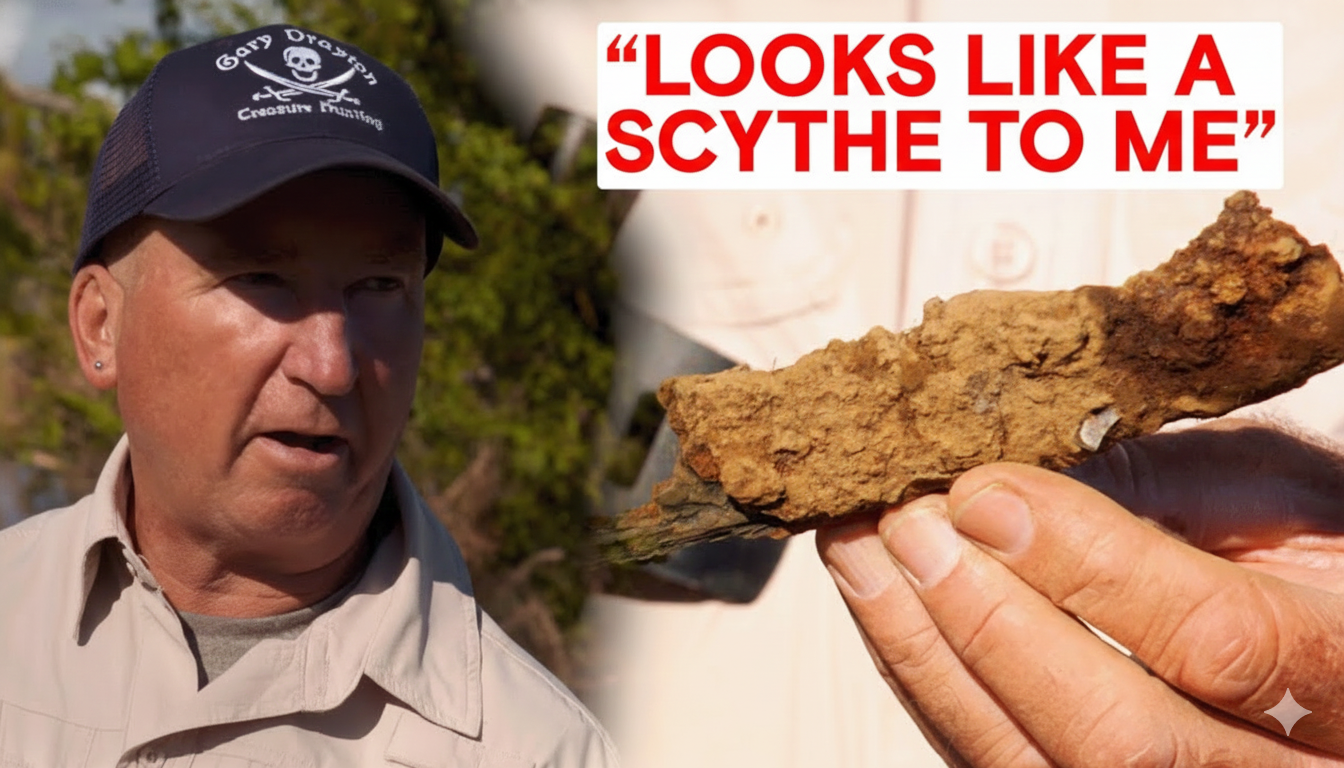
The southern edge of Oak Island’s triangle-shaped swamp has long been treated as unfinished business by the Lagina brothers and their team. In recent years, the swamp has produced a surprising number of ship-related artifacts—wooden components and structures that hint at activity far earlier than the island’s most famous legend, the Money Pit, first documented in 1795.
Now, in a renewed push along the swamp’s southern border, Rick Lagina, metal detection expert Gary Drayton, and excavator operator Billy Gerhardt have returned to an area where they believe the most important evidence may still be buried. The goal is specific: recover additional pieces that match earlier discoveries and help answer one of Oak Island’s oldest questions—who was here, and what were they doing?
Their renewed focus comes with a striking historical backdrop. Previous swamp finds have been dated between the 15th and 18th centuries. But one discovery in 2020 raised the stakes significantly: a piece of ship’s railing found near the southern border that was carbon-dated as early as the 8th century. That timeline, if accurate, suggests possible activity on Oak Island more than a thousand years ago.
With that in mind, the team approached the southern swamp with heightened urgency. The area sits close to a stone road-like feature that some researchers believe may have been used as a wharf or loading route centuries ago. If the swamp contains remnants of vessels, platforms, or engineered timber structures, it could offer a rare connection between the island’s surface features and the deeper underground systems long associated with the Money Pit.

Almost immediately, the search produced new material. Rick spotted a shaped piece of wood in the wet sediment—cut, drilled, and formed rather than naturally broken. Gary’s assessment was direct: the wood appeared to have a hole and a purposeful shape, potentially consistent with components used on boats.
Billy offered a practical interpretation based on his experience around wooden vessels. The piece’s curved profile, he suggested, resembled a “runner”—a rib-like strip attached to protect the underside of a smaller boat when pulled onto rocky shorelines. If correct, it would support the idea that wooden craft were being brought into the swamp or nearby shoreline for repeated use.
Yet the more the team dug, the more the discoveries shifted from isolated fragments to something potentially structural.
As Rick departed to oversee Money Pit drilling, Gary and Steve Guptill remained with Billy, who had repositioned and excavated deeper in the swamp. What emerged was described as a wall-like formation of horizontal and vertical boards—something resembling a retaining wall, shaft lining, or engineered barrier.
Billy’s immediate suspicion was that it could match what the late Oak Island landowner and treasure hunter Fred Nolan believed he had found decades earlier. Nolan had reported the presence of a wooden wall or dam in the swamp and argued it was evidence that the swamp itself had been artificially created to conceal something of value. If the new structure is part of the same construct, it could strengthen Nolan’s long-debated claim that the swamp was not a natural bog, but a deliberately manipulated feature.
The proximity of the wood to the stone road raised additional questions. If the structure aligns with the road’s age—estimated by some at roughly 500 years—it could indicate a coordinated engineering project involving transport, loading, and shoreline control. It also raised the possibility that activity in the swamp may be linked to other features across the island, including the tunnel-like structures discussed in the Money Pit area.
To assess the find, Rick invited geoscientist Dr. Ian Spooner to inspect the exposed timber and surrounding sediment. Spooner focused on context: where the wood sits in the layers, what sediment surrounds it, and whether it shares characteristics with nearby features.
One detail stood out to Spooner immediately. Beneath the stone road, investigators have previously noted a distinct “red” sediment layer. If that same red material is found within and around the newly exposed wooden structure, it could indicate that both features belong to the same historical phase. The implication would be significant: a road-like wharf and a timber wall or platform built as part of a single, deliberate operation.
Spooner’s caution was equally clear. Anything engineered at this scale would represent “a huge effort,” and the team would need to proceed carefully to avoid damaging evidence that could explain the structure’s purpose.
While attention remained on the southern swamp, another potentially major discovery emerged in the northern region—an area tied to the long-running mystery of Nolan’s Cross, a formation of boulders that has attracted theorists for years. Researcher John Edwards directed the team to a specific spot, claiming that its location relative to Nolan’s Cross could indicate a buried feature connected to historical groups such as the Knights Templar.
As excavation progressed, a massive boulder was found sitting atop a stone formation that appeared intentionally arranged. Spooner’s examination suggested the boulder may have been moved and repositioned, reinforced by a stick found between the boulder and sediment. If correct, it would indicate human manipulation of the landscape, possibly related to drainage and water control.
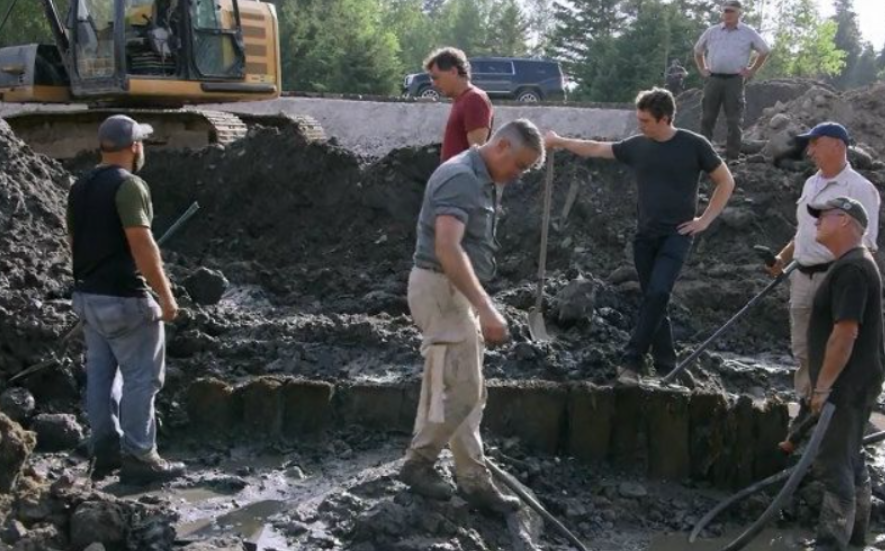
The next clues only added momentum. Cut wood appeared at the base layer, prompting plans for carbon dating. Nearby, the team found multiple tree stumps and chopped timbers in a section of swamp where trees typically cannot grow naturally. Spooner has previously argued that such evidence suggests the swamp’s environment may have been altered centuries ago, potentially drained or reshaped before being flooded again.
Then came a discovery that surprised even seasoned members of the team: a rock-lined depression and a circular arrangement of stones—described as a “one-over-two, two-over-one” style pattern that looked engineered rather than random. The group agreed to halt further disturbance until the feature could be properly evaluated, potentially cored, and documented.
No precious metals were detected at the feature, but the team noted that other confirmed structures on Oak Island—such as paved areas and road-like formations—have also produced little metal evidence despite being clearly intentional.
By the end of the investigation, the team’s conclusion was measured but unmistakable: the swamp continues to reveal signs of purposeful construction, repeated activity, and a timeline that may reach far earlier than conventional theories once allowed. If the wood walls, stakes, stone circles, and boat-related fragments can be dated and linked to known features like the stone road, the discoveries could help answer the question that has always hovered over Oak Island’s swamp.
Not simply what is hidden there—but why it was built that way in the first place.