Templars, Vikings, and a Trail Across the Atlantic: Oak Island Team Uncovers New Links in Europe and North America
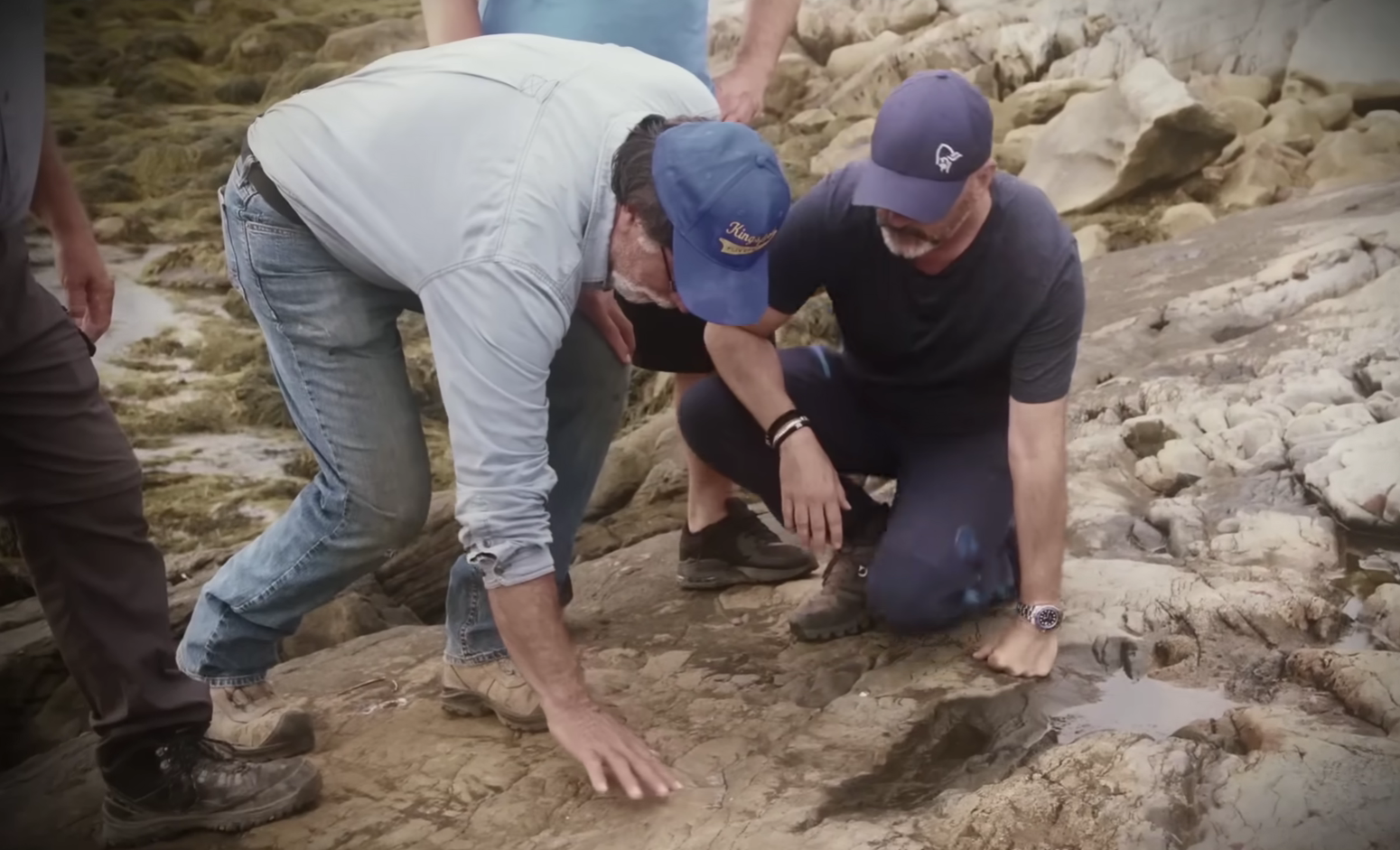
In their most ambitious investigation to date, the Oak Island team has embarked on a transcontinental journey following a trail that spans more than seven centuries—one that may link medieval Templar prisoners, Viking navigators, and the enduring mystery of Oak Island. Recent discoveries in the Netherlands, Denmark, and Newfoundland are fueling bold theories about who might have first crossed the Atlantic with priceless treasures long before Columbus.
The adventure begins more than 3,200 miles east of Nova Scotia in the Netherlands, where Rick Lagina, his nephews Alex and Peter, researcher Doug Crowell, and historian Emiliano Sacchetti meet with author Corjan Mol and medieval historian Jacquo Silvertant at the imposing 12th-century Valkenburg Castle. The fortress, once one of the region’s most powerful strongholds, also served as a grim prison during the suppression of the Knights Templar in the early 14th century.
Deep beneath the castle, in a narrow stone-walled dungeon, the team inspects a series of engravings carved roughly seven centuries ago. Among them: a four-dot cross, a symbol the team has encountered not only in Europe but on Oak Island itself—most famously on the controversial H+O Stone. Even more striking is the appearance of a “goose paw,” a mark historically linked to the Templar Order and previously spotted by researchers along the Nova Scotian coastline in Liverpool, only 50 miles from Oak Island.
The discovery raises an immediate question: did imprisoned Templars leave behind carved symbols identical to those found in the New World?
The answer becomes even more compelling when the team identifies a carving that resembles a two-masted Viking ship. The possibility that Templars and Vikings collaborated is not new; earlier this year, retired professor Dr. Doug Symons argued that Norse seafarers, who had already explored parts of North America by the year 1000, may have guided Templars westward during the 12th and 13th centuries—potentially transporting sacred relics such as the menorah of Solomon’s Temple or even the fabled Ark of the Covenant.
The carvings at Valkenburg reinforce Symons’ theory: Templars needed secrecy and safe passage, and Viking navigators had both the experience and the ships to reach remote lands far from European conflict.
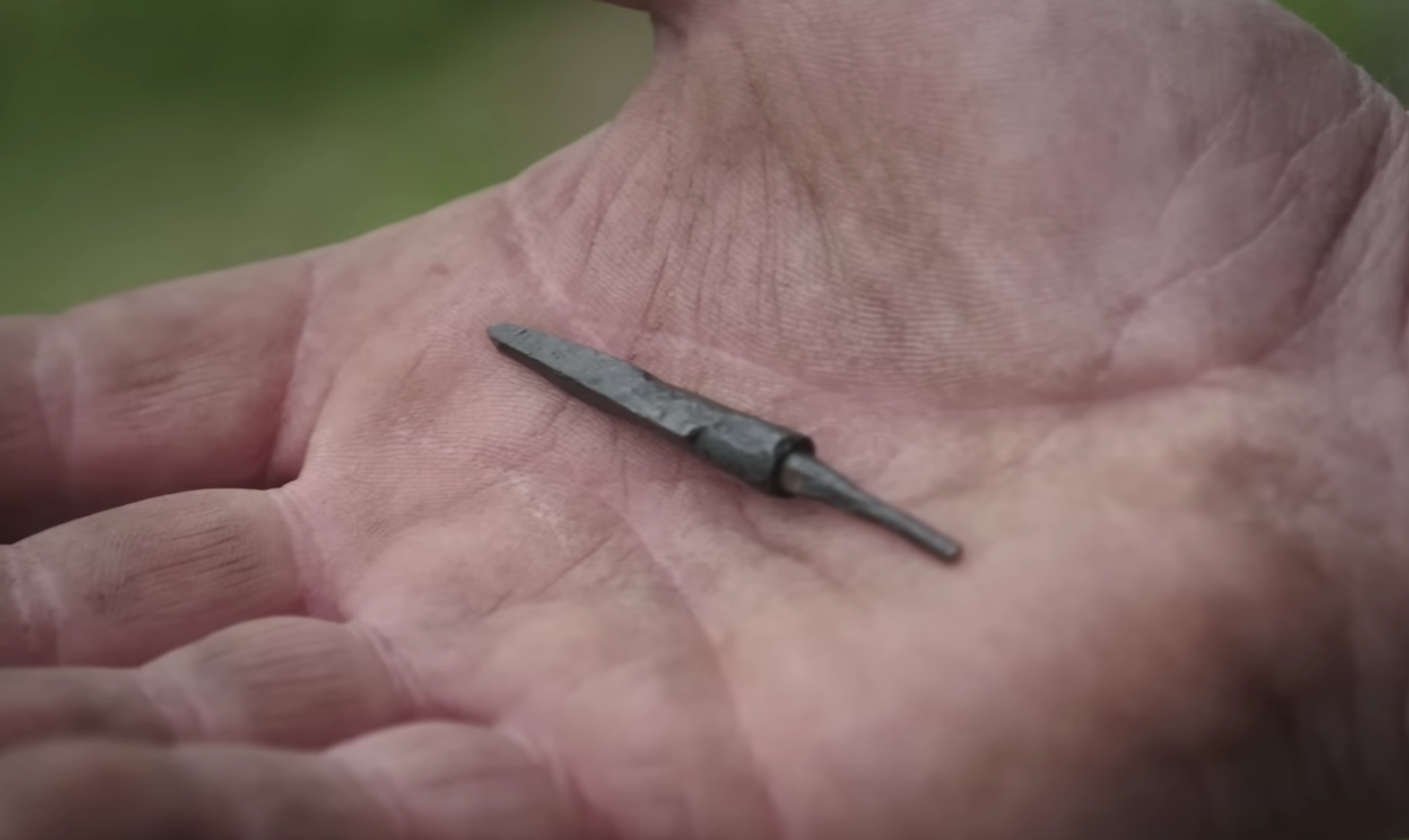
From the Netherlands, the team travels north to Denmark, arriving at the Ladby Viking Museum where curator Ane Jepsen Nyborg examines a mysterious crossbow bolt found decades ago on Oak Island. After reviewing photographs and comparing them with a replica, Nyborg identifies the object as a type of longbow arrowhead used widely during the Viking Age—dating between 800 and 1300 AD.

“It’s the kind of artifact I might find tomorrow in an archaeological dig here,” she tells the team.
Her assessment places the Oak Island artifact firmly within the medieval period, overlapping with the era of Templar activity and further supporting the idea of Norse involvement on the island. The team now questions whether some of Oak Island’s stone structures, such as Canada’s famous Nolan’s Cross or the enigmatic stone piles on Lot 15, could date back to the same Nordic tradition.
But the trail does not end in Europe.
Roughly 625 miles west of Oak Island, in Newfoundland, Marty Lagina and fellow researchers visit L’Anse aux Meadows—the only confirmed Viking settlement in North America. Welcomed by Parks Canada specialists and archaeologist Kevin Smith, the team learns that Norse explorers used the site as a winter camp around the year 1000, returning each year from expeditions that extended far to the south.
One of the most compelling clues supporting this idea is the discovery of butternuts at the site. These nuts have never grown in Newfoundland; their natural range lies hundreds of miles south—in New Brunswick and Nova Scotia. Their presence proves the Vikings traveled further down the coast than previously documented and may have reached the very region where Oak Island is located.
The team also explores connections between Norse descendants and the Catholic Church, noting that Viking leaders traveled to Rome and maintained relations with the papacy—the same authority that controlled the Templar Order. This overlap in geography, timeframe, and political relationships adds another layer of support to the theory that Templars and Vikings may have collaborated during their final years in Europe.
Back in the forge at L’Anse aux Meadows, a blacksmith trained in Viking-era techniques examines the Oak Island arrowhead and confirms that such an item could have been forged using bog ore—an iron-rich material commonly found in swamps. Oak Island’s swamp, long suspected of concealing ancient structures, could easily have supplied the raw iron for such a weapon.
For the Oak Island team, the implications are profound. Artifacts found on the island may not simply be remnants of early settlers or 18th-century explorers. Instead, they may form part of a much older and more complex narrative involving medieval religious orders, Norse mariners, and a transatlantic voyage undertaken centuries before the Age of Exploration.
As the team prepares to bring their findings back to Oak Island, Rick Lagina sums up the significance of the journey: “Oak Island has become so complex, with so many possibilities. Now we’re trying to narrow them, or confirm them. And what we’ve found here—this is excellent.”
Whether the clues lead to treasure, lost history, or yet another mystery, one thing is clear: the search has never been more intriguing.