THE GOLDEN TRAIL: New Discoveries at Shaft Six Vault Oak Island Team Toward the Money Pit
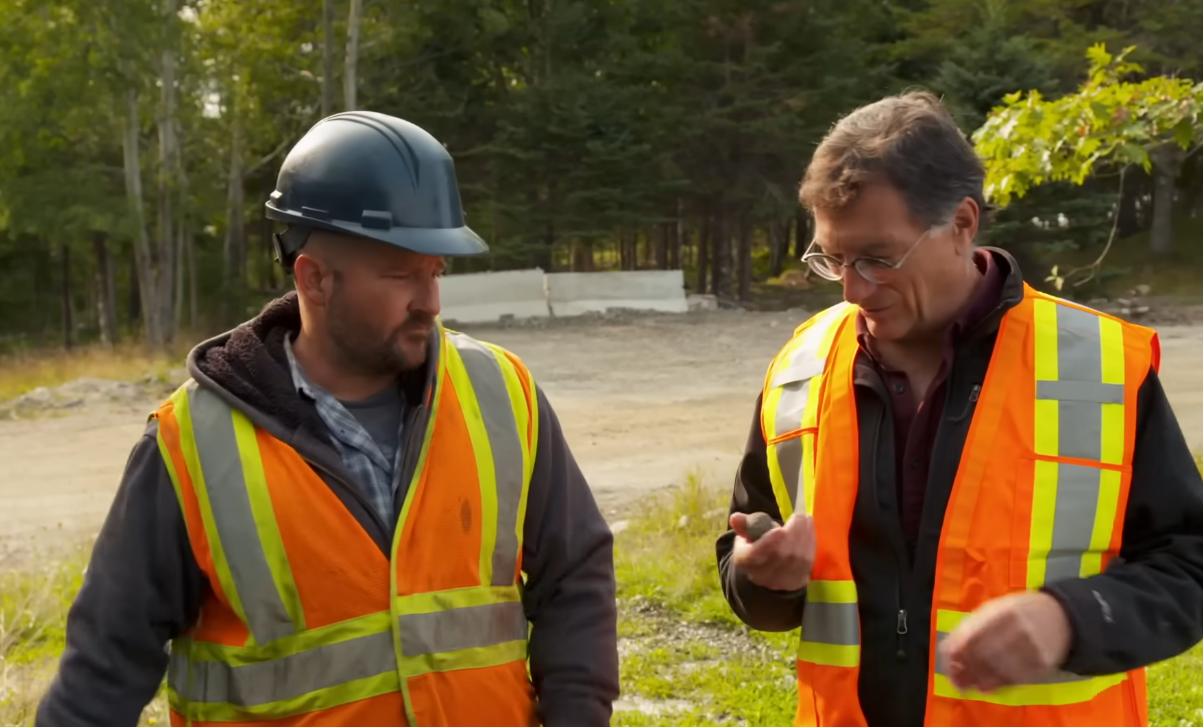
The decades-long search for the elusive “Money Pit” has reached a fever pitch this week as the Oak Island team, led by brothers Rick and Marty Lagina, announced a series of “bombshell” discoveries that may finally bridge the gap between historical legend and physical reality.
Using a specialized sonic drilling rig designed to pulverize the island’s notoriously stubborn glacial till, the team successfully intercepted what they believe to be the westernmost edge of Shaft Six. This critical find—a vertical timber discovered at a depth of 118 feet—corroborates historical records from 1861, when treasure hunters dug a secondary shaft to bypass the Money Pit’s infamous booby traps.
The Legend of Shaft Six
Historical accounts suggest that Shaft Six was dug 18 feet west of the original Money Pit. In 1861, as workers reached a depth of 118 feet, the tunnel suddenly flooded with seawater. Shortly thereafter, “thunderous crashes” were reported underground, leading many to believe the original Money Pit had collapsed, scattering its contents into a massive, flooded debris field.
“It’s as good a chance at Shaft Six as we’ve encountered,” Rick Lagina noted as the core sample revealed the timber. “We must have clipped just the edge of the tunnel. Now we have three data sets that indicate a tunnel is indeed there.”
Artillery and “Gun Stones”
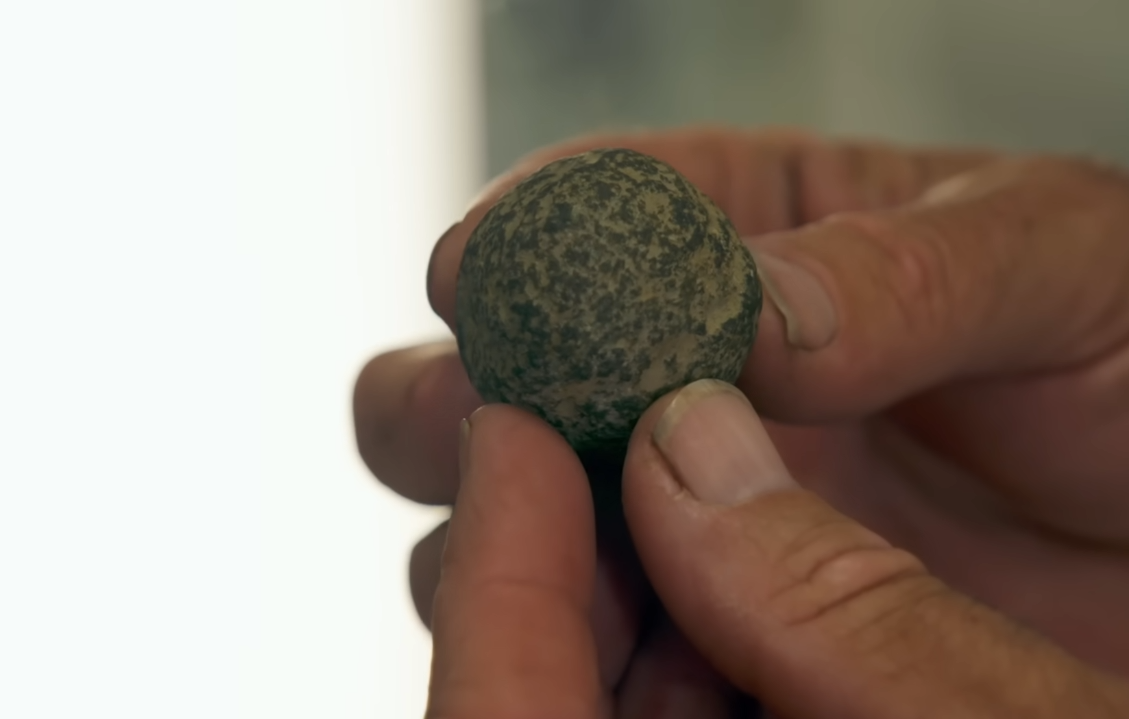
While the drilling team traced the path to the Money Pit, a parallel discovery at the wash table has reframed the island’s military history. Sifting through spoils from borehole E 5.25, team members Michael John and Steve Guptill recovered a small, encrusted sphere.
Initially suspected to be grapeshot, the artifact was later identified by metal detection expert Gary Drayton as a “gun stone” or “dress stone.” These stone projectiles predated iron cannonballs and were commonly fired from a blunderbuss—a short-barreled firearm favored by 17th-century mariners and even the early Pilgrims.
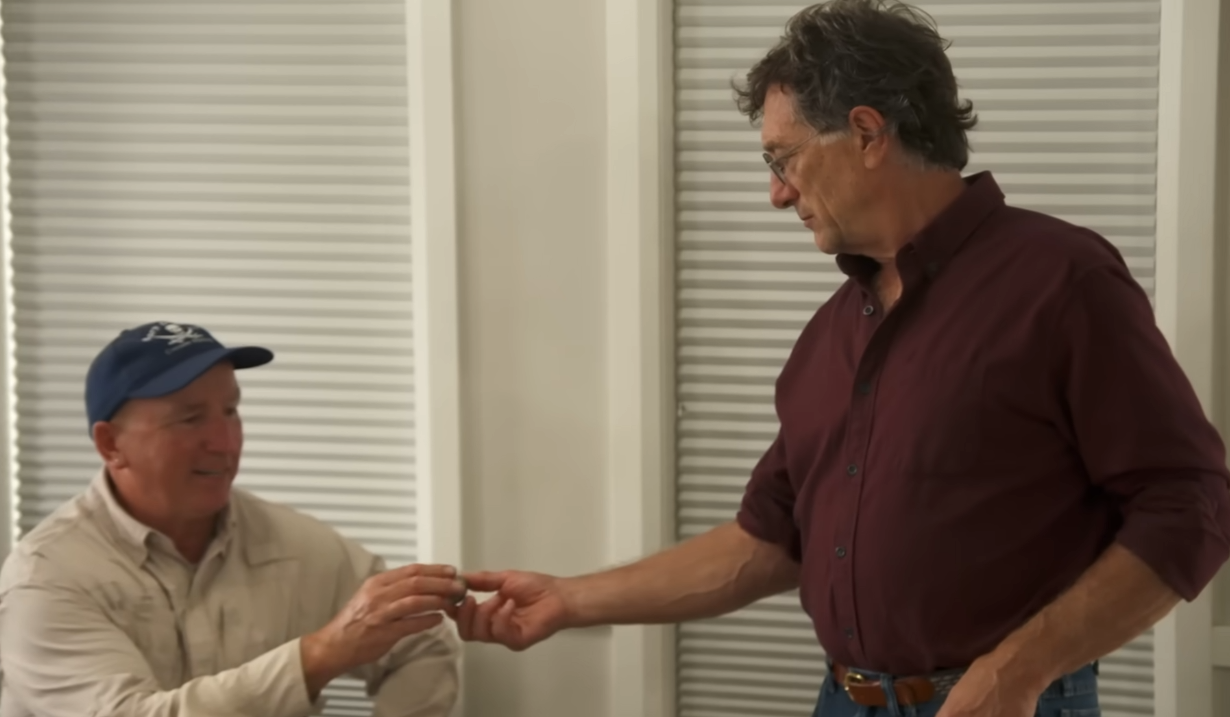
“This is really, really old. This is a projectile, mate,” Drayton remarked. The find adds significant weight to theories suggesting the island was a site of organized military or colonial activity long before the 1795 discovery of the Money Pit.
The “Au” Factor: Gold and Iron
Perhaps the most electrifying moment of the week occurred in the archaeology trailer. A metal object recovered from a depth of 75.5 feet in the C-1 cluster was subjected to X-Ray Fluorescence (XRF) analysis by conservator Kelly Bourassa.
While the object appeared to be a simple, encrusted piece of iron, the chemical signature told a different story. The XRF spectrometer detected a significant amount of Au (gold) within the artifact. This follows a similar discovery three weeks ago in borehole D2, where a golden-metal fragment was found alongside timber dating as far back as 1488.
A Legacy Honored
The week of breakthroughs was underscored by a somber tribute to the late Dan Blankenship, who spent 50 years trying to solve the island’s mystery. The team gathered at the 10X drill site to dedicate a memorial plaque fashioned from island stone, mounted upon Dan’s original drilling rig.
“Dan is a big part of all our lives,” Marty Lagina said during the ceremony. “Where his footsteps seem prudent, we’re trying to follow and extend them.”
As the season progresses, the Laginas remain undeterred by the “chapters” yet to be written. With Shaft Six located and gold-bearing metal appearing in multiple boreholes, the team believes they are no longer just searching for a mystery—they are documenting a history that will change the world forever.