The investigation of Oak Island progresses after a rare silver artifact is identified in a money pit.
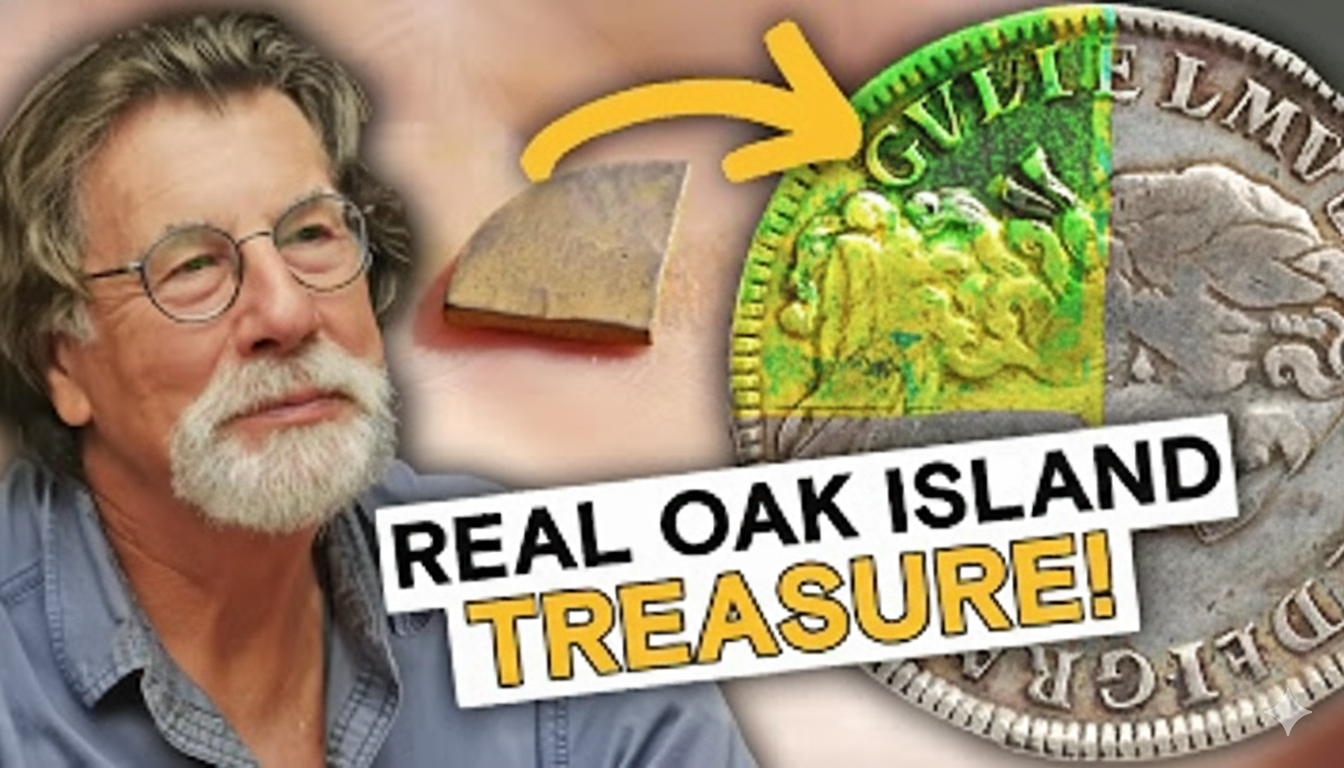
A small but highly significant find on Oak Island has added fresh momentum to the search for answers beneath its storied ground. During a careful re-examination of spoils excavated from Lot 5, metal detection expert Gary Drayton and researcher Peter Fornetti uncovered a cut silver coin—an artifact that has helped clarify timelines, human activity, and possible motives tied to one of the island’s most debated locations.
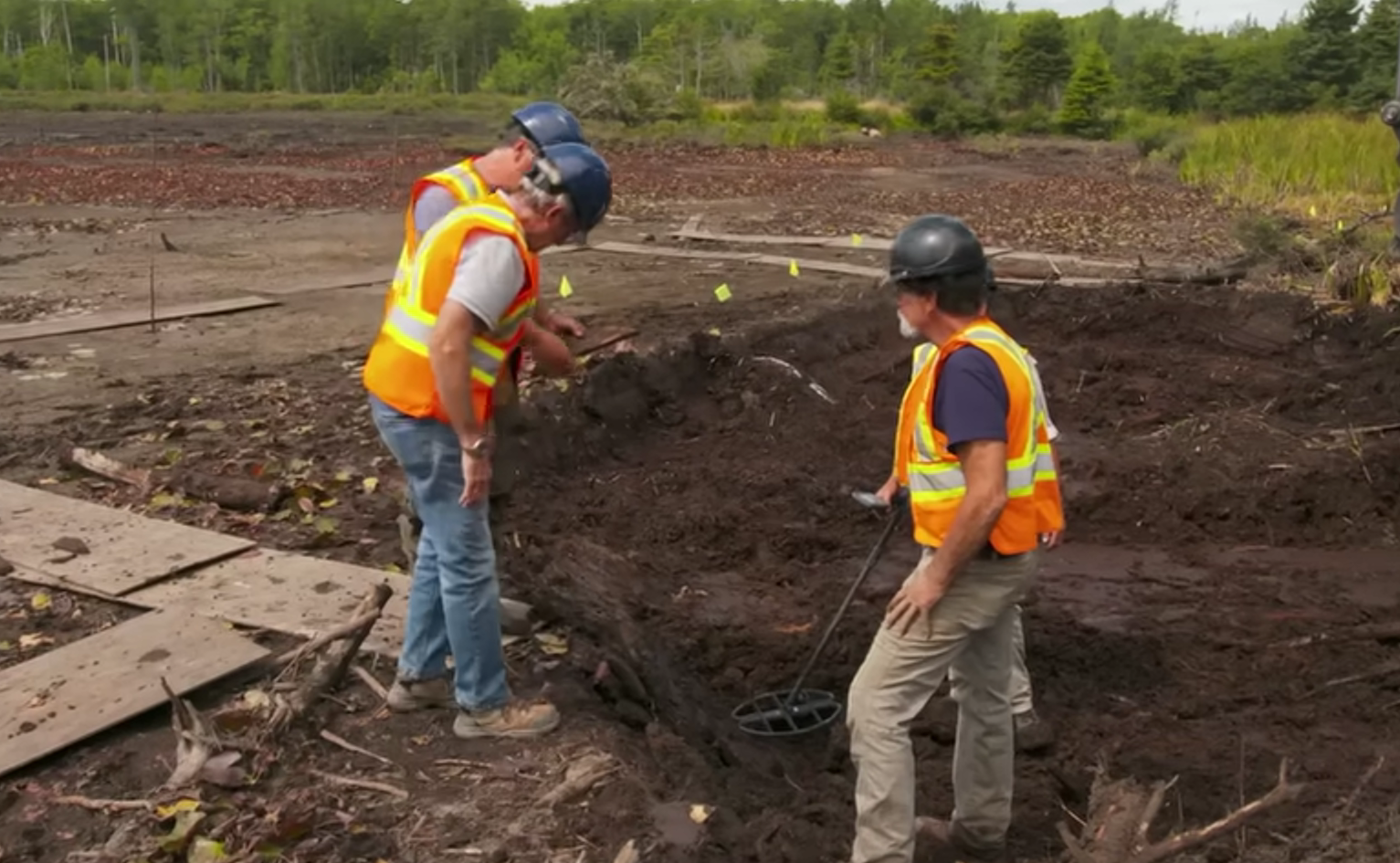
The spoils, weighing more than ten tons, were removed last year from a stone-lined feature near the Lot 5 shoreline. That feature had already attracted attention due to the range of artifacts recovered there, spanning multiple centuries. With previous finds including a 14th-century lead token and 17th-century iron tools, the team returned to the material hoping to establish when the structure was created and why it existed.
Working methodically on Lot 4, Drayton and Fornetti ran metal detection passes over the spoils twice—first isolating non-ferrous targets, then reviewing ferrous material. The approach paid off quickly. A strong signal led to a carefully extracted object that immediately stood out: a neatly quartered coin fragment.
Drayton recognized the importance at once. Cut coins were commonly used between the 15th and 18th centuries, particularly in colonial settings where making change was necessary and official minting was limited. Coins were often divided to pay soldiers, sailors, labourers, or crews. The precision of the cut suggested deliberate handling rather than accidental damage.
The find was promptly taken to the Oak Island laboratory, where it was examined by archaeologist Laird Niven and archaeometallurgist Emma Culligan. Initial inspection confirmed the object was silver and intentionally quartered. To reveal more detail, Culligan conducted a CT scan using a Skyscan 1273 system, producing three-dimensional images of the coin’s interior and surface condition.
While the quick scan revealed extensive abrasion, it did not provide enough detail to identify markings. Culligan then turned to X-ray fluorescence (XRF) mapping, a technique that identifies elemental composition and highlights subtle surface features invisible to the naked eye. The results were decisive.
The XRF map revealed clear lettering—“GVLI”—along with design elements that matched a known historical issue. The coin was identified as an English silver shilling from the reign of William III, dated to the 1690s. Its diameter, composition, and iconography aligned precisely with known examples from that period, including the distinctive ponytail and ribbon details associated with the monarch’s portrait.
For the Oak Island team, the identification was more than a numismatic footnote. It placed confirmed human activity on Lot 5 in the late 17th century, supporting theories that the area was used well before the mid-1700s. Marty Lagina noted that the find reinforced earlier assessments suggesting prolonged habitation or repeated visits rather than a single, brief event.
Importantly, the coin’s context matters. It was recovered from spoils associated with a structured stone feature that also contained mortar-like material similar to substances found deep in the Money Pit and beneath Cone E of Nolan’s Cross. The overlap in materials raises questions about coordination across sites and time periods, hinting at organized work rather than isolated activity.
The discussion in the war room quickly broadened. Doug Crowell referenced historical research proposing that British forces may have returned to Oak Island in the late 1600s and early 1700s while attempting to recover treasure allegedly buried earlier by Sir William Phips. According to that theory, English allies involved in salvage operations of the Spanish galleon Concepción made several attempts to retrieve valuables on Oak Island, none of which succeeded.
If accurate, the William III shilling could represent payment to personnel involved in those efforts—officers, labourers, or support staff operating on Lot 5 as part of a larger operation. While the team was careful not to overstate the implications, the coin fits the timeline and the practical realities of the period.
Equally important is what the coin is not. Marty Lagina suggested it is less likely to be a component of buried treasure itself and more likely evidence of people working on the island. That distinction matters: proof of organized activity strengthens the case that Oak Island hosted purposeful projects, whether construction, recovery attempts, or logistical staging.
Rick Lagina emphasized the broader objective. Oak Island’s puzzle has evolved over centuries, shaped by overlapping efforts and repeated interventions. Each credible artifact helps narrow possibilities and move the investigation from speculation toward proof that even skeptics would accept.
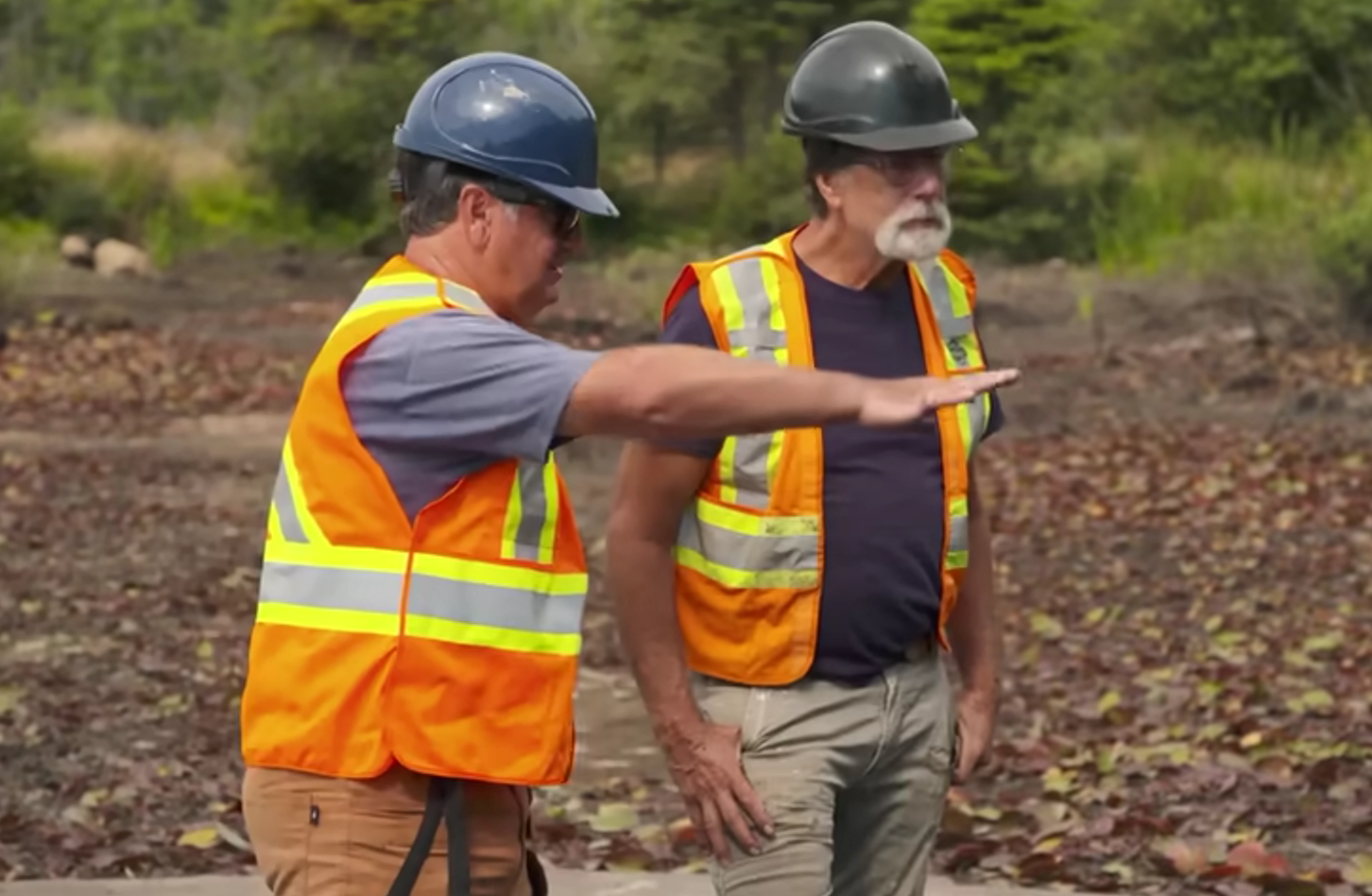
The team’s response to the find was measured but energized. Rather than declaring conclusions, they returned to the field with renewed focus. As Rick put it, where there is one piece of evidence, there may be more—especially when coins were commonly cut and distributed in parts.
In isolation, a single coin might be dismissed. In context—paired with stratigraphy, construction materials, and prior finds—it becomes a meaningful data point. The William III shilling now anchors Lot 5 to a specific historical moment, inviting further investigation into who was there, what they were doing, and how their work connects to the island’s other engineered features.
For Oak Island, progress often comes in increments. This discovery did not resolve the mystery, but it sharpened it—adding clarity to the timeline and reinforcing the case for sustained, organized activity in the late 1600s. With tools back in the ground and eyes on the evidence, the team continues its methodical search for the proof that could finally bring the island’s long story into focus.