The season was effectively over as Billy Gerhardt’s health deteriorated following the tunnel collapse at Oak Island.
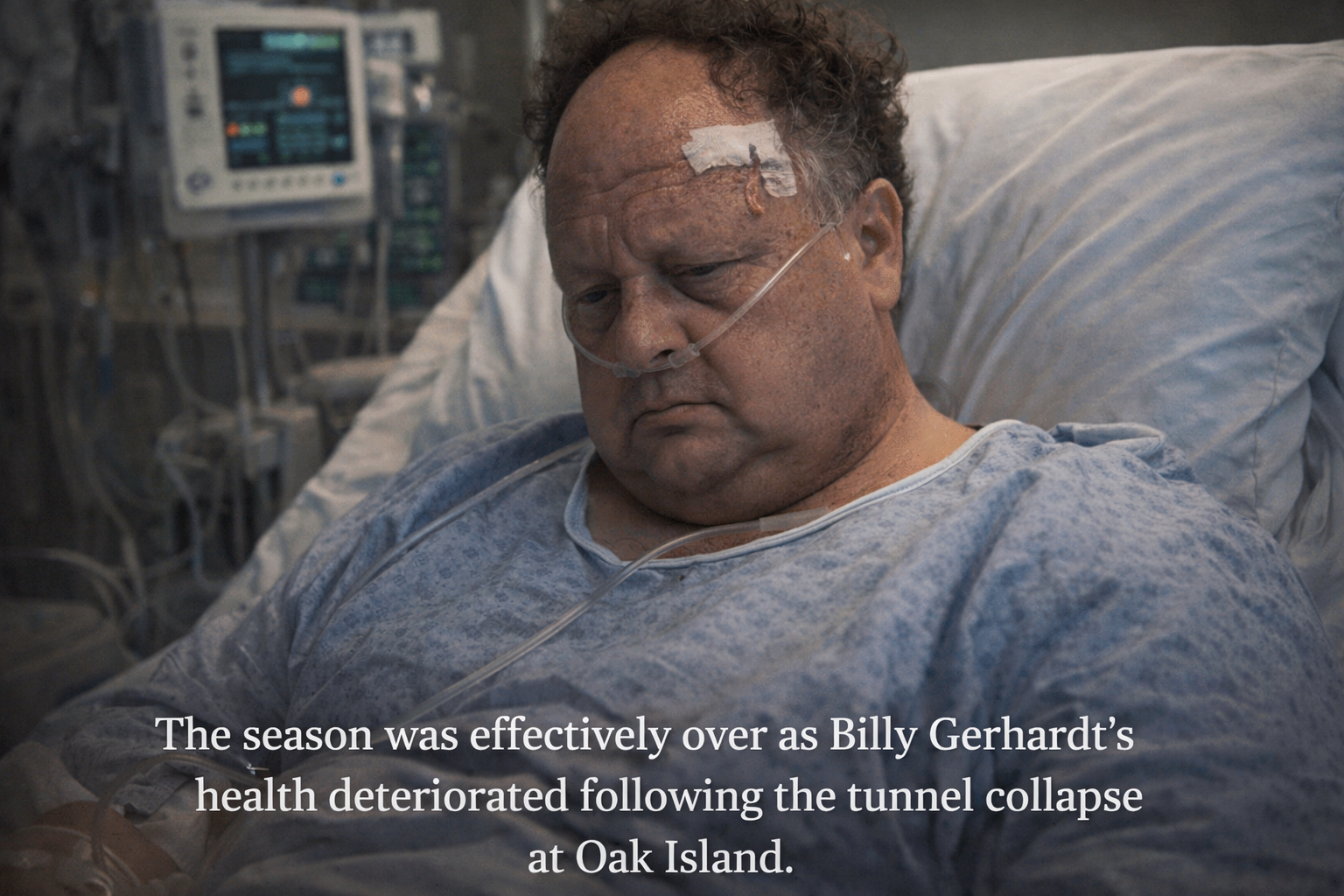
From an analytical standpoint, the reported tunnel collapse beneath Oak Island represents one of the most disruptive operational setbacks in recent seasons of The Curse of Oak Island. More critically, the deterioration in heavy equipment operator Billy Gerhardt’s health in the aftermath has effectively transformed a technical excavation failure into a full-scale production and logistical crisis. While Oak Island has long been defined by risk, uncertainty, and subsurface instability, this incident marks a structural breaking point in both field operations and narrative momentum.
Structural Failure and Operational Breakdown
The tunnel collapse is best understood not as an isolated geological event, but as the culmination of escalating subsurface stress within a heavily modified dig zone. Oak Island’s Money Pit region is already characterized by historic shaft interconnectivity, water intrusion systems, and unstable backfill layers. When heavy excavation intensified in the affected area, ground support integrity appears to have failed in a cascading manner, resulting in partial tunnel failure.
In practical terms, this type of collapse typically indicates either (1) underestimated void space beneath load-bearing strata or (2) progressive erosion of support columns created by repeated drilling and caisson activity. Either scenario suggests that the island’s subsurface architecture is far more interconnected than previously mapped by the engineering teams associated with Rick Lagina and Marty Lagina.
From an operational perspective, the immediate consequence was the suspension of excavation continuity. Heavy machinery access routes were compromised, and safety protocols would have necessitated an immediate shutdown of active digging zones. In high-intensity archaeological-engineering hybrid operations such as Oak Island, even a localized collapse can halt entire seasonal workflows.
Billy Gerhardt’s Role and the Human Cost of Heavy Excavation
Billy Gerhardt has consistently functioned as one of the most critical field operators on the island, responsible for precision excavation under unstable ground conditions. His expertise with heavy machinery has often allowed the team to push deeper into structurally uncertain zones than conventional archaeological teams would permit.

However, the reported deterioration in his health following the tunnel collapse introduces a significant variable: operator dependency. In high-risk excavation environments, experienced machine operators are not interchangeable assets; they are central nodes in operational execution. If Gerhardt is physically compromised, the team loses not just manpower, but institutional memory of how specific ground zones behave under stress.
From an analytical standpoint, his condition likely triggered an immediate reassessment of safety thresholds. It also raises the possibility that the collapse exerted indirect consequences—such as shock, exposure stress, or sustained physical strain during emergency extraction procedures. Regardless of specific medical framing, the implication is clear: the human cost of intensified digging has reached a level that directly impacts project viability.
Strategic Impact on the Lagina Operation
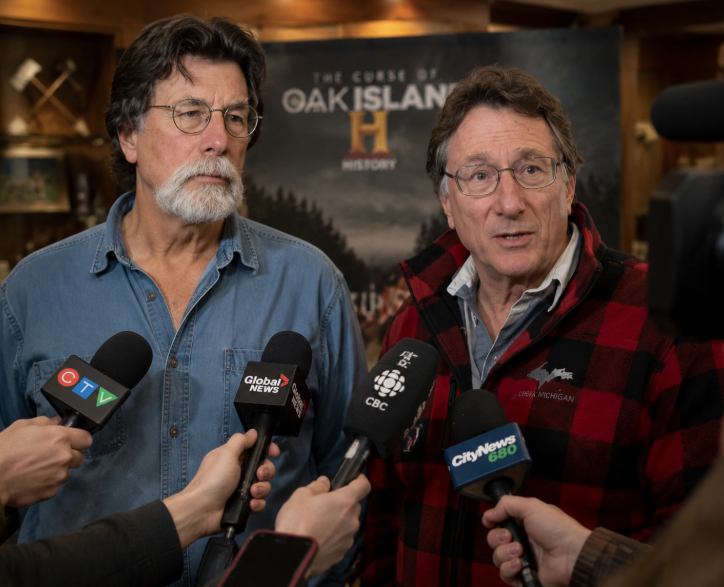
For Rick Lagina and Marty Lagina, this incident represents a dual crisis: technical and strategic. Historically, their approach has relied on iterative excavation—dig, analyze, reinforce, and continue. The tunnel collapse disrupts this cycle by introducing an area that may no longer be safely re-entered without significant engineering redesign.
The immediate consequence is likely a shift from active excavation to forensic assessment. Ground-penetrating radar re-evaluation, borehole reassessment, and structural stabilization modeling would become priorities. Additionally, any assumption of linear access to deeper targets beneath the Money Pit may need to be reconsidered entirely.
More importantly, the loss or limitation of Gerhardt’s operational capacity forces a reallocation of excavation responsibilities. This is not merely staffing—it is a recalibration of risk tolerance. Without a trusted heavy equipment specialist, the Lagina team must either slow operations or introduce external contractors unfamiliar with the island’s highly idiosyncratic terrain behavior.
Geological Interpretation: Why This Collapse Matters
From a geological perspective, the collapse may indicate that Oak Island’s subsurface is not a single stratified system but a networked void environment. Previous seasons of drilling have already revealed wood structures, water flood channels, and anomalous soil layering consistent with engineered interference.
A tunnel failure in such a system suggests one of three possibilities:
- Undiscovered interconnected shafts weakening load distribution
- Artificial flood channel reactivation, destabilizing surrounding soil
- Progressive void enlargement caused by repeated excavation and water intrusion cycles
Each of these scenarios increases uncertainty regarding the stability of any future deep excavation attempts.
Season Termination and Production Implications
The phrase “the season was effectively over” is not merely narrative—it is operationally consistent with how production teams handle high-risk field environments. Once a critical incident occurs involving structural collapse and key personnel health deterioration, liability thresholds and insurance constraints often dictate immediate suspension.
In production terms, the season’s narrative arc would shift from discovery-driven storytelling to consequence management. Episodes would likely pivot toward reflection, reassessment, and expert consultation rather than active digging breakthroughs.
This also has downstream implications for scheduling. Delayed excavation resets timelines for permits, equipment deployment, and geological reassessment cycles. In reality television production, such disruptions often compress or entirely restructure subsequent filming blocks.
Forward Predictions: What Happens Next
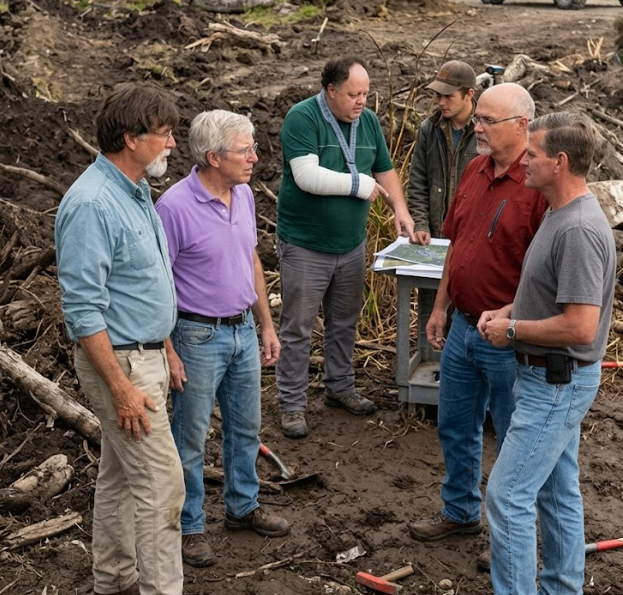
From an analytical forecasting standpoint, three likely scenarios emerge:
1. Operational Pause and Safety Rebuild (Most Likely)
The team pauses excavation in the collapse zone, conducts structural reinforcement, and limits future digging depth in adjacent areas.
2. Shift to Remote Analysis Phase
Increased reliance on scanning technology and core sample review replaces heavy excavation, reducing dependence on field operators like Gerhardt.
3. Strategic Retreat from High-Risk Zones
The Lagina operation may permanently abandon the collapsed tunnel region, redirecting focus to less structurally volatile areas of the island.
In all scenarios, Billy Gerhardt’s condition acts as a catalyst for operational restructuring. Whether he returns fully or partially, his absence forces a redesign of excavation strategy.
Conclusion
The tunnel collapse and subsequent deterioration of Billy Gerhardt’s health represent a defining inflection point in the Oak Island narrative. Beyond the immediate disruption, the incident exposes a deeper structural truth: the island’s subsurface environment is reaching a threshold where traditional excavation methods may no longer be sufficient—or safe.
For Rick Lagina, Marty Lagina, and the broader team, the challenge is no longer just discovery. It is sustainability. And in that sense, the season ending prematurely is not an accident of circumstance—it is an engineering inevitability emerging from decades of increasingly aggressive exploration beneath one of television’s most enduring mysteries.