What Rick Lagina Found Deep Underground Is Forcing a Rethink of Oak Island’s True Purpose
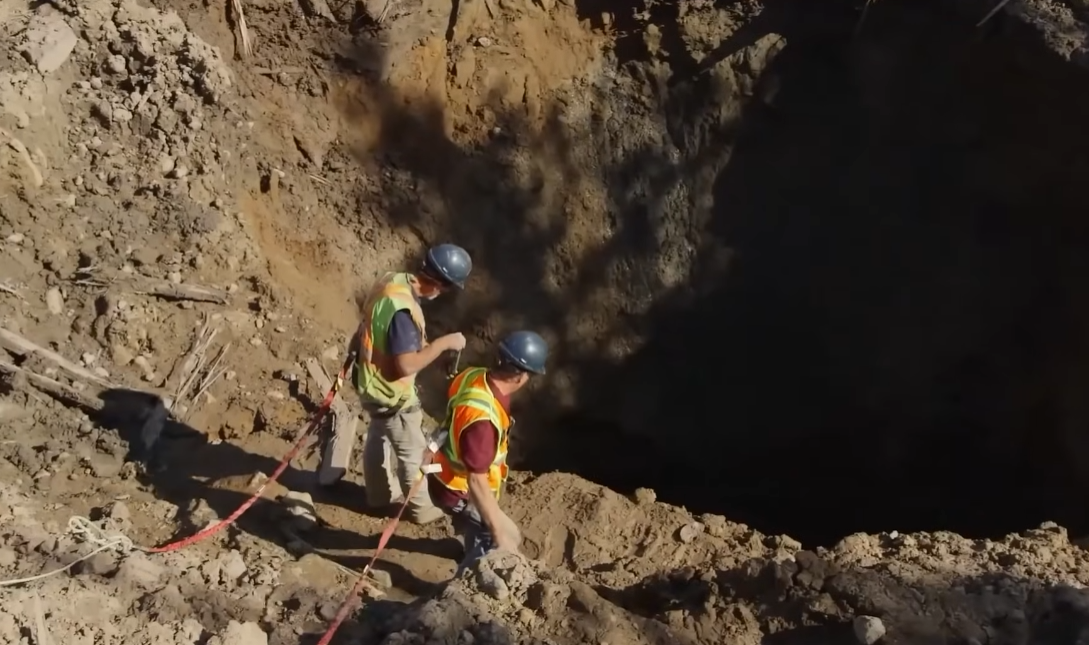
For more than two centuries, the mystery of Oak Island has been framed around a single vertical target: the Money Pit. Generations of explorers believed that whatever secret the island guarded lay straight down, buried layer by layer beneath wooden platforms and floodwater. But recent developments suggest that this long-standing assumption may have been incomplete.
According to sources close to the ongoing work featured on The Curse of Oak Island, a discovery made during filming has prompted an unexpected pause in standard operations. Rather than uncovering another isolated feature, the team appears to have encountered evidence pointing toward a much broader underground design—one that extends laterally and suggests deliberate coordination on a scale previously unproven on the island.
Satellite-assisted imaging and subsurface analysis reportedly indicate a substantial structure buried at depths that challenge conventional explanations tied to early colonial activity. If confirmed, the finding would represent a fundamental shift: from a single concealed shaft to a complex, interconnected system.
Evidence of a Coordinated Operation
This emerging interpretation is supported by a growing body of physical evidence collected across multiple lots. Among the most compelling are iron swages dated to the 14th century—specialised tools associated with advanced metalworking rather than domestic settlement.
Their presence on Lot 21 has drawn particular interest. Such equipment would have required skilled operators, organised logistics, and a clear purpose. Several historians consulted by the programme have suggested that the tools align more closely with a mobile professional group than with individual settlers or opportunistic explorers.
If Oak Island once hosted sustained metalworking activity, it raises a critical question: what was being produced, and for whom?
The Parchment Find and Intellectual Safeguards
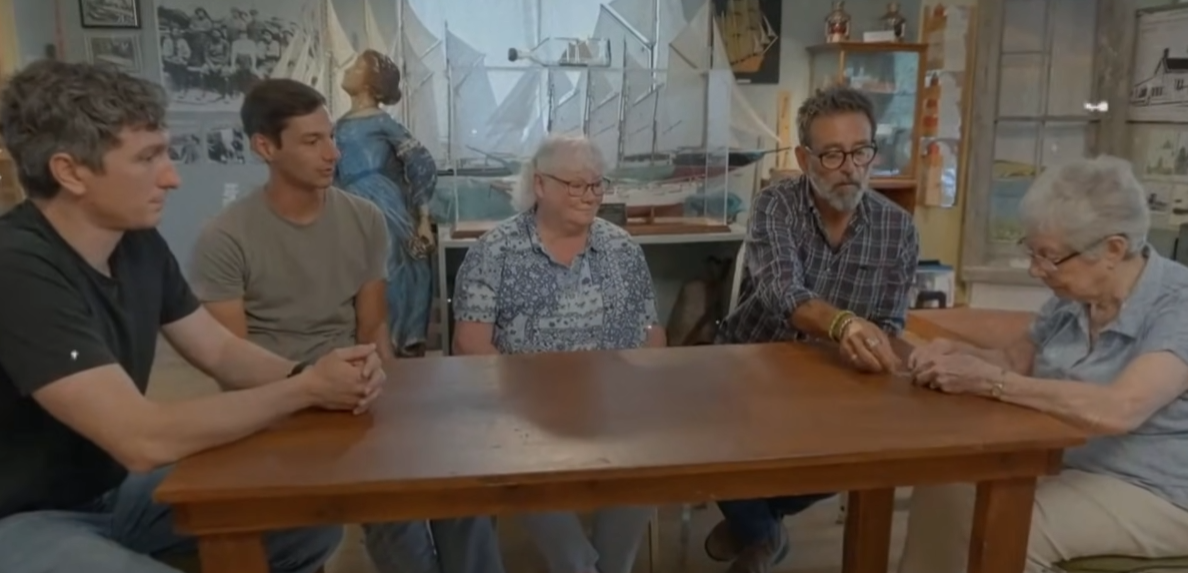
Another element reshaping interpretation is the discovery of a small parchment fragment retrieved from deep below the surface, sealed beneath a hardened, mortar-like layer. The depth and method of preservation indicate intention rather than accident.
This has revived interest in theories connected to Sir Francis Bacon and early modern intellectual societies. Some researchers propose that Oak Island functioned as a form of archival vault, designed to protect sensitive documents or philosophical works during a period of political and religious instability in Europe.
While such ideas remain speculative, the physical context of the parchment—its depth, isolation, and protection—suggests that whatever was placed there was meant to endure.
Converging Historical Threads
What makes the current phase of exploration notable is the convergence of multiple historical indicators that previously existed in isolation.
On land, a coin bearing a Templar-style cross found near the Money Pit continues to be debated alongside the geometric alignment known as Nolan’s Cross. While neither constitutes proof, together they reinforce the idea of deliberate planning rather than random deposition.
Elsewhere on the island, renewed attention has turned to Samuel Ball, an 18th-century landowner whose unexpected wealth has long puzzled historians. Recent artifact clusters on land once owned by Ball—including coins and firearm components—have reopened discussion about whether he may have encountered part of what earlier explorers missed.
In the swamp, the recovery of coconut fibre at significant depth remains one of the most difficult findings to dismiss. As a material absent from the local environment but common in historical maritime engineering, it continues to suggest intentional construction—possibly linked to controlled water movement beneath the island.
Engineering, Not Legend
Perhaps the most important shift in perspective is that the Oak Island story is increasingly being interpreted through the lens of engineering rather than folklore. Early accounts described sudden water intrusion and collapsing shafts, but modern analysis suggests these were not random obstacles.
Instead, the alignment, depth, and material composition of underground features point toward a designed system—one that still influences conditions today. This has reinforced the Lagina team’s cautious approach, prioritising data-driven decisions over rapid excavation.
Rick Lagina has often emphasised that the objective is not speed, but understanding. In recent episodes, that philosophy appears to have guided a temporary slowdown as new information is evaluated.
A Broader Implication
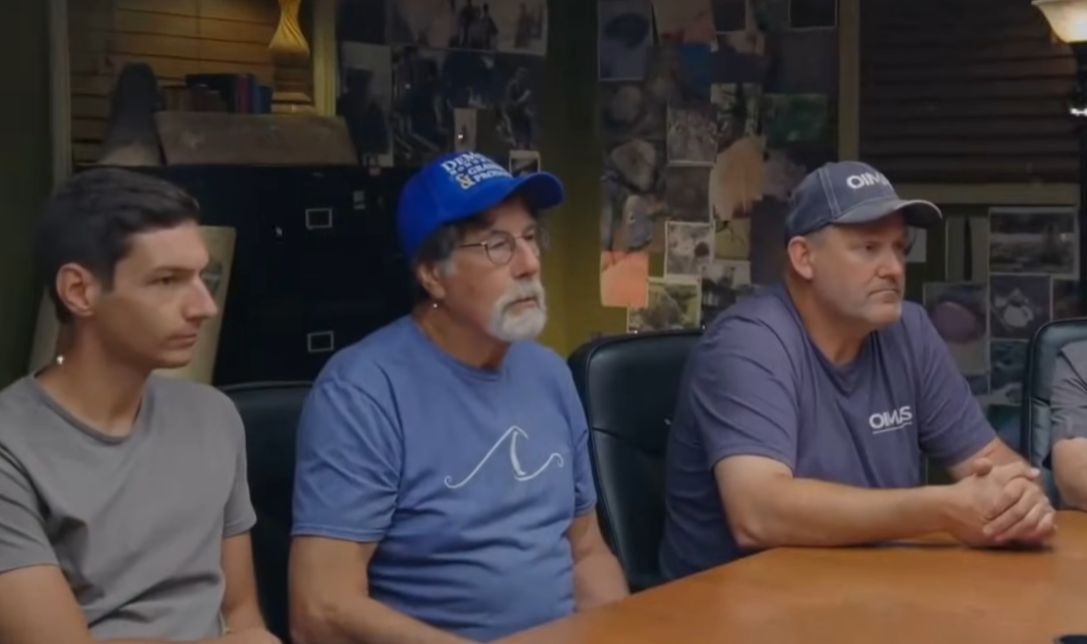
If the underground features now under review are confirmed to be part of a unified structure, the implications extend beyond Oak Island itself. Such an undertaking would imply access to advanced knowledge, significant manpower, and a long-term objective—elements not easily reconciled with standard historical narratives of the region.
This does not mean that definitive answers are imminent. On the contrary, the deeper the investigation goes, the clearer it becomes that Oak Island may represent a process rather than a destination.
What began as a search for buried valuables is increasingly resembling an inquiry into how knowledge, resources, and risk were managed in a period when the Atlantic world was being reshaped.
As the team prepares its next steps, one thing is clear: Oak Island’s story is no longer confined to a single shaft. It is unfolding as a layered, engineered landscape—one that may ultimately reveal more about the people who built it than about what they left behind.