RUSHING WATER AND ANCIENT FIBERS: OAK ISLAND TEAM STRIKES “BOOBY TRAP” AT SMITH’S COVE
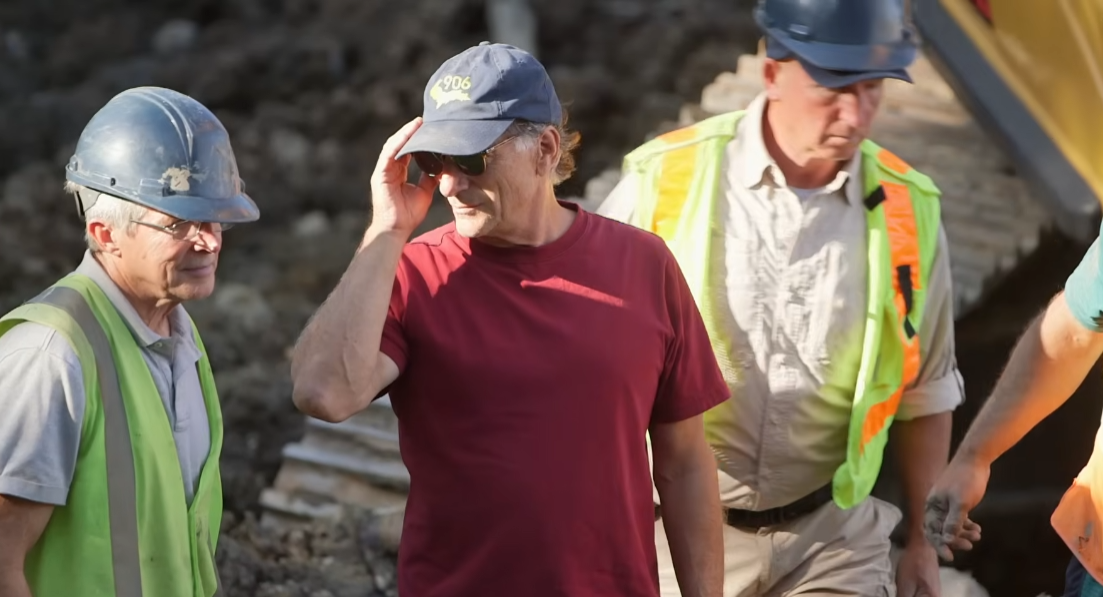
The legend of the Oak Island “flood tunnel”—a sophisticated, seawater-driven booby trap designed to protect the Money Pit—was transformed from myth to a terrifying reality this week. During an intense excavation in the uplands near Smith’s Cove, the fellowship led by Rick and Marty Lagina bore witness to a “geyser” of rushing water that forced a localized evacuation of the dig site and provided the most compelling evidence of original engineering in the island’s history.
The discovery began when heavy equipment operator Billy Gerhardt opened a deep trench, only to have it immediately besieged by high-pressure water “squirting up” from the landward side.
A Dangerous Encounter
“It’s freaking awesome,” remarked Jack Begley, though the excitement was quickly tempered by the instability of the ground. As Marty Lagina joined the inspection, the trench walls began to slough and crack under the pressure of the influx.
“This is all getting kind of dangerous,” Marty warned as a massive section of the embankment collapsed into the pit. “It would just be foolhardy to keep digging. It’s undermining the very ground we’re standing on.”
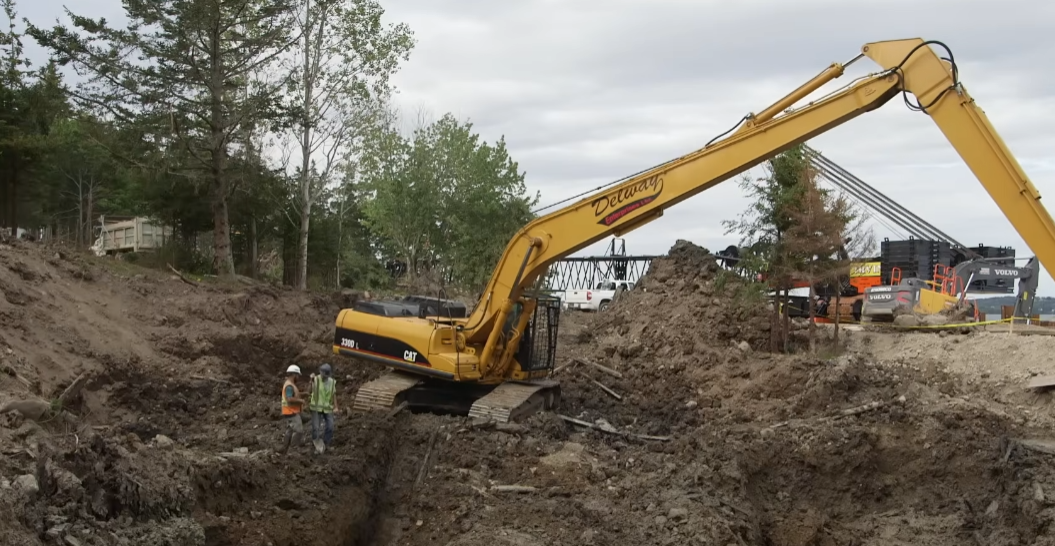
The team was forced to backfill the site to prevent a catastrophic cave-in, but not before a fiber-optic camera was lowered into the murk. The resulting footage revealed a “double-walled” wooden structure, reinforced with substantial two-inch beams, approximately 30 feet underground. According to the team’s analysts, the alignment suggests a systematic tunnel rather than a searcher’s shaft—a feature that points directly toward the fabled 18th-century “original works.”
The “Smoking Gun” of the Atlantic
While the water proved a formidable foe, the spoils of the trench provided the team’s “smoking gun”: massive clumps of hair-like material identified as coconut fiber.
The presence of coconut fiber on a North Atlantic island is historically significant. The nearest indigenous coconut trees are over 1,500 miles away, yet the material has been a recurring theme in Oak Island lore since 1804. Historically, searchers described a “filter” of coconut fiber and eelgrass covering five stone box drains at Smith’s Cove, designed to prevent the main flood tunnel from clogging while it drowned the Money Pit.
In a high-stakes War Room meeting, geoscientist Dr. Ian Spooner confirmed the authenticity of the find via telephone conference. “It is, in fact, coconut fiber,” Spooner reported, noting the rarity of such a concentrated find.
“Nobody else put a bunch of coconut fiber down while they were doing anything in Smith’s Cove,” Marty Lagina stated. “It represents original work. It’s confirmation of the old stories.”
Racing the Clock
Despite the breakthrough, the team faces a bitter logistical reality. Within 24 hours of the discovery, Irving Equipment Limited is scheduled to arrive to begin the decommissioning of the massive steel cofferdam that has protected the Smith’s Cove site all season.
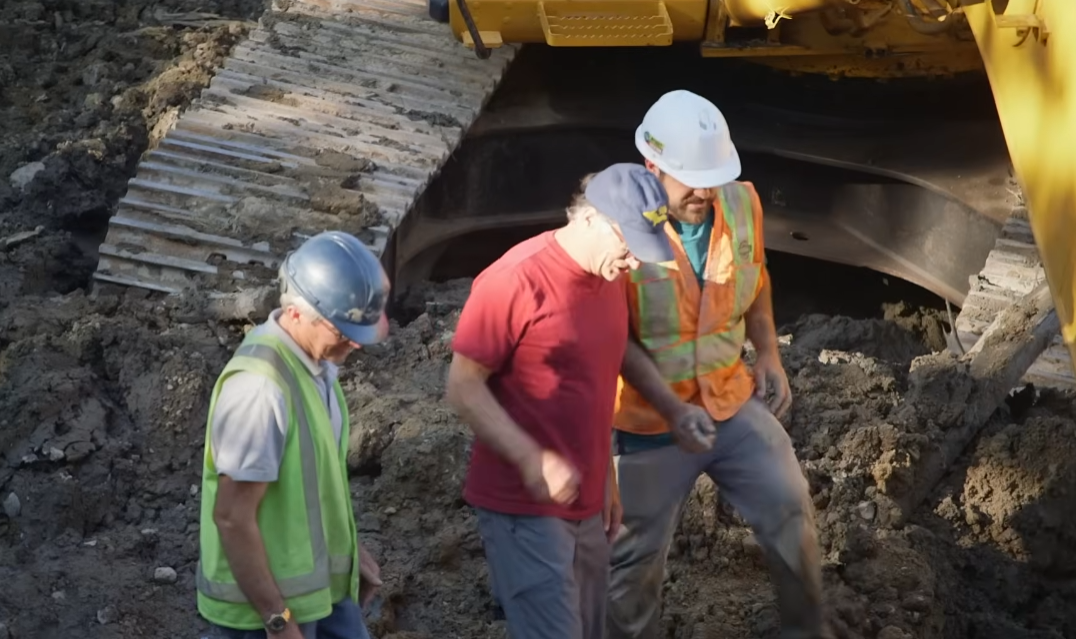
Due to strict environmental permits and the impending removal of the sheet pile, further excavation in this specific “Pandora’s Box” of timbers must be suspended for the remainder of the year.
“We’ve opened up a wooden treasure chest of clues,” Rick Lagina said, looking over the bags of ancient fiber. “We are absolutely closing in. The island is finally letting us see the truth, even if it’s trying to drown us in the process.”