The Templar Vault was Real, the Clues Have Been Uncovered

In a late-night television announcement that sent treasure-hunting communities into overdrive, Rick Lagina has claimed that an ancient vaulted chamber beneath Oak Island has finally been located and breached – and that the evidence inside points directly to the medieval Knights Templar.
According to the team, the breakthrough came after months of renewed sonar mapping and targeted drilling beneath the island’s swamp zone. At a depth of around 180 feet, survey data revealed a void that did not appear on any previous maps or geological models: a sealed cavity cut into bedrock, lying directly in line with the historic Money Pit trajectory and a secondary tunnel system.
Initial scans suggested the anomaly was not a natural cavern. Metallic density readings came back in regular, evenly spaced patterns, implying something layered and constructed rather than collapsed stone. “This could be the original vault,” Rick is reported to have said, as the team prepared to penetrate the outer seal.
Once a small access point was opened, the first object encountered was a limestone slab set like a threshold at the base of the chamber. Weathered but still distinct, it bore a carved cross pattée – the flared-arm emblem historically associated with the Knights Templar. The slab had been packed in marine clay, a material known to inhibit saltwater corrosion, suggesting deliberate preservation.
Subsequent laboratory tests, the team say, placed the age of the stone centuries before permanent European settlement in Nova Scotia. More intriguingly, faint etched symbols along one edge were later found to match iconography in Scotland’s Rosslyn Chapel, another site frequently linked in popular theories to Templar activity.
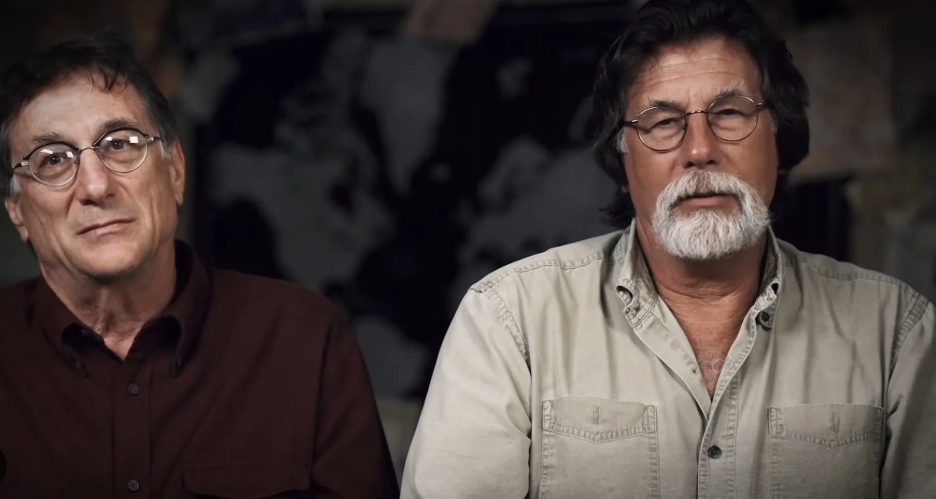
Further drilling into the chamber floor produced samples of quartz dust laced with fine, refined gold – not raw placer gold, but metal that had been melted and worked. For Rick Lagina, who has spent more than a decade pursuing Oak Island’s shifting clues, it marked a turning point. “We may not be chasing legend anymore,” he is reported as saying. “We’re standing over it.”
If the vault suggested a hidden story beneath the island, parallel work in European archives appeared to offer context. In France, a maritime historian reviewing 18th-century naval charts reportedly uncovered a 1701 map referring to “L’île de l’Or Perdu” – the Island of Lost Gold – with coordinates that, when adjusted for magnetic drift, closely resemble Oak Island’s outline.
Marginal notes on the chart mention “coffres du temple” – temple coffers – sealed beneath engineered trap stone. When superimposed over Oak Island’s modern survey grid, the sketched “central deposit” lies almost exactly where the newly located chamber now sits. The document’s existence suggests that knowledge of a hidden vault outlived the Templar suppression by several centuries, perhaps carried by mariners with direct or inherited ties to the order.
Inside the Oak Island chamber, excavations continued to add to the medieval narrative. The team recovered a fragment of brass chain fused into limestone, its small links engraved with miniature Templar crosses. Metallurgical analysis reportedly matched its alloy composition to 13th-century French examples, reinforcing the idea that at least some of the vault’s contents originated in Europe long before official records acknowledge transatlantic voyages.
A small lead container found nearby provided the most direct written evidence. Sealed with wax and resin and protected by anaerobic mud, it contained a fragment of parchment inscribed in medieval French. Early translations refer to “le grand arche” – the great ark – and “le secret sous la rose” – the secret beneath the rose, both phrases known from Templar coded language.
Using imaging techniques, researchers also identified an acrostic formed by the initial letters of each line, spelling out the Latin phrase “domus Dei” – house of God – a term historically used by the order for its most sacred repositories. Handwriting comparisons reportedly link the script style to known Templar clerks active in France shortly before the mass arrests of 1307.
If the texts suggested intention, the chamber’s construction underscored it. Below the first cavity, tools encountered a lattice of timber and brass built into the bedrock itself – an interlocked system of pulleys, valves and counterweights designed to redirect water or trigger collapse. Engineers have likened the layout to medieval ship rigging repurposed underground, implying that the builders were experienced mariners, not simply land-based stonemasons.
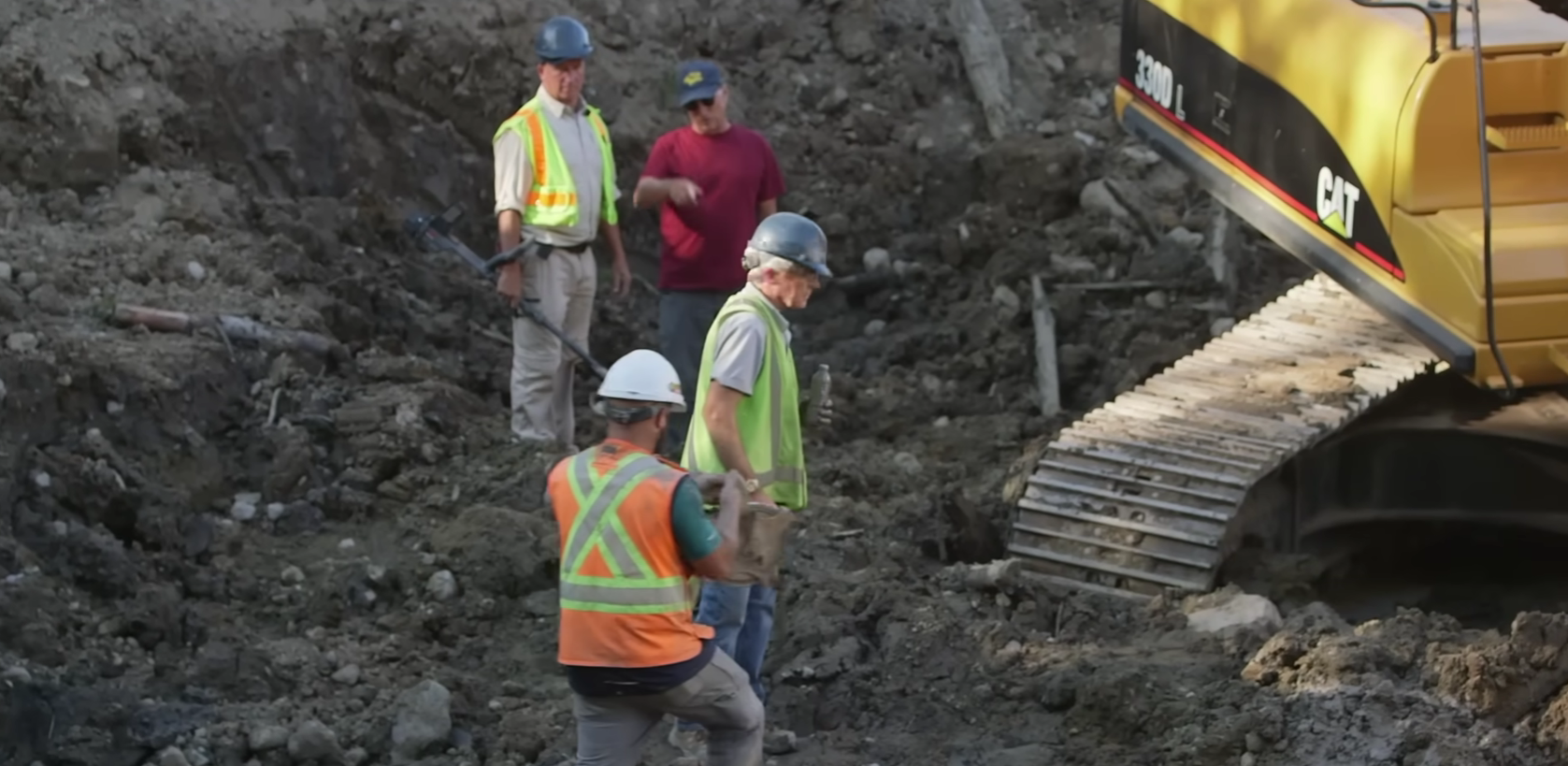
The team began referring to it as a “guardian mechanism”: a system meant not only to conceal whatever lay beyond, but to destroy it rather than allow unskilled intruders to reach it. It added weight to a long-debated idea – that the Oak Island works were not crude treasure pits but sophisticated defensive engineering.
Above ground, new survey technology appeared to reveal a broader design. LiDAR imaging of the island’s surface showed lines of carefully placed stones forming a geometric pattern stretching from Smith’s Cove to the Money Pit and across to the swamp. When plotted, the points traced a cross-shaped alignment that, when oriented to the night sky, closely mirrored the constellation Orion – a pattern that echoes star charts associated with medieval navigation and, in some speculative writings, Templar symbolism.
At the centre of this alignment, further drilling breached a second, smoother limestone cavity. Here, the team reported finding an arched inner gate carved with a single rose encircled by stems – a motif later connected to Rosicrucian and Templar traditions of secrecy “under the rose”.
A fibre-optic camera fed through a pencil-thin borehole captured the first images beyond. In the grainy light, reflections suggested stacked metal – chests, bars or other objects – and, at the heart of the space, a chalice-shaped vessel resting on a pedestal.
Once recovered, the chalice became the focus of intense scrutiny. Spectrometry results, according to the team, showed an unusual blend of Byzantine gold and Frankish silver, a combination consistent with high-status religious artefacts from the 12th and 13th centuries. Along its inner rim, a Latin inscription reads “Veritas sub rosa” – truth under the rose – a phrase long associated with confidential vows.
Interest from the Vatican’s heritage departments reportedly followed, with archivists noting that the chalice’s dimensions and inscription closely resemble a reliquary listed in papal inventories from 1312, believed lost during the confiscation of Templar assets. That connection has drawn the discovery out of television entertainment and into a complex arena of heritage law and ecclesiastical history, with Canadian authorities, French historians and church representatives all paying close attention.
Yet even as attention focused on the chalice, the original limestone tablet at the vault entrance produced another twist. Re-examined under full-spectrum imaging, it revealed faint secondary markings – a set of coordinates accompanied by a Latin note: “Haec est arca minor; maior ultra est” – this is the lesser ark; the greater lies beyond.
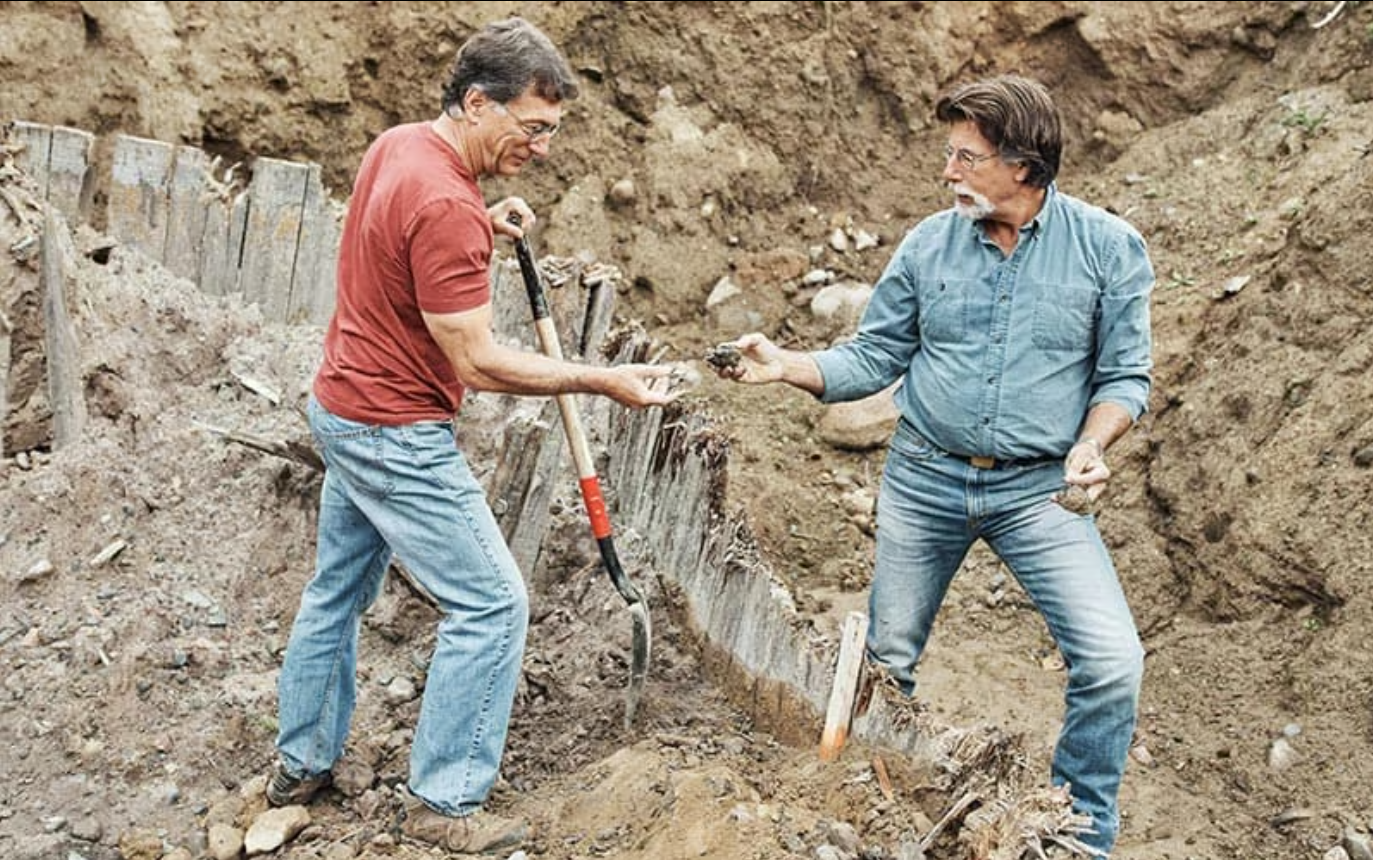
Those coordinates, researchers say, do not point to Oak Island at all, but to a remote North Atlantic location roughly 1,200 kilometres away. Combined with the island’s star-based geometry and long-standing theories about a divided Templar fleet, the implication is that Oak Island may never have been the ultimate hiding place, but a waypoint – a “lesser vault” designed to protect and signpost something larger farther offshore.
For Rick Lagina and his team, the claim is as daunting as it is enticing. Oak Island, long treated as the treasure itself, is now being framed as part of a wider coded network spanning oceans and centuries. Whether this story continues in the coves of Nova Scotia or moves onto the open Atlantic, one thing is clear: in their telling, the island is no longer just a hole in the ground full of mystery. It is a map – and, if their interpretation is correct, the most significant chapter in its story may still be unwritten.