Oak Island Season 13, Episode 18: A Dangerous Collapse Leads to a Stunning Underground Discovery!

In what can only be described as a pivotal moment in The Curse of Oak Island, the team has uncovered something far beyond their wildest expectations. Episode 18 of Season 13 delivers a shocking turn of events, when a routine excavation leads to an unexpected collapse in the T1 shaft, exposing hidden underground spaces that no one saw coming. This collapse, which could have derailed the entire operation, has instead revealed a secret that has been buried for centuries, shaking the team to their core. What lies behind these walls could change everything they know about the island’s mysterious underground system.
For over two hundred years, treasure hunters have attempted to unravel the mystery of Oak Island, chasing legends of hidden treasure, secret tunnels, and complex underground systems. The T1 shaft, located near Smith’s Cove, had become the focal point of the team’s investigation in recent seasons. As the team dug deeper into the island’s core, they encountered an array of geological challenges that pushed their efforts to the brink. The shaft had already been under immense stress, with casing issues, rock formations, and signs of shifting material. But it was the collapse in Episode 18 that truly opened up new possibilities, both terrifying and thrilling, for what could lie beneath Oak Island.
The collapse was swift and unsettling. Experienced crew members immediately recognized the deep, resonating shift from below, a sound that any excavation team fears. Equipment operators quickly reacted, and the monitoring system’s alarm spikes alerted the crew to the imminent danger. Despite the initial shock, the team followed proper safety protocols, halting operations and ensuring that no one was in harm’s way. Yet, when the dust settled, a stunning discovery was made: a hidden void, never before detected by any of the previous scans or drilling results, had been exposed. This space was different from the geological anomalies the team had found before—it was an artificially constructed chamber, lined with materials that had clearly been worked with intention. This unexpected find may be a breakthrough that could rewrite the history of Oak Island’s mystery.
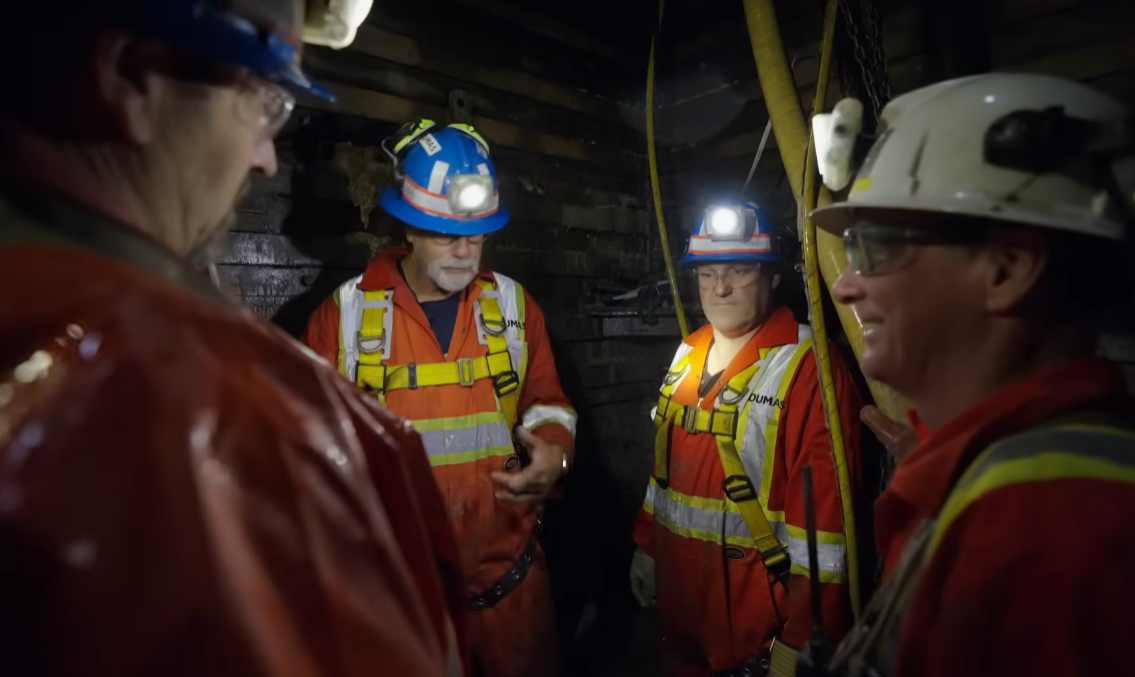
What makes this discovery even more intriguing is what it contains. As the team began to carefully inspect the void, they uncovered a collection of artifacts that immediately piqued their interest. Among the first objects recovered was a piece of worked stone, showing signs of craftsmanship that date back to the medieval period. The precise shaping of the stone suggested that it was not the product of random geological forces but of a culture skilled in architecture and construction. This kind of craftsmanship was typical of medieval European builders, raising the possibility that those who buried something on Oak Island may have had ties to ancient European practices.
The second object was a metallic piece, small but intricately shaped, featuring markings that could indicate religious or symbolic significance. Metalwork from this era typically carried inscriptions for purposes of identification, ownership, or religious context. The markings on this artifact were consistent with the kind of work that would be undertaken by people who valued their possessions deeply, and whose missions were likely of great importance.
The third and most mysterious object found was an organic fragment, partially preserved by the sealed conditions of the chamber. The organic material’s preservation suggested that it had been placed there a very long time ago, and its shape implied it was once part of a larger item, possibly a religious or symbolic object of significant value. This discovery adds another layer of intrigue to the Oak Island mystery, potentially providing a crucial clue to the identity of those who built this underground system.
Perhaps the most striking aspect of this discovery is the realization that the collapse revealed a design methodology far more sophisticated than previously imagined. The horizontal void behind the wall of the T1 shaft suggests a deeper, more complex system of concealment than the flood tunnels alone. The team had long been aware of the flood tunnels, which were designed to flood any excavation attempts with water. But now, it seems the builders of Oak Island employed additional layers of concealment, using vertical and horizontal voids that were impossible to detect using modern scanning technology. This discovery opens up new possibilities about the extent of the underground system and the level of expertise possessed by those who created it.
This is not just the discovery of a single hidden space but potentially a new chapter in the history of Oak Island’s underground design. If the builders were capable of creating a concealed horizontal void that resisted detection for over two centuries, they were likely able to replicate this technique in multiple locations, at various depths, across the island. This revelation implies that the treasure hunters may be dealing with an entire network of hidden chambers, each carefully concealed and designed to evade detection, waiting to be uncovered one by one.
The team’s excitement is palpable as they reflect on this new discovery. The collapse, though dangerous, may have been the key to revealing this hidden part of Oak Island. For years, the team has speculated about the existence of underground systems and booby traps, but now, they are faced with hard evidence that could lead them one step closer to solving the island’s biggest mystery. As Rick Lagina looks at the objects recovered from the void, his reaction is one of reverence, and perhaps even a sense of grief, for the years of effort it took to finally reach this point. Marty Lagina, always the practical one, begins to think about the implications for the next steps in the excavation.

As Oak Island Season 13 progresses, the collapse marks a dramatic turning point. It is no longer just about finding treasure—it’s about understanding the intricate and clever design behind the island’s underground network. The team now faces the daunting task of continuing their work in the face of geological challenges and the limited timeline of their excavation permits. But one thing is certain: the discovery in Episode 18 has breathed new life into the search for the Money Pit treasure. The game has changed, and with it, the possibilities for what might be waiting just beneath the surface.
The future of the Oak Island treasure hunt looks more promising than ever, with new clues and the potential for even more discoveries. The questions raised by the collapse—about the hidden voids, the meticulously crafted objects, and the unexplored sections of the island—will shape the path forward. For Rick, Marty, and the team, this is not just another setback; it is a new chapter in the ongoing quest to solve one of the world’s greatest mysteries. The real question now is: what other secrets are hidden beneath Oak Island, waiting for the right moment to be uncovered?